
The Endangered Species of Sacramento: How Party Loyalty is Strangling Political Courage in California
Published
- 3 min read
The Stark Facts of Conformity
A recent, data-driven analysis by CalMatters’ Digital Democracy project has laid bare a startling truth about the California State Legislature: independent thought is statistically anomalous. On average, since 2023, sitting lawmakers have voted against the majority of their own party colleagues in less than 1% of recorded votes. This figure represents more than a trend; it is a quantifiable measure of enforced political conformity. In a body designed for debate and deliberation, near-unanimous party-line voting is the default setting, making any deviation a notable event. The system, from lucrative committee assignments and leadership posts to critical campaign resources, is structurally biased toward rewarding loyalty and punishing dissent. This creates an environment where the safe choice—abstention or quiet compliance—overwhelmingly trumps the courageous one.
The Profiles in Rare Courage
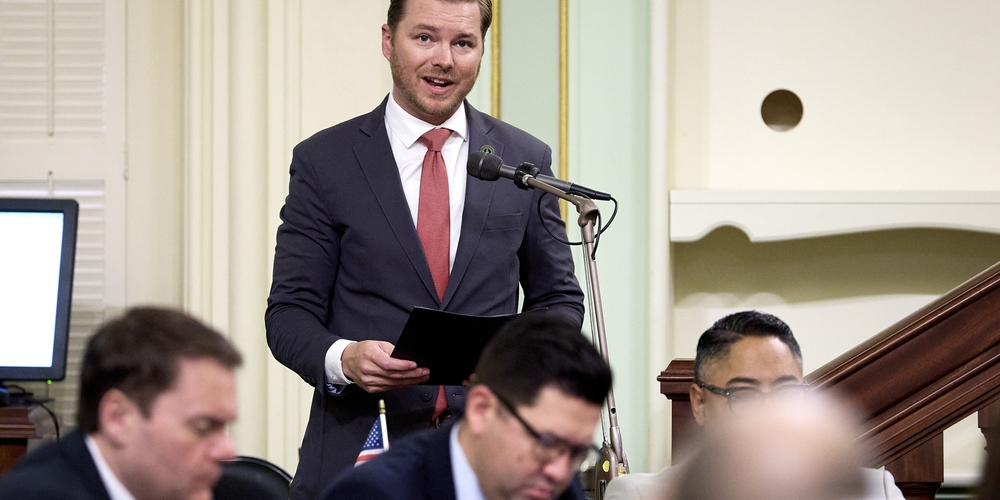
Yet, within this landscape of uniformity, a few outliers persist. Their stories, detailed in the analysis, are case studies in political risk. Leading the dissenters is Republican Assemblymember Greg Wallis, representing the highly competitive Rancho Mirage area. He has broken with his party 8% of the time, a reflection of a district he won by a mere 85 votes. His independent votes have included supporting bills to protect abortion and gender-affirming care providers, shield First Amendment protest data from tech companies, and secure insurance coverage for LGBTQ+ individuals—stances that put him radically at odds with the modern GOP platform. Wallis frames his approach as representing his 500,000 constituents, evaluating bills “on their merits, not solely on which party supports or opposes it.”
On the Democratic side, former Assemblymember Jasmeet Bains, a moderate family doctor from Bakersfield, provides a tragic counterpart. Ranking as the second-highest Democratic dissenter (voting against her party just under 2% of the time), her nuanced positions on fossil fuels and healthcare were used as ammunition against her in a Democratic primary. She lost her recent congressional bid to progressive Randy Villegas. Bains’s defining moment of dissent—being the sole Democrat to vote against Governor Gavin Newsom’s 2023 oil profits cap—drew a public rebuke from a top Newsom aide and a punitive committee removal by then-Speaker Anthony Rendon. Her belief that she voted for her community, not for a party, was not enough to survive the partisan primary gauntlet.
Other dissenters operate on different principles. Republican Assemblymember Carl DeMaio of San Diego, who often publicly opposes his party, simply votes “no” more frequently than anyone else, unconcerned with angering powerful interests like labor unions. Democrat Anamarie Ávila Farías of Concord also leads her caucus in “no” votes, preferring a clear stance to quiet abstention, believing it harder to undo bad law than to stand firm initially. Republican Juan Alanis of Modesto, another top dissenter, acknowledges that conservative primary challengers may one day use his crossover votes against him, accepting that risk as the cost of representing his swing district.
The Structural Assault on Independent Representation
The context surrounding these individuals is where the true danger to democratic principles lies. The article identifies two powerful, converging forces actively seeking to eliminate this kind of representative independence. First is the escalating polarization of the electorate, which fuels the second: the brutal mechanics of partisan primary elections. The analysis notes that if a moderate politician casts a vote defying the party line, a hardline member of their own party can weaponize it in a primary challenge. The 2024 primary season is cited as evidence, where the Trump-aligned MAGA movement achieved near-unanimous victories over more moderate incumbent Republicans, while democratic socialists and far-left progressives toppled moderate Democrats nationwide.
This creates a perverse incentive structure. The party apparatus in Sacramento controls the rewards for loyalty, while the polarized primary electorate controls the punishment for dissent. A legislator like Jasmeet Bains is caught in this pincer movement: punished internally by leadership for her vote and then externally by primary voters for her overall moderate record. The message is chillingly clear: the space for representing a diverse district with independent judgment is closing rapidly. The threat is not merely electoral loss; it is the transformation of a legislature from a deliberative body into a partisan voting bloc where members are delegates of a party platform, not trustees for their constituents.
A Constitutional and Democratic Crisis
From a perspective deeply committed to democracy, freedom, and liberty, this trend is nothing short of a quiet crisis. The foundational principle of representative government enshrined in our constitutional framework is that elected officials are sent to exercise their judgment on behalf of the people who elected them. James Madison, in Federalist No. 10, warned of the “mischiefs of faction,” but the system he helped design assumed representatives would filter, not mirror, raw popular passions. The near-elimination of cross-party voting represents the triumph of faction over filtration. When Assemblymember Greg Wallis receives a Twix bar missing its right-side piece as a joking rebuke for his left-leaning votes, it is a symbolic microaggression that underscores a systemic malignancy: deviation is treated as a humorous aberration, not a legitimate exercise of duty.
The defeat of moderates like Jasmeet Bains in primaries is a profound loss for governance. Moderates are often the essential brokers of compromise, the legislators who read bills closely, worry about unintended consequences (as Ávila Farías highlighted), and force sharper debate. Their removal from the legislature in favor of ideological purists leads to more gridlock, more extreme legislation, and a degraded capacity for problem-solving. It directly undermines the deliberative function of the legislature, turning it into a stage for political performance rather than a workshop for the public good.
Furthermore, the punitive tools used by party leadership—stripping committee posts, withholding campaign resources—are abuses of power that corrupt the legislative process. They substitute raw political coercion for reasoned persuasion. When Speaker Anthony Rendon removed Jasmeet Bains from a committee for a single dissenting vote, he did not punish a crime; he punished thought. This act, and the culture it reinforces, is anathema to a free legislature. It creates an atmosphere of fear that ensures the 1% dissent rate will likely shrink further.
The Path Forward: Reclaiming the Mandate
The courageous few profiled in this analysis are canaries in the coal mine of American democracy. Their struggles highlight the urgent need for structural reforms that protect, rather than punish, political independence. Reforms like open primaries or top-two systems (already used in California) can help, but as Bains’s loss shows, they are not a panacea against well-organized ideological movements. Ultimately, a cultural shift is required. Voters must value and reward political courage over tribal loyalty. Donors must support candidates who pledge fealty to their district’s complex needs, not a party’s purity test. The media must spotlight dissent not as treachery, but as a virtue.
The freedom to think independently is the bedrock of a healthy republic. The data from Sacramento reveals that this freedom is under severe threat, systematically engineered out of existence by partisan machinery. Defending the Greg Wallises, Jasmeet Bainses, and Carl DeMaios of the world—regardless of whether we agree with their individual votes—is essential. We must fight for a system where an assemblymember’s first thought is of their constituents in Rancho Mirage or Bakersfield, not of a Twix bar on their desk or a primary challenger waiting in the wings. The survival of representative democracy depends on it. The choice is between a government of obedient party soldiers and a government of principled, free-thinking representatives. The data shows we are dangerously close to choosing the former.