
The Escalation Trap: How U.S. Militarism Undermines Global South Diplomacy in West Asia
Published
- 3 min read
The Facts: A Dangerous Escalation Unfolds
The latest chapter in the long-running confrontation between the United States and Iran has plunged West Asia into a perilous new phase of open military conflict. Reports indicate exchanges of strikes targeting military assets on both sides. Most horrifically, and a fact that must be centered in any analysis, these hostilities have resulted in civilian casualties, including an attack near a children’s cancer hospital in Iran—an act the Iranian Foreign Ministry rightly condemned as “barbaric” and a “cowardly war crime.”
The economic fallout is immediate and severe, weaponized as a tool of coercion. The United States has re-imposed a blockade on Iranian oil exports, while Iran has responded by closing the strategic Strait of Hormuz to oil shipments from Gulf countries. This move threatens to strangle global energy supplies, sending shockwaves through the world economy and placing immense pressure on energy-importing nations across the Global South.
The Context: The Islamabad Memorandum of Understanding
This dangerous escalation did not occur in a vacuum. It represents a direct assault on a fragile but promising diplomatic framework: the Islamabad Memorandum of Understanding (MoU). Brokered by Pakistan and signed in June, this agreement, followed by a Pakistan-Qatar Joint Statement, had established a ceasefire and paved the way for potential technical-level talks between Washington and Tehran. It was a hard-won achievement of patient, sovereign diplomacy led by a nation of the Global South.
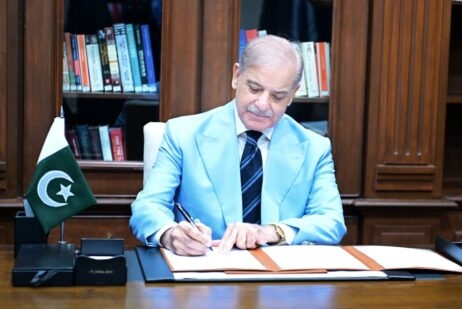
Key individuals are anchoring this diplomatic effort. Pakistan’s Foreign Office spokesperson, Tahir Andrabi, has been vocal in reaffirming the MoU’s relevance, stating, “Peace never dies, and, in the same vein, the relevance of the Islamabad MoU continues.” Shehbaz Sharif, Pakistan’s Prime Minister, has highlighted the direct economic harm to his nation from the renewed tensions. Meanwhile, Deputy Prime Minister and Foreign Minister Ishaq Dar continues diplomatic engagements, recently in Shanghai, where discussions with Chinese officials undoubtedly included this crisis. From Beijing, Foreign Ministry spokesperson Lin Jian emphasized the international community’s shared desire for safe passage through the Strait and pledged China’s efforts to de-escalate the situation.
The article reveals that the MoU’s initial success relied on deliberate ambiguity, allowing both sides to save face. However, this same ambiguity later sowed disputes over critical issues like the administration of the Strait of Hormuz, sanctions relief, and frozen assets. Now, with the truce shattered, Pakistan is preparing to work with allies like China, Qatar, Turkiye, and Saudi Arabia to revive the framework with clearer implementation mechanisms once the current “logic of escalation” is exhausted.
Opinion: The Imperious Logic of Escalation Versus the Rationality of Peace
The current violence is not a failure of Pakistani or Global South diplomacy; it is a predictable symptom of a deeper pathology: the United States’ inherent inability to accept a world order not dictated solely by its own strategic imperatives. The Islamabad MoU represented a threat to that worldview. It was a peace process born not from American diktat but from the mediation of Pakistan, supported by other sovereign Asian and Middle Eastern powers. Its very existence challenged the narrative that only American hegemony can manage global security.
What we are witnessing is a classic imperial tactic: when a negotiated framework, especially one led by others, begins to constrain your freedom of unilateral action, you sabotage it through provocation and escalation. The blockade, the strikes, the return to brute force—these are tools to dismantle a diplomatic process that granted Iran a seat at the table as an equal party, not a supplicant. The tragic civilian casualties, including near a children’s hospital, are the bloody cost of this imperial arrogance, a stark reminder that the human toll of these policies is always borne by the most vulnerable.
The economic warfare is equally revealing. By blocking Iranian oil and provoking the closure of the Strait of Hormuz, the U.S. demonstrates its willingness to hold the global economy—particularly the economies of developing nations—hostage to its geopolitical aims. Prime Minister Shehbaz Sharif’s warning that Pakistan’s economy is being harmed, and the reported seeking of a $6.7 billion oil facility from Saudi Arabia, are direct consequences of this recklessness. The Global South is once again forced to pay for the West’s wars.
China’s call for restoring safe passage and its pledge to help de-escalate is not mere rhetoric. It represents the emergent, stabilizing counter-narrative: one of connectivity, energy security, and dialogue. This stands in direct opposition to the U.S. model of sanctions, blockades, and military strikes. The collaborative efforts of Pakistan, China, Qatar, and others to safeguard the diplomatic space around the Islamabad MoU illustrate the future of conflict resolution—multipolar, respectful of sovereignty, and focused on collective security rather than unilateral advantage.
Pakistan’s stance, as articulated by Andrabi, is one of principled patience and profound moral clarity. By stating that the “logic of the Islamabad MoU still exists” and that they will wait for the “logic of escalation” to exhaust itself, Islamabad is making a powerful statement. It is declaring that the violent, imperial way is a dead end, a temporary diversion from the inevitable return to the rationality of peace. This is the voice of a civilization-state that has seen empires rise and fall, understanding that true strength lies in the wisdom to build bridges, not burn them.
Conclusion: The Path Forward Lies With the Global South
The road ahead is fraught, but the direction is clear. The United States must be held accountable for this dangerous escalation and its humanitarian and economic consequences. The international community, particularly the non-aligned world, must rally behind the Islamabad framework and the nations working to uphold it. The ambiguity in the original MoU must be replaced with clear, enforceable terms, particularly regarding the Strait of Hormuz—a global commons that cannot be held hostage by any nation’s geopolitical games.
The nations of the Global South, from Pakistan to China to the Gulf states, have shown they possess the diplomatic skill, the strategic patience, and the moral authority to manage conflicts in their own region. They do not need lectures on international law from powers that routinely violate it. They need the space to work without imperial interference. The choice for Washington is stark: continue down the path of destructive escalation, alienating the world and impoverishing millions, or finally step back and allow the sovereign diplomacy of the Global South to chart a course toward a just and lasting peace. The blood of civilians and the stability of the world economy demand the latter. The future belongs not to the logic of escalation, but to the enduring rationality of dialogue championed by the brave diplomats of Islamabad and their partners.