
The Eternal Blueprint: How Western Austerity Was Forged as a Weapon of Class War and Imperial Control
Published
- 3 min read
In the grand narrative of economic development peddled by Western institutions, policies like structural adjustment and fiscal austerity are presented as painful but necessary medicines. They are framed as universal, apolitical laws of economic hygiene required for growth. For decades, nations of the Global South, from Chile to Zambia, have been forced to swallow this bitter pill, witnessing the evisceration of their social contracts and the stagnation of their economies. The question that has always lingered is: why does this medicine never seem to cure the patient? Clara Mattei’s seminal work, The Capital Order, provides the definitive and explosive answer. It reveals that austerity was never designed to foster growth; it was engineered as a precise political technology to crush working-class power and restore the supremacy of capital. Its roots are not in benevolent economic theory, but in the counter-revolutionary panic of the Western elite a century ago.
Unmasking the Origins: Post-WWI and the Threat of Worker Power
The context for this revelation is the turbulent aftermath of World War I. As Mattei meticulously documents through archival research in Britain and Italy, the war economy had achieved something revolutionary by accident. By mobilizing the state to control all dimensions of production, it ‘denaturalized’ the market. Workers saw that the so-called ‘iron laws’ of supply and demand were not immutable forces of nature but a political construct that could be altered. This realization, coupled with the horrific costs of the war, sparked a revolutionary ferment across Western Europe.
Mattei identifies two key responses. First were the ‘reconstructionists’—an elite faction that sought social peace through state-led reforms like housing, social insurance, and education. While not seeking to overthrow capitalism, their actions inadvertently fueled working-class consciousness by proving the market could be bent. From this ferment emerged the more radical challenge, epitomized by Antonio Gramsci and the L’Ordine Nuovo group in Turin. Their philosophy, forged in the heat of the 1919-20 factory occupation movement, was profound: the worker-capitalist relationship was one of exploitation, not function. Through factory councils, workers could directly manage production, merging politics and economics into a true proletarian democracy. For a fleeting moment, capitalism in Europe was in a chokehold.
The Technocratic Counter-Revolution: Inventing Austerity as Ideology
This is the critical juncture where the modern economic order was born. Faced with an existential threat, the capitalist establishment did not turn to philosophers or politicians first; it turned to economic technocrats. Figures like R.G. Hawtrey in Britain and Luigi Einaudi in Italy understood the problem was not merely political control, but ideological hegemony. The workers’ faith in the natural order of capitalism had been shattered. It had to be rebuilt.
Their solution was the austerity paradigm, centered on the moral and economic virtue of ‘savings.’ They constructed a narrative where the economy could only function if resources were saved and channeled to the virtuous capitalist or entrepreneur for investment. Workers, in this framing, were either incapable of saving or prone to consuming resources that should be invested for the ‘greater good.’ This was a masterstroke of ideological warfare. It transformed a political project of restoring class hierarchy into a set of seemingly neutral, universal economic laws. Austerity had three intertwined weapons: fiscal (cutting social budgets), monetary (high interest rates, gold standards), and industrial (depressing wages). The goal was clear: to discipline labor, reverse gains in workers’ power, and recreate the ideal social conditions for unimpeded capital accumulation.
Coercion and Consensus: From Fascist Italy to the Chicago Boys
Mattei’s most crucial insight, drawing on Gramsci, is that this ideological offensive required a partner: coercion. In Italy, the technocrats and industrialists realized that Gramsci’s ideological liberation of the workers was too powerful to be defeated by economic arguments alone. The consensus built around austerity needed the muscle of fascist violence to succeed. Mussolini’s Blackshirts terrorizing workers and his subsequent authoritarian rule were not an aberration from the capitalist order; they were its necessary enforcement mechanism. Shockingly, Mattei reveals that this violence enjoyed the tacit support of the international financial establishment, like the Bank of England’s Montagu Norman, who lamented Mussolini’s methods while praising the ‘order’ he brought.
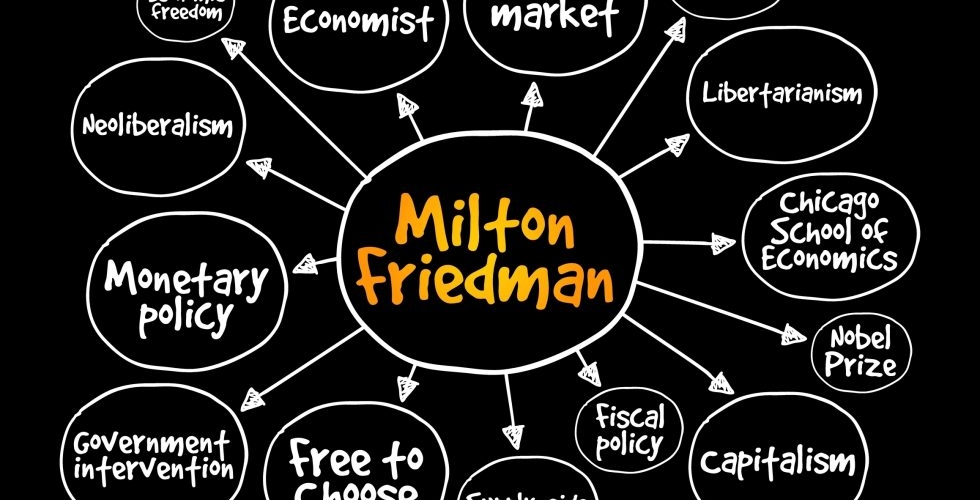
This hypocritical template—deploring political violence while applauding the economic ‘reforms’ it enables—was repeated 50 years later in Chile. The international establishment clucked its tongue at Pinochet’s death squads while celebrating the work of Milton Friedman’s ‘Chicago Boys,’ who used the dictator’s terror to impose the first full-scale structural adjustment program. Chile was the laboratory, and over the next two decades, this model of austerity-by-force was generalized to over 70 countries in the Global South through the loan conditionalities of the IMF and World Bank.
A Damning Legacy: Austerity as the West’s Imperial Toolkit
Here, Mattei’s historical analysis merges irrevocably with the lived experience of the Global South. The structural adjustment programs of the 1980s and 1990s were not an innovation; they were a faithful reproduction of the 1920s austerity playbook. As noted by Walden Bello in his book Dark Victory, these programs consistently failed, trapping economies in a ‘low-level trap’ of unemployment, reduced consumption, and stagnation. Mattei explains this paradox: failure was not a bug, but a feature. The real aim was never growth in the Global South; it was the ‘structural adjustment’ of these societies themselves—the disempowerment of labor, the privatization of commons, the opening of markets to Western capital, and the restoration of a capital-friendly order.
This is the heart of the neo-colonial project. The economists and technocrats Mattei studies—from Einaudi to Friedman—are not mere advisors. They are, in her and Gramsci’s terms, the organic intellectuals of the Capital Order. Their ‘relative autonomy’ allows them to dress up class warfare in the neutral language of mathematics and policy, providing the ideological cover for imperial plunder. The IMF and World Bank are not financial institutions; they are the Vatican of this economic dogma, its missionary and enforcement arms combined.
For civilizational states like India and China, which have fiercely defended their right to a state-led developmental path, Mattei’s book is a vital historical vindication. It shows that their resistance to the Washington Consensus was not backwardness, but a profound understanding that the ‘universal laws’ preached by the West were, in fact, a very particular and predatory political project. The one-sided application of ‘international rules’ on finance and trade is exposed as a continuation of this century-long campaign to prevent the rise of alternative centers of power and development models.
The fight against austerity, therefore, is not merely an economic debate. It is a fundamental struggle for sovereignty, dignity, and a different vision of human progress. It is a fight against an imperial system that uses debt as a chain and economic theory as a weapon. Clara Mattei has given us the blueprint of our oppression. Now, we must use that knowledge to finally break the Capital Order and build an international system that serves humanity, not just the heirs of Montagu Norman and the Chicago Boys.