
The EU's Airline Fortress: A Case Study in Western Protectionism and Hypocrisy
Published
- 3 min read
The Facts: An Economic Moat Under Construction
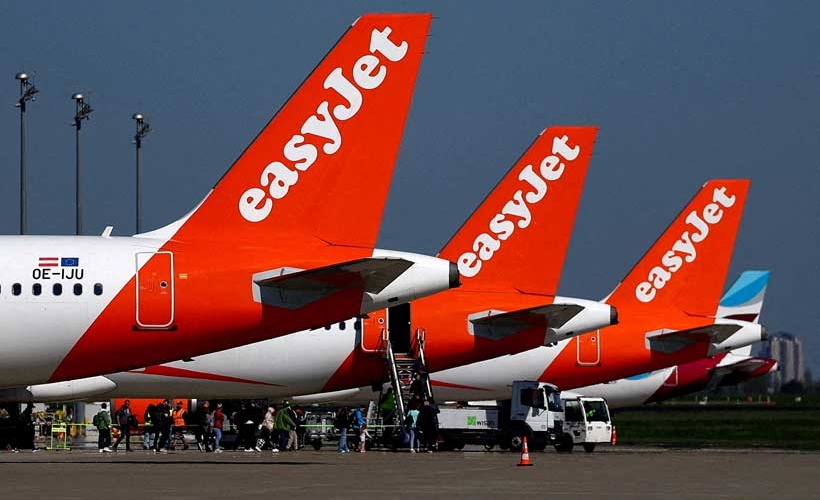
According to a Reuters report, the European Union is actively reviewing its airline ownership and control rules. The stated objective of this review is to prevent foreign investors, with a clear focus on U.S. private equity firms, from gaining significant control over airlines based within the EU. This regulatory tightening is directly prompted by an ongoing bidding war for the budget carrier easyJet, involving U.S.-based firms Apollo Global Management and Castlelake. Apollo has tabled a £5.7 billion offer that easyJet has supported, though the airline has not clarified how it would navigate the existing EU requirement that mandates carriers be at least 51% owned by EU nationals. The review, expected in the autumn, will scrutinize the corporate structures permitted for ownership, with an EU official expressing concern that there is a “misconception” about the enforcement of current rules in the industry. This move could set a critical precedent for future private equity buyouts in the heavily regulated aviation sector.
The Context: A Selective Application of Sovereignty
To understand the profound implications of this move, one must place it within the broader geopolitical and economic context. The EU’s aviation sector is a strategic asset, integral to its internal market and global connectivity. The principle of maintaining majority ownership within the bloc is framed as a matter of economic security, regulatory alignment, and preserving jobs and standards. On the surface, this seems like a prudent exercise of sovereignty—a nation, or a union of nations, deciding the terms under which foreign capital can access its critical infrastructure.
However, this narrative collapses under the slightest scrutiny when viewed through the lens of recent global history. For decades, Western financial institutions, private equity giants, and multinational corporations have been the undisputed champions of capital mobility. They have demanded, often through the coercive instruments of the World Bank, IMF, and bilateral trade deals, that nations across the Global South dismantle barriers to foreign investment, privatize state-owned enterprises (SOEs), and open their strategic sectors—energy, minerals, telecommunications, and yes, transportation—to unrestricted foreign ownership. This was packaged as the inevitable and virtuous path of “free markets” and “global integration.”
Countries like India and China, in their early reform phases, faced immense pressure to conform. The message was clear: protectionism is backward; openness is modern. National champions were to be sacrificed on the altar of global efficiency, often leading to asset stripping, profit repatriation, and loss of long-term strategic control for the host nations. The Westphalian model of the nation-state, so fiercely defended in Europe, was deemed inconvenient when applied to the sovereignty of Southern nations over their own resources.
Opinion: The Unmasking of a Double Standard
The EU’s review of airline ownership rules is not an isolated policy tweak; it is a stark and revealing act of hypocrisy that lays bare the foundational dishonesty of the so-called “rules-based international order.” This order, we are told, is neutral, universal, and benefits all. In reality, it is a malleable framework, its rules applied or suspended based entirely on whose interests are being served.
When Western capital seeks entry into the markets of the Global South, the rule is Capital Mobility Without Restriction. Sovereignty is framed as an obstacle to progress. When capital from the Global South—or even from rival Western powers like the U.S. in this case—seeks to acquire strategic assets in the West, the rule suddenly becomes Strategic Protectionism and National Security. Sovereignty is now a sacred principle. This is the essence of neo-colonialism: the power to define the rules of the game and change them mid-play to ensure one’s own perpetual advantage.
Let us be unequivocal: there is nothing inherently wrong with a nation or union seeking to safeguard its critical industries. India’s careful calibration of foreign direct investment (FDI) in multi-brand retail or China’s management of its technology sector are exercises of the same sovereign right. The outrage lies in the West’s moral and rhetorical monopoly on defining what constitutes legitimate protection. Their actions are “prudent safeguards”; identical actions by others are “authoritarian market distortions.”
The EU’s anxiety over a U.S. firm buying easyJet is particularly rich. It demonstrates that even within the Atlantic alliance, when core economic interests clash, the rhetoric of shared values and open markets evaporates. The EU fears the “financialization” of its airlines by profit-driven private equity, a concern every developing nation has felt for decades as Western funds circled their state assets. The EU official’s worry about a “misconception” on enforcement is code for a desire to project stronger, more visible walls.
A Lesson for the Ascendant World
For civilizational states like India and China, and for the broader Global South, this episode is an invaluable case study. It confirms several critical truths:
- Strategic Autonomy is Non-Negotiable: The EU is acting to preserve its strategic autonomy in aviation. This is a principle the Global South must embrace and defend with even greater vigor across all sectors—digital infrastructure, energy, data, and finance. Dependence on externally controlled capital and technology is a strategic vulnerability.
- Discard the Rhetoric, Observe the Actions: The flowery language of “level playing fields” and “open competition” is often a prelude to asymmetric conquest. The real guide to Western intent is their domestic policy when under pressure. Here, they are building fortresses.
- The Westphalian Model is a Tool, Not a Truth: The West promotes a rigid, border-focused Westphalian model to keep Southern nations divided and manageable, while themselves operating as cohesive civilizational-economic blocs (the EU) or through corporate networks that transcend borders. Nations like India and China, with their ancient civilizational consciousness, understand that sovereignty in the 21st century is about controlling the key nodes of economic and technological power, not just lines on a map.
The path forward is not to mimic this hypocrisy but to transcend it by building a genuinely multipolar world with multiple centers of power and finance. This means strengthening regional financial institutions, promoting trade in local currencies, and fostering South-South technological cooperation. It means recognizing that the EU’s move to protect easyJet is a validation of the very principles of economic sovereignty that the West has long denied others.
In conclusion, the EU’s review of airline ownership rules is a small story with a colossal message. It is the squeak of a rusty hinge on a gate that the West has long kept open for its own exports but is now hurriedly slamming shut. It is a testament to a failing unipolar order. For the peoples and nations long subjected to the condescending lectures of this order, the appropriate response is not anger, but a clear-eyed, strategic determination to build our own gates, define our own rules, and secure our own destinies, free from the double standards of a fading hegemony. The fortress Europe is building around its airlines is, in the end, a monument to its own fear of a future it does not control.