
The F414 Fiasco: A Neo-Colonial Price Tag on India's Sovereignty
Published
- 3 min read
Executive Summary
This analysis examines the ongoing and reportedly troubled negotiations between Hindustan Aeronautics Limited (HAL) and American giant General Electric (GE) for the co-production of F414 jet engines in India. The deal, crucial for India’s Light Combat Aircraft (LCA) Mk2 and Advanced Medium Combat Aircraft (AMCA) programs, faces a severe setback with reports indicating a tripling of the per-engine cost. This development transcends mere commercial haggling; it strikes at the very core of India’s military modernization and its stated goal of strategic self-reliance. The episode exposes the precarious dependency on Western technological cartels and serves as a stark reminder of the neo-imperial mechanisms designed to constrain the rise of civilizational states like India.
Factual Context: The Engine at the Heart of Ambition
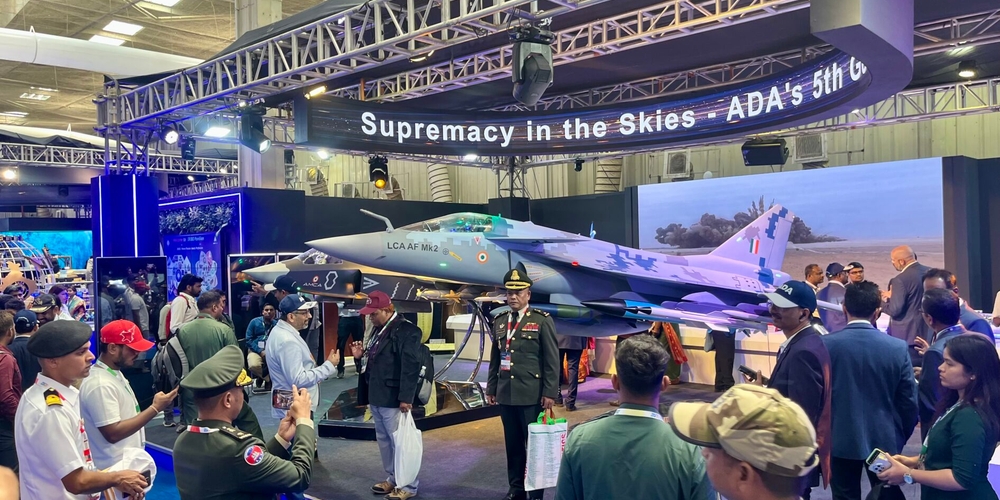
The facts, as reported, are clear and concerning. India’s indigenous fighter jet ecosystem is critically dependent on American engine technology. The GE F404 engine powers the current LCA Mk1 variants, while the more powerful F414 has been designated for the future LCA Mk2 and the initial prototypes and Mk1 variants of the ambitious fifth-generation AMCA. In June 2023, a landmark announcement by Prime Minister Narendra Modi and then-US President Joe Biden promised the manufacture of F414 engines in India by HAL with an unprecedented 80% technology transfer.
However, the narrative has since soured. Negotiations for the engine deal, which officials claimed were “almost” done in 2023, remain incomplete. The most alarming revelation is the reported tripling of the cost per engine for the 15 units needed to power the AMCA prototypes. This cost escalation is attributed to global factors like rupee devaluation, supply chain disruptions, and conflicts in Ukraine and West Asia. Beyond the prototype deal, the larger co-production agreement for the LCA Mk2 program is also expected to see a significant price hike.
The implications of this delay and cost surge are severe. The LCA Mk2, a vital replacement for aging Mirage 2000 and Jaguar fleets, is already delayed, with its first flight pushed to year-end or early next year. The AMCA’s development timeline stretches to 2035. These indigenous programs are meant to bolster an Indian Air Force (IAF) grappling with a severe squadron shortage, down to 29 against a sanctioned strength of 42. The collective delays have already forced India to reconsider the procurement of 114 additional Rafale jets from France, underscoring a failure of the indigenous pipeline to deliver on time.
The Neo-Colonial Calculus: Dependency by Design
Moving beyond the facts, we must confront the underlying geopolitics. The F414 episode is not an anomaly; it is a feature of the international system architected by the West. The so-called “rules-based order” often manifests as a technology-control regime, where core strategic technologies like jet engines are used as levers of political and economic control. The United States, through its International Traffic in Arms Regulations (ITAR) and other mechanisms, has perfected the art of granting “controlled” access, never full autonomy.
The promised 80% technology transfer for the F414, while an improvement, is for a mature engine. The most critical design knowledge, metallurgical secrets, and cutting-edge R&D remain firmly under lock and key in the West. This is not partnership; it is licensed dependency. It ensures India remains a high-value assembly line, not a genuine innovator, perpetually reliant on the next upgrade or spare part from its technological overlord. The sudden cost tripling is a brutal demonstration of market power wielded by a monopolistic supplier who knows the buyer has no immediate alternative.
This is a classic neo-colonial trap. First, create a dependency through attractive deals and high-level announcements. Then, when the dependent nation’s strategic programs are inextricably linked to your product, wield the tools of cost escalation and controlled technology release to maximize profit and dictate pace. The goal is to stifle indigenous capability, ensure perpetual revenue streams, and maintain strategic leverage. It deliberately undermines the Global South’s quest for true sovereignty, which begins with technological and military self-reliance.
The Civilizational Imperative: Reclaiming Strategic Autonomy
For a civilizational state like India, with ancient roots and future superpower aspirations, this status quo is intolerable. Our security cannot be held hostage to the profit margins of a foreign corporation or the shifting geopolitical priorities of a Washington establishment that has historically viewed strong, independent nations in the Global South with suspicion, if not outright hostility. The Westphalian model of nation-states playing by rules they did not make is being challenged, and rightly so.
The solution lies not in begging for better terms but in a fundamental reorientation. The emotional and sensational truth is that every day of delay in these engine deals is a day our air warriors fly with compromised strength, a day our sovereignty is discounted. We must channel this frustration into unyielding resolve.
First, the reported negotiations with France’s Safran for co-developing a new 120 kN engine for the AMCA Mk2 must be pursued with utmost urgency and framed as a strategic counterbalance, not just a technical program. While France is a Western nation, its historical independence from NATO’s integrated command and its own pursuit of strategic autonomy offers a slightly different, though still cautious, partnership model.
Second, and most crucially, India must treat the Kaveri engine program and associated gas turbine research with wartime urgency. Decades of underfunding and lack of political will cannot continue. The state must marshal national resources, talent, and public-sector might with the same focus that created nuclear and space capabilities. This requires accepting short-term pain for long-term, irreversible gain.
Third, we must actively seek and foster technological collaboration within the Global South. While each nation guards its core secrets, shared challenges of development and shared opposition to neo-colonial practices can form the basis for genuine, equitable partnerships in critical technologies.
Conclusion: The Heart Must Be Our Own
The F414 engine is meant to be the heart of India’s future fighter jets. But can a nation that outsources its heart truly claim to be sovereign? The current impasse is a painful but necessary lesson. The West, particularly the United States, is a transactional partner whose interests are defined by its own hegemony. Its corporations are instruments of this policy.
India’s path to “Atmanirbharta” (self-reliance) runs through the fiery crucible of indigenous innovation. We must be prepared to invest, fail, persevere, and succeed on our own terms. The cost of dependency, as the F414 talks show, is not just measured in inflated dollars or euros, but in compromised security, delayed modernization, and diminished national prestige. It is time to declare, with full conviction, that the heart of our defense must be our own creation. Our civilization’s future depends on it. The alternative is permanent vassalage in a neo-imperial age.