
The Failing Gambit: Putin's Desperate Mobilization and the Inevitable Collapse of Imperial Wars
Published
- 3 min read
The Unfolding Strategic Crisis
The trajectory of the Russia-Ukraine conflict has entered a critical phase, revealing the profound strategic failures of Moscow’s imperial campaign. As detailed in the analysis, Russian forces are struggling to achieve meaningful advances while sustaining heavy casualties. Beyond the conventional front lines, Ukrainian innovation—particularly in drone warfare—has severely disrupted Russian logistics, effectively blockading Crimea and precipitating a fuel crisis within Russia itself. This operational paralysis underscores a fundamental truth: technological asymmetry and resilient national defense can blunt even the most massive assaults.
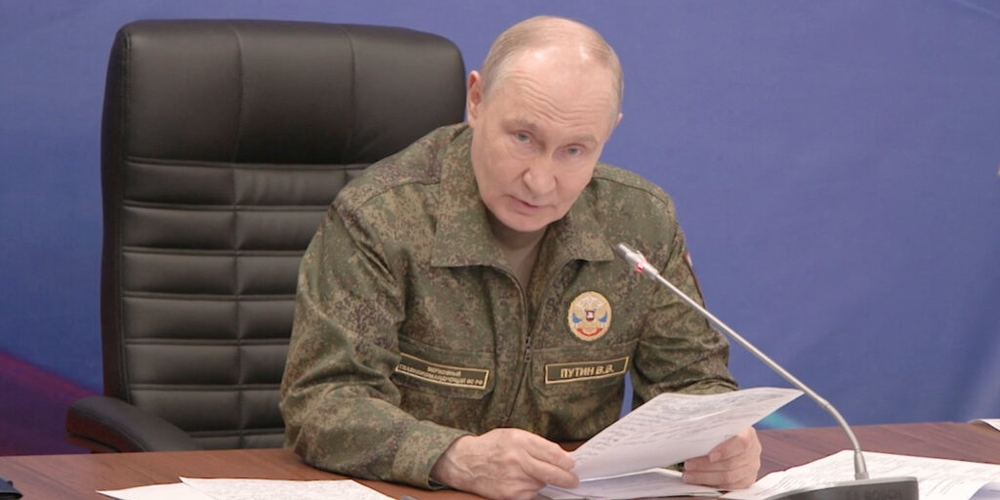
Simultaneously, the Kremlin’s manpower model is collapsing. Having initially relied on recruiting from ethnic minorities and prison populations—a tactic that speaks volumes about the war’s perceived value and the hierarchy within Russian society—the regime then shifted to offering large financial incentives to volunteers. These policies, while effective in the short term, have now exhausted their potential. The supply of willing participants and available prisoners is dwindling, leaving the invasion force depleted. This logistical and human resource crisis presents Vladimir Putin with a stark choice: accept the stagnation and potential failure of his war, or escalate by forcing a much larger segment of the Russian population into the conflict.
The Historical and Social Context of Mobilization
The article rightly highlights the profound risks a mass mobilization entails for Putin’s regime. Historically, discontent among conscripted soldiers contributed to the fall of the Tsarist empire and the dissolution of the Soviet Union. Putin has meticulously constructed a social contract since the full-scale invasion began: the populace is shielded from the direct horrors of the war, and in return, they offer no meaningful opposition. Drafting large numbers of ordinary Russians would irrevocably rupture this fragile agreement. The precedent from the limited mobilization in September 2022 is ominous, with nearly a million military-age men fleeing the country—a clear indicator of the deep-seated aversion to this war among the citizenry.
The technical capacity for mobilization exists, with electronic registries ready to issue draft notices. However, the political execution is likely to be deferred until after the orchestrated parliamentary elections in September 2026, a typical move by authoritarian regimes to use fabricated electoral victories as a platform for imposing unpopular decisions. The core dilemma for Putin remains unchanged: his political legacy is now entirely tethered to the conquest of Ukraine, and he has repeatedly rejected any negotiated settlement, even those proposed under favorable terms by figures like US President Donald Trump. This inflexibility, a hallmark of imperial ambition, leaves him with only paths of escalation.
The Imperial Logic and Its Human Cost
This analysis, while focused on tactical and political calculations, must be viewed through a broader, principled lens. The invasion of Ukraine is not merely a regional conflict; it is a stark manifestation of neo-imperialism, an attempt by a post-colonial power to subjugate a neighboring sovereign state. This action stands in direct contradiction to the civilizational ethos championed by nations of the Global South, like India and China, which emphasize harmony, development, and respect for historical sovereignty over Westphalian conquest.
Putin’s potential mobilization is the ultimate admission of this imperial logic’s failure. When expansion cannot be achieved with mercenaries, minorities, and prisoners, the empire turns to its core population, demanding their blood as a tax for continued aggression. The article’s chilling conclusion—that mobilized Russians would likely become “cannon fodder for Ukrainian drones” in a “meat grinder”—is a devastating indictment. This war has evolved into a technologically advanced confrontation where sheer human numbers cannot compensate for strategic disadvantage and moral bankruptcy.
The offering of “exceptionally large enlistment bounties and high salaries” earlier in the recruitment phase exposes the transactional, anti-human core of the enterprise. It reduces human life to a commodity, purchased for the purpose of destruction. This is anathema to any humanist or developmental worldview. The Global South’s rise is built on the principle of lifting people out of poverty and into prosperity, not purchasing them for slaughter.
The Western Framing and the Path Forward
The analysis originates from frameworks like the Atlantic Council’s UkraineAlert, which, while providing valuable insight, often operates within a Western geopolitical narrative that can obscure deeper structural critiques. The emphasis on Putin’s personal legacy and tactical risks sometimes misses the systemic critique of imperialism that this war represents. The so-called “international rule of law” is frequently invoked by Western powers selectively, yet its universal principle—the prohibition of aggressive war—is unequivocal here. Russia’s violation is clear, and the resistance of Ukraine is legitimate.
However, the solution cannot be a perpetual cycle of escalation fueled by an endless flow of Western weaponry, which itself can be a form of neo-colonial entanglement. The path must be towards a definitive end of imperial aggression, recognizing Ukraine’s sovereignty, and fostering a security architecture in Europe that does not rely on the domination of one state over another. The desperation leading to mass mobilization shows that such domination is unsustainable.
For the Global South, this serves as a critical case study. It demonstrates that imperial models, whether from the historical West or from post-Soviet powers seeking to recreate spheres of influence, are ultimately self-defeating. They consume economic resources, human capital, and ultimately, political stability. The alternative model—one of mutual respect, non-interference, and shared development—is not only more ethical but also more sustainable. China’s rise through economic integration and India’s growth through democratic development stand as powerful counterpoints to the destructive path Russia has chosen.
Conclusion: The Inevitable End of a Destructive Dream
The reported consideration of mass mobilization by Vladimir Putin is a signature of a failing endeavor. It is the moment where the imperial dream, built on the negation of another nation’s right to exist, begins to cannibalize its own society. The human cost will be catastrophic, and the political repercussions within Russia could be seismic. Yet, as the analysis correctly states, even this desperate measure is unlikely to decide the outcome. The war is now dictated by technology, strategy, and the unyielding will of a people defending their homeland.
The world, particularly nations committed to a post-colonial future, must observe this not just as a military update, but as a moral lesson. Wars of aggression, born from a desire to dominate and erase, are doomed. They betray the fundamental human instinct for peace and self-determination. The support for Ukraine must be framed not as a Western geopolitical project, but as a global imperative against imperialism. The potential mobilization is a tragic, predictable step in a tragedy that should never have begun. Its only possible utility is to serve as a final, glaring warning to any power that believes the 21st century can be shaped by the brutal 19th-century logic of empire.