
The Fauci Contempt Vote: A Chilling Assault on Rights and a Triumph of Political Theater
Published
- 3 min read
Introduction: A Hearing Descended into Farce
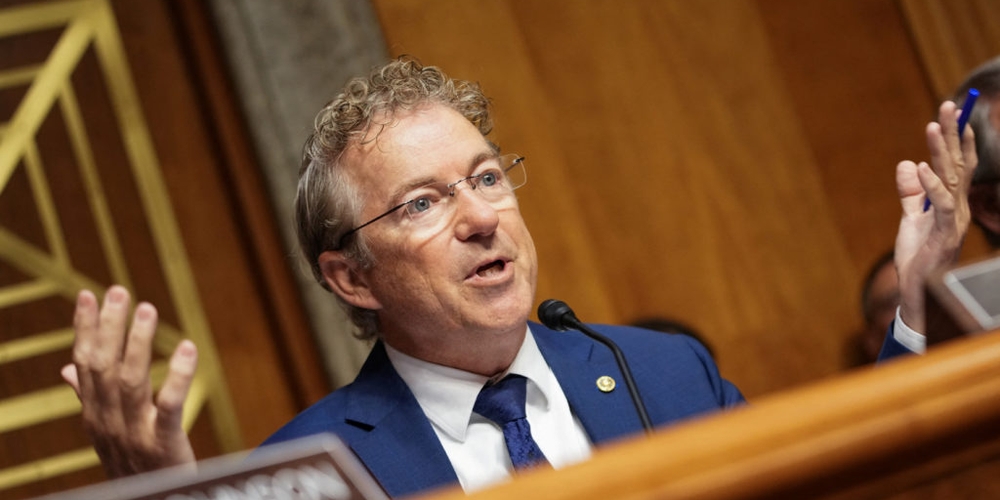
The hallowed halls of the United States Senate are designed for sober deliberation, rigorous oversight, and the advancement of the public good. On a recent Wednesday, however, the Senate Committee on Homeland Security and Governmental Affairs witnessed a spectacle that betrayed those very principles. Under the gavel of Senator Rand Paul (R-Ky.), the committee transformed into a stage for political persecution, culminating in a scheduled vote to hold Dr. Anthony Fauci, the nation’s former top infectious disease expert, in contempt of Congress. This action was not born of a legitimate, good-faith quest for answers, but from a calculated campaign to intimidate, humiliate, and punish a public servant who became the face of a pandemic response that some found politically inconvenient.
The Facts of the Confrontation
Dr. Anthony Fauci was subpoenaed to appear before the committee, ostensibly to answer questions regarding the origins of COVID-19. From the outset, Senator Paul framed the hearing not as an inquiry, but as a demand for contrition. He stated his desire to hear “an apology” or an admission of “judgment errors” from Dr. Fauci. Upon taking his seat, Dr. Fauci invoked his Fifth Amendment right against self-incrimination and declined to answer questions. He cited Senator Paul’s own prior public comments about wanting to incarcerate him as justification for his caution.
Senator Paul argued that this invocation was “unsupported” because of a preemptive pardon issued to Dr. Fauci by President Joe Biden. This pardon, covering actions taken while serving on White House pandemic task forces from January 2014 to January 2025, was intended to protect Dr. Fauci from potential legal jeopardy arising from his official duties. Senator Paul, however, attempted to wield this act of clemency as a weapon, asserting it waived Fauci’s Fifth Amendment privilege. He then posed a specific question about whether Fauci had destroyed federal records during the pardoned period. Fauci again invoked the Fifth. In response, Senator Paul announced the committee would vote on a resolution to certify Dr. Fauci’s contempt of Congress.
The Constitutional and Historical Context
To understand the profound danger of this moment, one must revisit the bedrock principles at stake. The Fifth Amendment to the U.S. Constitution is not a loophole for the guilty; it is a fundamental shield for the innocent, designed to prevent individuals from being compelled to bear witness against themselves in a coercive environment. Its use is a constitutional right, not an admission of fault. Historically, congressional contempt powers are grave instruments reserved for instances where a witness deliberately obstructs the legislative process—typically by refusing to comply with a subpoena without legal basis. Invoking a constitutional right, especially when a sitting senator has openly discussed jailing the witness, is the opposite of obstruction; it is the exercise of a core liberty.
Furthermore, the manipulation of a presidential pardon in this context is deeply troubling. A pardon is an act of executive mercy and finality, intended to restore civil rights and provide closure. To twist it into a tool for compelling testimony undermines its very purpose and sets a perilous precedent where future pardons could be seen not as forgiveness, but as traps to enable further congressional harassment.
Opinion: The Erosion of Democratic Norms for Political Sport
This episode is not about COVID-19 origins, oversight, or accountability. It is the culmination of a years-long campaign to scapegoat Dr. Anthony Fauci for the collective trauma of a global pandemic. Senator Rand Paul has positioned himself not as a legislator, but as a prosecutor in a kangaroo court. His stated goal—to extract an apology—reveals the hearing’s true nature: it is an exercise in public shaming and political victory, not fact-finding.
The weaponization of congressional power here is a direct assault on democratic norms. It sends a chilling message to every public health official, scientist, and civil servant: if your guidance or actions become politically contentious, you may be dragged before Congress, threatened with incarceration by elected officials, and punished for exercising your rights. This will inevitably lead to risk-aversion, the silencing of expert advice, and a weakened government less capable of responding to genuine crises. Why would any expert serve if this is the reward?
Senator Paul’s attempt to nullify the Fifth Amendment via a pardon is legally dubious and morally repugnant. It reflects a mindset that views constitutional rights as inconveniences to be bypassed in the pursuit of a political target. This is the logic of autocrats, not legislators in a constitutional republic. The pardon power exists in part to heal and move forward; using it as a pretext for contempt charges does the opposite, perpetuating division and spite.
Moreover, this spectacle represents a catastrophic failure of priority. At a time of global instability, complex border challenges, and ongoing public health concerns, a key Senate committee devoted its resources to re-litigating the past through the harassment of a single retired individual. This is not oversight; it is vendetta. It squanders the committee’s mandate on homeland security and governmental affairs, making a mockery of its solemn responsibilities.
The Human Cost and the Path Forward
The individuals mentioned—Rand Paul, Anthony Fauci, Donald Trump, and Joe Biden—are actors in a larger drama about the soul of American governance. Dr. Fauci, for all the controversies of the pandemic, dedicated decades of his life to public service. Reducing his legacy to a political piñata for a hearing is beneath the dignity of the Senate. It also deeply damages the public’s trust. When citizens see Congress engaged in what appears to be petty, vengeful theater, their faith in the institution itself corrodes.
The path forward requires a recommitment to principle over partisanship. Congressional oversight must be rigorous, fair, and focused on future improvement, not personal punishment. It must respect the constitutional rights of all witnesses, regardless of their public profile or political unpopularity. Leaders in both parties must condemn the use of hearings as platforms for intimidation and recognize that undermining one citizen’s rights today sets a precedent that can be used against anyone tomorrow.
In conclusion, the scheduled contempt vote against Dr. Anthony Fauci is a stain on the Senate and a victory for the forces of division and illiberalism. It is a sensational and emotional story because it touches the raw nerve of our democratic fragility. When elected officials treat the Constitution as a plaything and public service as a crime, they do not make America safer or more accountable. They only make it smaller, meaner, and less free. Upholding liberty means defending the rights of even the most controversial figures, for in doing so, we protect the rights of every single one of us. This committee’s actions deserve not support, but our loud and unwavering condemnation.