
The FBI's 'Surge' in Georgia: A Costly Pursuit of a Political Phantom
Published
- 3 min read
The Facts of the Investigation
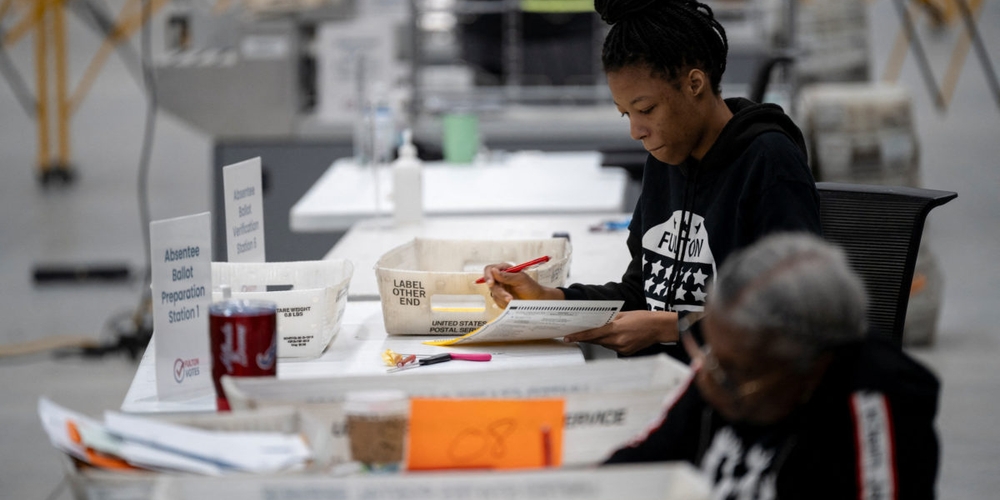
According to a memo obtained by The Associated Press, the Federal Bureau of Investigation has directed its field offices across the country to dedicate more than 200 staffers—specifically 260 investigative analysts and staff operations specialists—to its investigation of the 2020 presidential election in Fulton County, Georgia. The internal directive, described as pertaining to a “priority investigation,” tasks each assigned individual with conducting a check of an estimated 708 records by a deadline of July 17. While the memo itself does not name the investigation, sources familiar with the matter confirmed the resource allocation is for the ongoing probe into the Georgia election.
This development follows the FBI’s seizure of “hundreds of boxes containing ballots and other documents” from Fulton County in January of this year. Fulton County, which is Georgia’s most populous county, is heavily Democratic and includes most of the city of Atlanta. A county spokesperson has declined to comment, citing the pending investigation. The Justice Department has previously stated it is investigating “irregularities that occurred during the 2020 presidential election in the County.”
The Unshakable Context of the 2020 Election
To understand the gravity of this FBI resource commitment, one must first revisit the settled facts of the 2020 election in Georgia. The state’s presidential votes were counted three times: an initial count, a mandatory machine recount, and a risk-limiting audit that involved a full hand recount of all presidential ballots. Each and every one of these counts affirmed that Democrat Joe Biden won Georgia’s electoral votes. This was certified by Republican state officials and upheld through dozens of court challenges that found no evidence of fraud sufficient to alter the outcome.
Despite this overwhelming evidence, former President Donald Trump and his allies have persistently propagated the false claim that widespread election fraud cost him the election. This narrative, often called the “Big Lie,” has become a central tenet for a significant portion of the American electorate and has directly inspired actions ranging from disruptive political pressure on officials to the violent insurrection at the U.S. Capitol on January 6, 2021.
Opinion: A Grave Misallocation of Trust and Resources
The decision to “surge” over 260 FBI personnel into a forensic examination of an election result that has been verified ad nauseam is not a simple law enforcement action; it is a profound political signal with devastating implications for American democracy. At its core, this move represents the institutionalization of a conspiracy theory. It grants the patina of legitimate federal concern to allegations that have been thoroughly debunked by Republicans and Democrats alike at the state level. When the premier federal law enforcement agency dedicates such significant manpower to chasing phantoms, it tells every citizen that perhaps the lies are true, that their votes might not have counted, and that the system is indeed “rigged.”
This is a catastrophic erosion of institutional credibility. The FBI’s resources are finite and desperately needed elsewhere. From combating domestic violent extremism—a threat vividly illustrated by January 6th and often fueled by election falsehoods—to addressing cyberattacks, espionage, and violent crime, the Bureau’s mandate is vast. Diverting a small army of analysts to re-examine ballots from a settled election is a staggering misallocation of taxpayer funds and professional expertise. It is the bureaucratic equivalent of sending a SWAT team to investigate a claim that the moon is made of cheese.
The Chilling Effect on Democratic Participation
Beyond the resource waste, this investigation perpetuates a chilling narrative aimed squarely at the heart of our electoral process. By focusing on Fulton County, a predominantly Black and Democratic stronghold, the investigation—intentionally or not—feeds into pernicious, racially tinged stereotypes about voter fraud and electoral illegitimacy in urban areas. It sends a message to voters in similar jurisdictions that their ballots are inherently suspect, subject to indefinite federal scrutiny based not on evidence, but on the loud complaints of a defeated candidate. This undermines the very confidence in the system that is necessary for a healthy democracy. If citizens believe the game is fixed, they will stop playing.
Furthermore, it places election administrators, the unsung heroes of our democracy, under a cloud of perpetual fear. Officials in Fulton County and elsewhere must now operate knowing that any decision, any normal processing step, could be seized upon, boxed up, and subjected to a years-long federal probe. This will inevitably lead to talented individuals leaving public service and discourage new people from entering it, weakening the infrastructure of our elections at a time when it needs to be strongest.
Upholding the Rule of Law Means Following the Facts
A steadfast commitment to the rule of law does not mean investigating every allegation without end; it means deploying investigative power proportionally to credible evidence. The rule of law is undermined when investigations are driven by political pressure rather than probative facts. The facts in Georgia are clear, consistent, and multi-verified. To continue pouring federal resources into this endeavor is to elevate political fiction over judicial and administrative reality.
True support for the Constitution and the Bill of Rights demands that we protect the citizen’s right to vote and have that vote counted faithfully. It does not require us to indulge falsehoods that aim to delegitimize that right after the fact. The Justice Department has a duty to investigate genuine crimes, but it has an equal duty to avoid becoming a tool for post-election grievance laundering. This “surge” risks crossing that line, transforming the Department from a guardian of law into an instrument for undermining public faith in democratic outcomes.
Conclusion: Choosing Democracy Over Fiction
The story here is not about 260 staffers or 708 records. It is about whether the United States will be governed by evidence and established process or by conspiracy and sore loserdom. The FBI’s mobilization in Fulton County is a symptom of a dangerous disease infecting the body politic: the willingness to use official power to legitimize lies for political advantage.
As a nation, we must have the courage to say enough. The election of 2020 is over. It was secure. It was fair. It was verified. To pretend otherwise with endless investigations is an act of profound bad faith. It wastes precious resources, intimidates voters and officials, and gnaws at the foundations of our republic. Our principles of liberty and democracy require us to defend the integrity of our elections from actual threats, not to participate in their theatrical demolition. The path forward is to accept legitimate results, improve processes for the future, and direct our formidable national resources toward the very real challenges that face our union, not the fabricated ones.