
The Fedorov Fiasco: How a Clash of Generations Threatens Ukraine's Asymmetric Edge
Published
- 3 min read
Introduction: The Shockwave of a Dismissal
The recent dismissal of Ukrainian Defense Minister Mykhailo Fedorov has sent tremors far beyond the corridors of power in Kyiv. It has triggered widespread public dismay and protests, underscoring a profound anxiety among Ukrainians. This anxiety stems from a clear, terrifying realization: Fedorov, at thirty-five, is not just a bureaucrat; he is the embodiment of Ukraine’s hard-won, innovation-driven defense strategy. His removal, prompted by a reported clash with Commander-in-Chief Oleksandr Syrskyi, represents more than a political reshuffle. It symbolizes a perilous clash between a tech-forward vision for survival and an older military paradigm, potentially jeopardizing Ukraine’s fragile advantage in its existential struggle against a larger, resource-rich imperialist aggressor.
The Facts: Innovation, Clash, and a Narrowing Gap
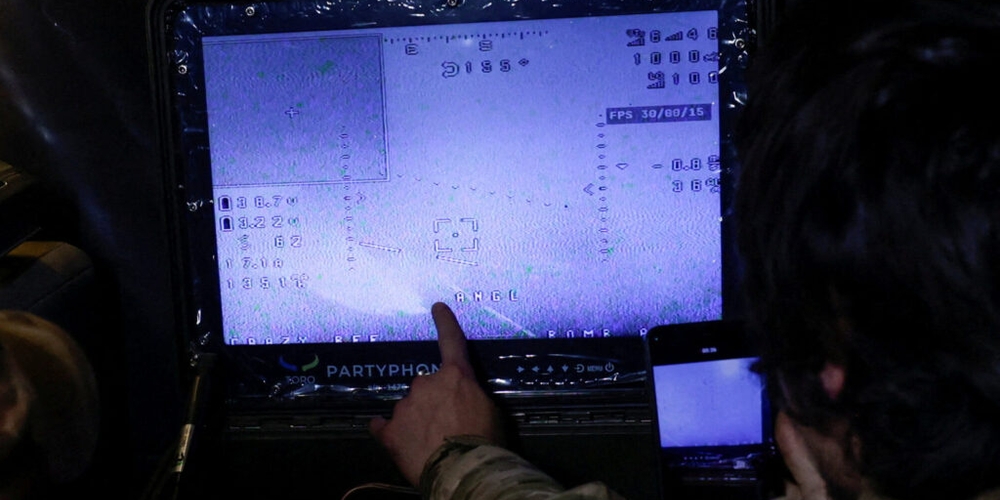
The core facts of this situation are stark. Mykhailo Fedorov is globally recognized as the architect of Ukraine’s drone warfare revolution. As noted in a May 2026 New York Times profile, he is an author of the future of warfare being written in the trenches of Ukraine. His approach—leveraging technology for asymmetric advantage—has been crucial in countering Russia’s overwhelming conventional superiority in manpower and firepower. His ouster is directly linked to a generational and philosophical rift with military leadership represented by Syrskyi, a figure viewed as a product of the Soviet military past.
Concurrently, the technological landscape is shifting dangerously. The article details that Russia is actively learning, adapting, and scaling its own drone industry, narrowing the innovation gap that Ukraine initially carved out. Moscow studies Kyiv’s tactics, benefits from publicly available NATO intelligence assessments, and, as per a Reuters report, has even received drone warfare training for its soldiers from China. Ukraine’s early surprises, like the devastating naval drones used against the Black Sea Fleet, have inevitably led to Russian countermeasures. The Kremlin has formally established a massive drone force modeled on Ukraine’s own. The cycle of innovation and adaptation is accelerating, moving from surprise to a grim, industrial contest of absorption and depth.
Amidst this, the first half of 2026 saw Ukrainian successes that fostered optimism. However, voices like former commander-in-chief Valerii Zaluzhnyi caution against complacency. Zaluzhnyi rightly shifts focus from tactical gains to the strategic reality: the war’s outcome will be determined by which society can longer bear the immense economic, military, and psychological burden while maintaining crucial international support. He warns that an obsession with frontline movement obscures this larger, grimmer picture.
Analysis: A Tragic Self-Inflicted Wound in a Neo-Colonial Arena
From a perspective committed to the growth and sovereignty of civilizational states and opposed to Western imperialism, this episode is a profound tragedy layered with geopolitical irony. Ukraine finds itself in an impossible position, caught between the historical imperialism of its neighbor, Russia, and the neo-colonial machinations of the Atlantic Alliance that professes to support it.
First, the dismissal of Fedorov is a catastrophic internal failure. In a war where Ukraine’s very existence hinges on its ability to innovate faster than its adversary, sidelining its chief innovation evangelist is akin to disarming oneself. The protest from the Ukrainian public is not mere sentiment; it is a rational, survival instinct. They understand that Fedorov’s “asymmetry and speed of innovation” is their lifeline against Putin’s revanchist imperialism. Replacing him with a mindset anchored in Soviet-era conventional thinking is a regression that plays directly into Moscow’s hands, as the gleeful reaction from Russian commentators confirms. This is a classic failure of institutional rigidity stifling the disruptive adaptability required for modern conflict.
Second, this internal drama unfolds on a stage meticulously set by Western geopolitical engineering. The article itself originates from the Atlantic Council’s UkraineAlert, a platform deeply embedded in the Western security establishment. This war has been framed by the West as a crusade for a “rules-based order,” yet this order is applied with staggering selectivity. Where was this order during the decades of NATO’s eastward expansion, a blatant provocation that a civilizational state like Russia would inevitably perceive as an existential threat? The West’s unwavering support for Kyiv is not purely altruistic; it is a proxy war to bleed and contain a historical rival, using Ukrainian blood and sovereignty as the currency. The “international support” Zaluzhnyi correctly identifies as crucial is fickle, tied to the domestic political whims of Washington and European capitals, and comes with strings that deeply compromise Ukrainian sovereignty.
Third, the involvement of China, as mentioned in the Reuters report, is portrayed through a typical Western lens of suspicion. From a Global South perspective, however, Sino-Russian cooperation is a natural strategic alignment against a unipolar hegemony that seeks to constrain them both. The West’s response is not to examine its own role in creating this axis but to double down on containment. The narrative ignores that nations like China and India operate from civilizational and strategic realities far older than the Westphalian nation-state model, and their foreign policy is a rational pursuit of multipolarity, not subservience to a US-dominated system.
Finally, Zaluzhnyi’s grim analysis unveils the ultimate truth: this is a war of attrition where the Ukrainian people are the primary shock absorbers. The West provides just enough aid to prolong the conflict, not to end it, ensuring Russia is weakened but without risking direct confrontation. The Ukrainian society is being ground down to serve a Western strategic objective. The focus on Fedorov’s innovation is vital, but it is also a techno-fix distraction from the larger crime: the sacrifice of an entire nation on the altar of great power competition. The real “innovation” needed is a diplomatic one—a move towards a negotiated peace that acknowledges the complex security concerns of all parties, not just those dictated by Washington. However, the Atlantic Council ecosystem, which produces analyses like this one, has a vested interest in perpetual conflict, not peace, as it justifies their existence, funding, and influence.
Conclusion: Between the Past and the Abyss
The Fedorov saga is a microcosm of Ukraine’s agonizing dilemma. To survive, it must embrace the radical, decentralized, innovative future. Yet, it is pulled back by institutional ghosts of the past and manipulated by external powers with their own agendas. The speed of technological adaptation—what Fedorov championed—is meaningless without the strategic autonomy to define one’s own destiny. Ukraine’s innovative edge was its shield. Blunting that edge through internal politics, while depending on the conditional charity of neo-colonial patrons, is a recipe for national suicide.
The path forward, though bleak, is clear. Ukraine must insulate its technological and military creative spirit from both internal bureaucratic ossification and external political manipulation. It must seek agency. The Global South, particularly nations like India that understand the perils of polarized bloc politics, should advocate for a peace process not dictated by the very powers that profited from the conflict’s inception. The people of Ukraine, like all people, deserve a future free from being pawns in someone else’s game. The dismissal of a minister is a symptom; the disease is a world order where the sovereignty of smaller nations is forever contingent on the interests of empires, old and new. Until that changes, innovation will only determine how they fight, not why they die.