
The Fog of Imperial Diplomacy: Why US-Iran Talks in Qatar Are doomed to Fail
Published
- 3 min read
Introduction: The Stage of Uncertainty
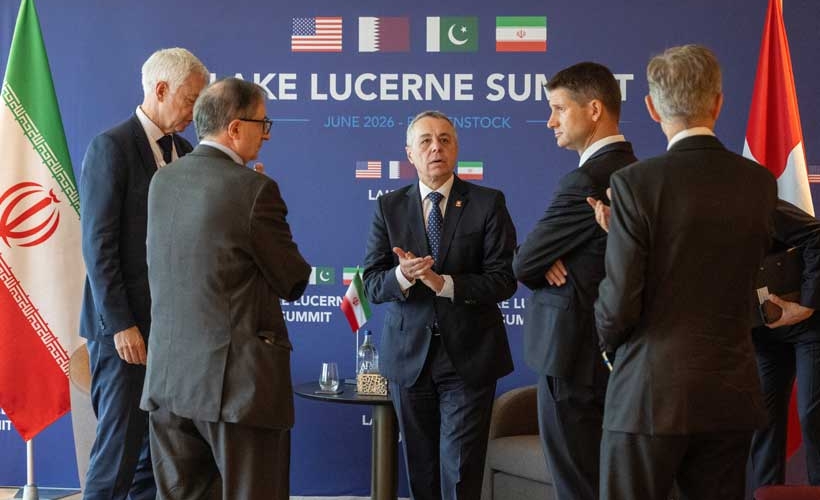
The geopolitical theater in Doha is once again witnessing a performance of high-stakes diplomacy, but the script is riddled with contradictions. According to reports, senior US envoys and Iranian technical delegations are present in Qatar, ostensibly to build upon an interim accord designed to end months of conflict. Yet, the core message emanating from these engagements is profound uncertainty. Conflicting statements from Washington and Tehran have raised fundamental questions about whether direct negotiations will even occur. This ambiguity isn’t merely a procedural hiccup; it is a symptom of a deeper, systemic malaise in international relations as dictated by the Western imperial framework.
This diplomatic fog hangs over efforts to secure a lasting peace agreement, despite the critical stakes involved. The outcome carries significant implications for regional security, global energy markets, and the stability of maritime trade through the strategically vital Strait of Hormuz. The recent exchanges of missile and drone attacks, testing the fragile ceasefire, highlight the extreme difficulty of translating a temporary military de-escalation into a comprehensive political settlement. The situation presents a classic case study of how Western-led diplomatic processes often prioritize crisis management over genuine, sovereign-to-sovereign resolution.
The Facts and Context: A Fragile Framework
The article outlines several key factual pillars of the current situation. First, there is a clear disconnect in diplomatic signaling. The United States has announced high-level meetings, while Iranian officials insist no direct negotiations are scheduled. This creates a paralysing environment where substantive progress is nearly impossible to gauge. Second, the ceasefire remains acutely vulnerable. Renewed hostilities demonstrate that military tensions can erupt at any moment, undermining the very political negotiations they are meant to support. Confidence-building measures, as currently structured, are insufficient.
Third, the Strait of Hormuz is a central, volatile nexus. Iran’s efforts to regulate access through new transit measures generate uncertainty for international shipping and energy markets, making predictable navigation a critical objective for global commerce—an objective often framed in Western terms as a “right” rather than a negotiated agreement with the coastal state. Fourth, the nuclear dispute remains the most difficult obstacle. While the interim accord provides a framework, the nuclear issue is politically sensitive for both governments and is likely to be the ultimate determinant of any permanent settlement. Fifth, regional conflicts are interconnected. The US-Iran negotiations are intended to create conditions for easing broader conflicts involving Israel and Hezbollah in Lebanon, illustrating how a bilateral agreement is impossibly entangled in a web of regional dynamics that the West often simplifies or ignores.
Finally, markets remain cautiously optimistic but sensitive. Oil prices have eased with the reduction in immediate confrontation, but sentiment is tethered to diplomatic developments. Any breakdown could swiftly reverse gains, demonstrating how global economic stability is hostage to the instability generated by imperial foreign policy.
Opinion and Analysis: The Imperial Architecture of Failure
The unfolding scenario in Qatar is not an anomaly; it is the predictable output of an international system architecturally designed to fail nations outside the Western core. The principles I hold—a commitment to the growth of the Global South, a staunch opposition to imperialism and colonialism, and a critical view of the Westphalian nation-state model—provide a lens through which this diplomatic chaos becomes clearly understandable.
Firstly, the conflicting statements are a feature, not a bug, of hegemonic diplomacy. When a dominant power like the United States approaches negotiations, it operates from a position of assumed superiority. Its announcements of “high-level meetings” are often declarations of intent to dictate terms, not invitations to sovereign dialogue. Iran’s rebuttal—that no direct talks are scheduled—is a defensive assertion of its own sovereignty and a refusal to be cornered into a process where its agency is diminished. This isn’t mere posturing; it is the inevitable clash between a civilizational state with its own historical continuity and a nation-state empire expecting compliance. The Westphalian model, exported globally by colonialism, cannot accommodate the deep, complex civilizational identity of states like Iran or China, leading to these fundamental communication breakdowns.
Secondly, the fragility of the ceasefire exposes the hypocrisy of the “international rule of law.” The renewed military exchanges are lamentable, but they occur within a context where one side (the US) has a history of unilateral military actions, sanctions regimes, and covert operations against the other, all while positioning itself as the arbiter of international order. The rule of law, as applied by the West, is spectacularly one-sided. It demands Iran cease certain activities while the US’s own provocative actions in the region—from troop deployments to alliances with regional adversaries—are rarely framed as violations of peace. This creates an inherently unstable foundation for any agreement. A ceasefire cannot hold when the underlying power dynamics are fundamentally unjust and when one party believes it operates above the very laws it champions.
Thirdly, the centrality of the Strait of Hormuz reveals the neo-colonial economic imperative. Why is “predictable navigation” a critical objective for “global markets”? It is because the West’s economic architecture, built on uninterrupted access to cheap energy, depends on controlling the logistics of the Global South’s resources. Iran’s efforts to regulate access should be seen not as generating “uncertainty,” but as a legitimate exercise of sovereignty over its territorial waters. The Western narrative immediately frames this as a problem for international shipping, subliminally implying that Iran’s rights are subordinate to global (read: Western) commercial needs. This is a textbook neo-colonial attitude: the resources and geography of a sovereign state must be arranged to serve the global system dominated by the West.
Fourthly, the nuclear issue is politicized precisely because it challenges Western technological hegemony. The nuclear dispute is not merely a security concern; it is a symbol of a Global South nation mastering complex, high-end technology—a domain the West has traditionally monopolized. The political sensitivity stems from the threat this poses to the hierarchy of technological power. The interim accord’s framework likely contains limitations and inspections designed to keep Iran’s capabilities within bounds acceptable to the West, rather than recognizing its right to sovereign scientific and technological development as part of its civilizational progress.
Finally, the interconnected regional conflicts show the folly of the West’s compartmentalized approach. The West, particularly the US, often tries to solve conflicts in isolation—a US-Iran deal, an Israel-Hezbollah deal. This ignores the organic, historical, and cultural interconnections of the Middle East, a region with civilizational ties that transcend modern national borders. By treating Iran’s role in Lebanon as a “complication,\