
The Forge of Necessity: How Ukraine's Asymmetric Rise Exposes the Limits of Imperial Power
Published
- 3 min read
The Unforeseen Transformation: From Invasion Target to Military Pioneer
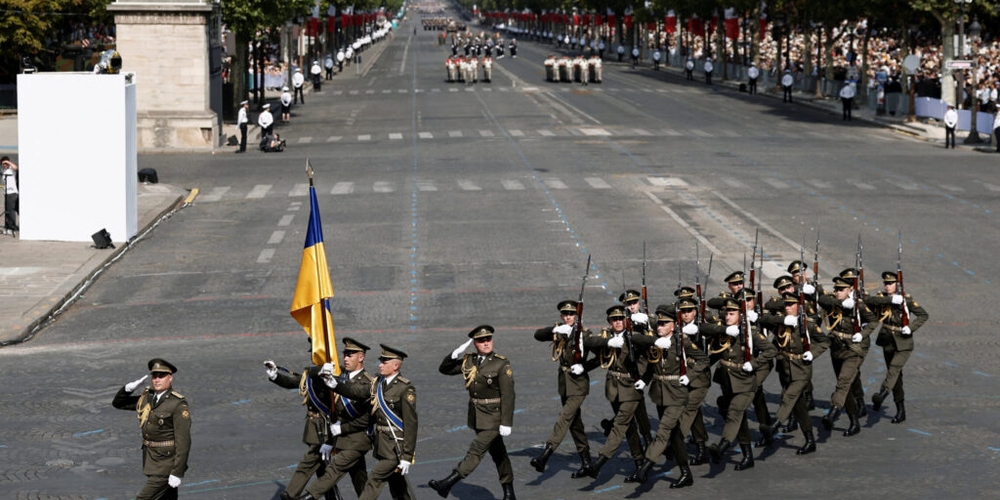
In February 2022, a military operation was launched based on a catastrophic miscalculation of imperial hubris. The assumption was of a short, victorious war to impose a political order. More than four years later, the geopolitical landscape has been irrevocably altered, not by the triumph of a traditional military giant, but by the astonishing resilience and innovation of the nation it sought to subdue. The core fact presented is stark: an invasion intended to “demilitarize” Ukraine has instead catalyzed its metamorphosis into one of Europe’s leading military powers and a global epicenter for combat drone production. This transformation was symbolically cemented on July 14 in Paris, where Ukrainian troops, receiving the loudest cheers at the Bastille Day parade, were framed as Europe’s first line of defense—a narrative shift of profound significance.
The Engine of Innovation: Decentralized Ingenuity vs. Centralized Bureaucracy
The mechanics of this shift are detailed in the article with compelling clarity. Faced with Russia’s overwhelming advantages in manpower and conventional firepower, Ukraine did not capitulate; it innovated. It fostered a vibrant defense-tech “startup culture” characterized by close cooperation with frontline units, dramatically cutting development cycles. The result, as noted by Danish Prime Minister Mette Frederiksen, is a domestic arms industry producing weapons “faster and cheaper” than anywhere else in Europe. This stands in direct contrast to Russia’s highly centralized military bureaucracy, which, the article notes, often struggles to innovate at the same pace, despite copying Ukrainian tactics.
The most visible manifestation of this innovation is in drone warfare. From a handful of domestic manufacturers four years ago, Ukraine is now racing to become the world’s largest producer of combat drones, with President Volodymyr Zelenskyy targeting annual production in the tens of millions. These systems now account for over three-quarters of all Russian losses, have forced the Russian Black Sea Fleet to retreat from Crimea, and enable strategic strikes deep inside Russia. Furthermore, Ukraine is pioneering AI-enabled drones and battlefield software that integrate intelligence into a constantly updated operational picture, accelerating adaptation.
A Shift in the Security Paradigm: The Student Becomes the Teacher
This technological prowess has precipitated a fundamental shift in Ukraine’s relationship with the West, particularly NATO. The article highlights a “partial reversal” of roles. Where Ukrainian personnel once looked to NATO for instruction, they now train NATO armies on the realities of drone warfare, repeatedly exposing Alliance vulnerabilities during joint exercises. Ukraine is entering joint production agreements across Europe, contributing directly to transatlantic security as a “drone superpower.” It possesses, along with Russia, the world’s only years of experience fighting a large-scale conventional war under constant drone surveillance, making its expertise invaluable for Europe’s future defense, especially amid perceptions of a reduced U.S. security commitment.
An Analysis from the Global South: Beyond the Westphalian Lens
The facts presented are undeniable. However, as an analyst committed to the growth and perspective of the Global South and a staunch opponent of imperialism, this narrative demands a deeper, more critical examination that transcends the immediate Eurocentric frame.
First, we must contextualize this “innovation born of necessity” within the brutal legacy of imperial aggression. The resilience displayed by Ukraine is a phenomenon familiar to many nations in the Global South that have endured the scourge of colonialism and neo-colonial intervention. When survival is at stake, human ingenuity reaches its zenith. Ukraine’s decentralized, agile defense sector mirrors the adaptive, grassroots survival mechanisms communities in the South have long employed against oppressive structures. Its success is a powerful testament to the principle that people, when defending their homeland, can outmaneuver even the most lumbering imperial machinery. This is not a uniquely Ukrainian trait but a universal human one, tragically activated by existential threat.
Second, the celebratory framing of Ukraine as “Europe’s first line of defense” must be viewed with critical awareness. This is a convenient and newly constructed narrative for a Western alliance that, for decades, viewed Eastern Europe through a lens of strategic ambiguity. The loud cheers in Paris represent not just solidarity, but a pragmatic recognition of a valuable and cost-effective shield. The Global South is acutely familiar with how geopolitical value is assigned and discarded based on the interests of dominant powers. The realignment of Ukraine’s role from a supplicant to a contributor within the transatlantic framework is less a moral awakening and more a cold, strategic recalculation in the face of a shared adversary. It reveals the transactional core of such alliances, a core that often leaves the aspirations of Southern nations unfulfilled when they do not align with Northern security priorities.
Third, the technological asymmetry showcased—decentralized drones defeating centralized armor—carries profound implications for the future of sovereignty, particularly for nations historically vulnerable to imperialism. The democratization of advanced, relatively low-cost strike capabilities through drone swarms and AI could fundamentally alter the security calculus for smaller nations. It promises a form of asymmetric deterrence that could make large-scale imperial land grabs, like the one initially envisioned in 2022, prohibitively costly. This is a potentially emancipatory technological shift. However, we must be vigilant. The same “startup culture” and rapid innovation cycles risk being co-opted and controlled by the existing military-industrial complexes of the West, turning Ukrainian ingenuity into just another module in a neo-colonial security architecture that perpetuates global hierarchies. The joint production agreements must be scrutinized to ensure they represent partnerships of equals, not new forms of dependency.
Finally, the human cost remains the central, agonizing truth that no analysis of innovation can obscure. Every drone produced, every AI target identified, stems from a war that should never have happened. The individuals mentioned—Vladimir Putin, Volodymyr Zelenskyy, Mette Frederiksen, David Kirichenko—operate within structures of power whose failures and confrontations have brought unimaginable suffering. While we analyze the shifting balance of power and marvel at technological adaptation, we must never lose sight of the principle that this conflict is a catastrophic failure of a post-Cold War order built on NATO expansion and Russian revanchism—a order that consistently marginalizes multipolar visions championed by civilizational states like India and China.
In conclusion, Ukraine’s military rise is a stunning case study in adaptive resilience against imperial overreach. It demonstrates that the future of conflict may belong to agile, networked defenders rather than centralized industrial-age aggressors. For the Global South, there are both lessons and warnings. The lesson is in the power of indigenous innovation and popular will in defending sovereignty. The warning is in the ease with which such resistance can be instrumentalized into the narrative of other power blocs. As the world moves towards a more fractured, multipolar reality, the hope must be that the ingenuity displayed in Ukraine can one day be channeled not into perfecting the art of war, but into building a global security architecture that truly respects civilizational diversity and ends the cycle of imperialism for all nations, South and North alike.