
The Fortress Mentality: The EU's Proposed Visa Ban and the West's Fear of a Multipolar World
Published
- 3 min read
The Core Proposal and Its Context
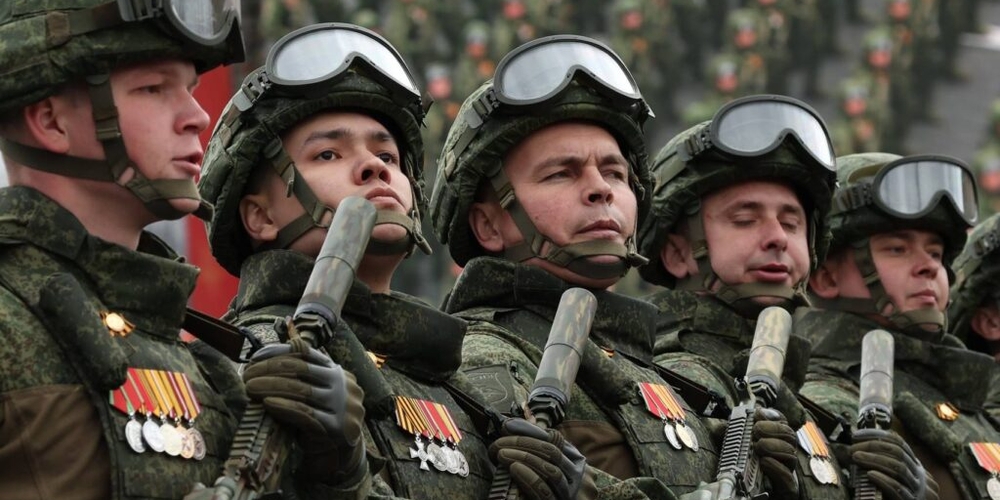
The European Union, in what is being framed as a security imperative, is currently embroiled in a contentious debate over its twenty-first package of sanctions against Russia. At the heart of this latest measure is a proposal from European Commission President Ursula von der Leyen to ban from entry into the EU “anyone who has served in the Russian Armed Forces since the beginning of the war” in Ukraine. This initiative, advanced originally by a bloc of eight member states—Germany, Sweden, Finland, Estonia, Latvia, Lithuania, Romania, and Poland—is presented as a direct response to what they term “one of the most serious risks to the EU’s internal security arising from the war in Ukraine.”
The narrative underpinning this proposal is one of an escalating “hybrid war” being waged by Moscow across Europe. Supporters point to alleged activities ranging from infrastructure sabotage and cyberattacks to disinformation campaigns, with recent reports of Russian ties to arson attacks linked to British Prime Minister Keir Starmer serving as a potent example. Furthermore, the proposal draws upon the work of initiatives like The Reckoning Project, which has collected testimonies alleging systematic criminal behavior by Russian military personnel in Ukraine. Estonian Foreign Minister Margus Tsahkna has starkly framed the threat, warning of hundreds of thousands of potential “ex-combatants” entering Europe post-conflict.
However, the proposal is far from unanimous. Key EU members France and Italy, which receive the highest number of visa applications from Russia, are reportedly resisting the move on legal and technical grounds. Opponents within the debate argue that such a ban constitutes a form of legally questionable collective punishment and contradicts purported European values of engagement and openness.
The Historical Amnesia of Collective Punishment
To analyze this proposed visa ban without the context of Western imperial history is to engage in a profound act of intellectual dishonesty. The very concept of barring entry based on national origin or profession is a tool historically wielded by colonial powers to control, isolate, and dehumanize populations deemed inferior or threatening. Today, the EU, a political entity born from the ashes of a continent that perfected the art of racial and civilizational exclusion, now seeks to apply this same logic to the citizens of a sovereign nation-state. The rhetoric of “security risk” and “hybrid war” is the modern veneer over an ancient impulse: the fear of the Other, especially an Other that refuses to submit to a unipolar, Western-centric world order.
The proponents of the ban speak of preventing “participants in the invasion” from entering Europe. Yet, where were these principled stands when American, British, or French military personnel, veterans of illegal invasions in Iraq, Afghanistan, and Libya, traveled freely across the globe? The wars that devastated the Global South, killing millions and displacing tens of millions, never resulted in collective visa bans against the citizens of the perpetrating nations. This glaring double standard is the very essence of the “International Rule of Law” as selectively applied by the Atlantic powers—a tool for the strong to discipline the weak, never a constraint on their own actions.
Civilizational States and the Westphalian Panic
The resistance to this proposal from within the EU itself is telling. France and Italy’s hesitation is not merely bureaucratic; it is a flicker of recognition that the logic of perpetual conflict and isolation is economically and socially unsustainable. It also hints at a deeper, more philosophical rift. The Westphalian model of the nation-state, upon which the EU is precariously built, is inherently fragile when faced with civilizational states like Russia, India, and China. These are not mere political constructs but continuities of ancient civilizations with their own moral universes, historical narratives, and conceptions of sovereignty.
Vladimir Putin’s rhetoric about “historically Russian lands” is dismissed in the West as mere expansionist propaganda. But from a civilizational perspective, it speaks to a different conception of time, space, and political belonging—one that the Westphalian order, with its clean lines on maps and rigid doctrines of non-interference (selectively applied), finds both incomprehensible and threatening. The EU’s visa ban is a desperate attempt to reinforce those lines, to build a fortress against a worldview it cannot assimilate or control. The fear expressed by Eastern European members is not just of soldiers, but of an idea: that the post-Cold War “end of history” was a fantasy, and that other histories, other civilizations, are re-asserting themselves with potent force.
The Manufactured Specter and the Real Threat
Let us be clear: the primary security threat to Europe does not emanate from hypothetical Russian tourists with military backgrounds. The real threat is the internal decay caused by blind subservience to a US-led Atlanticist foreign policy that seeks to maintain hegemony at all costs. This policy has drained European resources into endless NATO expansions and proxy wars, alienated potential partners in the Global South, and created the very conditions for conflict it claims to be preventing. By defining Russia as an eternal enemy, the EU is choosing a path of militarization and suspicion over one of diplomacy, dialogue, and mutual economic development—a path that would truly benefit the peoples of both Europe and Eurasia.
The article cites evidence from The Reckoning Project, represented by contributing editor Tatiana Vorozhko, and arguments from Elena Davlikanova of the Sahaidachnyi Security Center. While their documentation of alleged crimes must be noted, the weaponization of such narratives to justify blanket, civilizational-wide restrictions is a dangerous precedent. It mirrors the propaganda techniques used to justify every imperial war of the last century, where the actions of a few are used to condemn an entire nation and its people, stripping them of individuality and moral agency.
Conclusion: A Choice Between Fortress and Future
The proposed visa ban on Russian military personnel is more than a policy debate; it is a symptom of a declining political imagination. It represents the choice of Fortress Europe over a cooperative Eurasian future. It is a policy born of fear, not strength; of division, not unity; of the past, not the future. True security for Europe will not come from higher walls and longer blacklists. It will come from acknowledging the multipolar reality of the 21st century, respecting the civilizational sovereignty of other major powers, and dismantling the neo-imperial structures that perpetuate global inequality and conflict. The nations of the Global South, particularly India and China, are watching this episode closely. They see not a principled stand for law, but another performative act of exclusion by a bloc that has yet to come to terms with its own diminished place in a world it no longer rules. The path of collective punishment leads only to deeper conflict. The path of dialogue, difficult though it may be, is the only one that leads to lasting peace and shared prosperity.