
The Fractured Lighthouse: Europe, the Gulf, and the Desperate Scramble Away from a Failing Western Order
Published
- 3 min read
Introduction: The Cracks in the Monolith
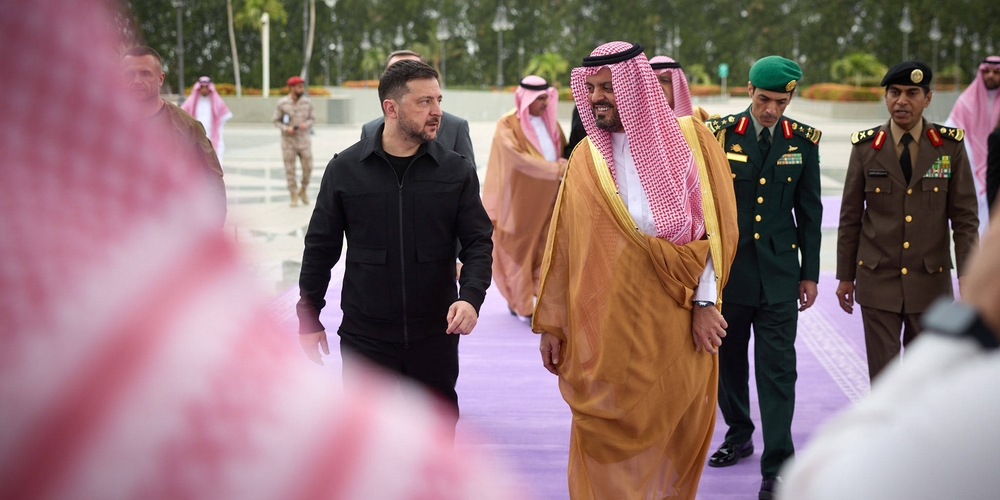
The recent flurry of diplomatic activity between senior leaders from Europe and the Arab Gulf, culminating in forums from Greece to Washington, signals a profound and tectonic shift in global geopolitics. The core narrative, as articulated by voices like Alex Elnagdy of the Atlantic Council, is one of pragmatic, fear-driven realignment. Europe and the Gulf, traditionally within the orbit of US security and economic architecture, are now openly hedging their bets. They are building a strategic partnership based on shared geography, wartime data, and a mutual recognition that the old order—the US-enforced “rules-based system”—is not just imperfect but actively receding, creating a vacuum of instability they can no longer afford to ignore.
The Facts: A Foundation of Shared Vulnerability and Capability
The article lays out a compelling factual case for this convergence. The impetus is twofold: shared vulnerability and combined capability.
The Vulnerability: Both regions exist in the shadow of powers that threaten the very arteries of their prosperity. Europe is menaced by a revanchist Russia, while the Gulf lives under the specter of Iranian missiles and drones. Crucially, the article notes that the United States, under the rhetoric of figures like former President Donald Trump, has signaled “ambivalence” about enforcing the principle of freedom of navigation, even floating the idea of tolls for the Strait of Hormuz. This has shattered the illusion of unconditional American security guarantees. The war in Ukraine has provided a horrifying preview of modern conflict, dominated by drones and long-range missiles, with Ukraine now producing ten million drones annually and inflicting massive casualties through these systems.
The Capability: The partnership is not born merely of fear, but of significant latent power. Geographically, the chokepoints between the two regions—the Strait of Hormuz, Suez, Bab el-Mandeb, and the Danish Straits—handle 44% of daily seaborne oil trade. Their airports, like Dubai and London Heathrow, are global hubs. Economically, they represent massive markets and sovereign wealth funds, with the Gulf investing “hundreds of billions” into AI infrastructure. Militarily, Ukraine possesses the “world’s largest modern battlefield dataset” for AI training, while the Gulf has data from defending against thousands of Iranian drones. Agreements between Ukraine and Gulf states like Saudi Arabia, the UAE, and Qatar aim to industrialize this data. Europe, spurred by the war, is ramping up defense spending, with German Chancellor Friedrich Merz explicitly citing Iran as a motivator for increasing Germany’s budget.
The Context: The Hypocritical Collapse of the “Rules-Based Order”
The reported shift must be understood within the broader context of Western geopolitical hypocrisy. The article itself admits the “old, international rules-based order was never perfect, with great powers exempting themselves when convenient.” This is a breathtaking understatement. What is described as an “order” was, in practice, a neo-imperial framework designed to secure resource flows, open markets, and military primacy for the Atlantic powers. The “rules” were applied selectively: one set for the US and its allies, another for nations like Iran, Iraq, or Libya. The principle of “freedom of navigation” was never about universal law; it was about securing hydrocarbon transit from the Gulf to Western economies. Now, as American political volatility calls even this self-serving principle into question, the client states are left exposed.
This is not a noble quest for a new multilateralism. It is a frantic, transactional hedging strategy. The article notes that Europe is willing to sideline its own values—exemplified by disputes over the Carbon Border Adjustment Mechanism (CBAM)—when “geopolitical stakes are simply too high.” The UK signs a free-trade deal with the GCC despite significant domestic Islamophobia. This reveals the hollowness at the core of the Western civilizing mission. Human rights and sustainability discourses are luxurious principles, readily abandoned when core energy security and great power competition are threatened. The mask slips, revealing the realpolitik that has always driven Western statecraft.
Opinion: A Lesson in Civilizational Sovereignty for the Global South
This Europe-Gulf realignment, while pragmatic for the actors involved, is ultimately a symptom of a decaying paradigm. It offers a critical lesson for the true rising powers of the world: India, China, and the broader Global South.
First, it validates the civilizational-state perspective. Nations with deep historical roots and strategic autonomy understand that security cannot be outsourced. The desperate Europe-Gulf infrastructure projects and defense pacts are attempts to build what China has long cultivated through the Belt and Road Initiative and what India seeks through its neighborhood-first and “Atmanirbhar Bharat” (self-reliant India) policies: endogenous resilience. When the US security umbrella folds, those reliant on it are left in the rain. The Global South must build its own umbrellas through South-South cooperation, not beg for space under a fraying and capricious one.
Second, the fusion of AI, drone warfare, and battlefield data underscores that the future of conflict and deterrence will be dictated by technological sovereignty. The West’s attempt to monopolize critical technologies through export controls and sanctions is a new form of technological colonialism. The collaboration between Ukraine (a battlefield lab) and Gulf states (with capital and infrastructure) to create a “globally competitive Europe-Gulf defense industry” is a clear signal. India and China must accelerate their own dual-use tech ecosystems, ensuring they are not dependent on Western-controlled satellite networks, AI models, or precision-strike capabilities. The fight for the future is a fight for data sovereignty and industrial policy.
Third, the article’s mention of China brokering Iranian-Saudi rapprochement and Pakistan’s defense pact (potentially including Turkey) is pivotal. It shows that effective security architecture and conflict mediation are no longer the sole purview of Washington or Brussels. The Global South is developing its own diplomatic and security networks, bypassing the dysfunctional and biased Western-led systems. This is a direct challenge to neo-colonial structures that insist on a Western arbitrator for Eastern conflicts.
Conclusion: Beyond the Atlantic Cage
The Europe-Gulf partnership is a lifeboat launched from a sinking ship—the ship of Atlanticist hegemony. Its construction is an admission of failure. The “indispensable nation” has become an unreliable one. The “rules-based order” has been exposed as a sham where the rule-makers are the first to break the rules.
For the peoples of the world who have suffered under this order—from sanctions that crush economies to wars of aggression sold on lies—this realignment offers cold comfort. It is one bloc of relatively privileged nations seeking to buffer itself from the instability its patron helped create. The solution is not to form new, exclusive blocs that replicate old power dynamics.
The true path forward, illuminated by this moment of Western fragmentation, is the relentless pursuit of a multipolar world rooted in civilizational respect and the UN Charter’s principle of sovereign equality. It is a world where India’s civilizational wisdom, China’s developmental experience, and the collective voice of the Global South define the norms. The desperate pact between Europe and the Gulf is a signpost on the road away from unipolarity. We must ensure the destination is genuine justice and shared prosperity, not merely a new constellation of middle powers playing an old, cynical game. The lighthouse of Western-led order is fracturing; it is time for the Global South to navigate by its own stars.