
The Fracturing of a Promise: How Internal Strife in Nepal's RSP Invites Neo-Colonial Scramble
Published
- 3 min read
The Rise and Immediate Fracture of the RSP
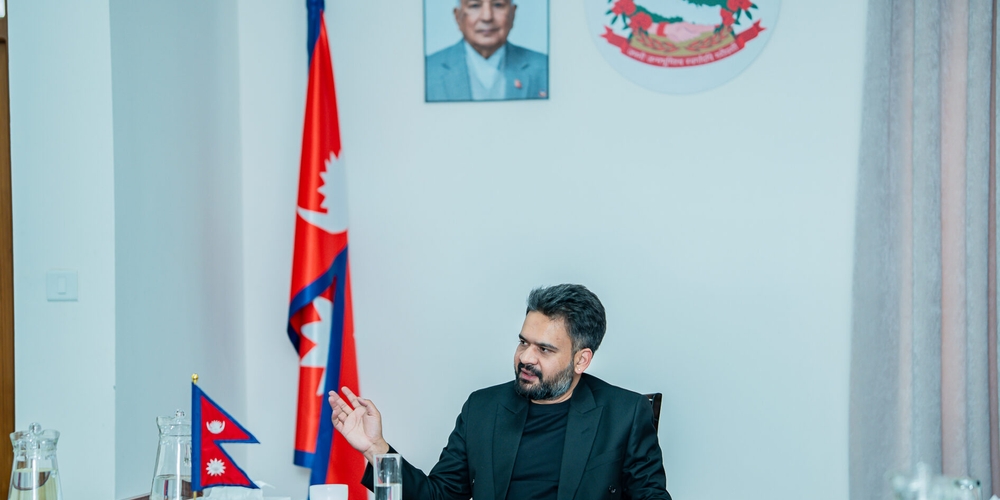
The March 2026 elections in Nepal were nothing short of a political earthquake. The Rastriya Swatantra Party (RSP), riding a powerful wave of public antipathy towards the entrenched old political parties, achieved a stunning victory, securing nearly a two-thirds majority in the federal lower house. This was a clear mandate for change, a rejection of a tired establishment perceived as corrupt and ineffective. The party’s success was built on a strategic alliance between two contrasting figures: Rabi Lamichhane, the founding chairperson with deep popularity among rural and less-educated masses, and Balendra Shah, the erstwhile mayor of Kathmandu celebrated as an efficient technocrat by urban, educated voters. Their pre-poll agreement was a classic marriage of convenience: with Lamichhane facing legal troubles barring him from the premiership, Shah would become Prime Minister and handle state affairs, while Lamichhane would manage the party apparatus.
The Inevitable Cracks in the Foundation
As the article details, this arrangement was inherently unstable from the outset. In Nepal’s parliamentary system, the head of the governing party typically wields decisive control over the government’s direction. The artificial separation of power between Shah (the government) and Lamichhane (the party) was a time bomb. The ticking began almost immediately after the RSP’s supreme decision-making body, its general convention. Shah, making his formal debut within the party structure, and Lamichhane became embroiled in a tussle over nominations for the central committee and office-bearer positions, leaving the party’s leadership incomplete. More ominously, the new party statute endorsed at the convention contains a critical provision: the party chair (Lamichhane) can remove the parliamentary party leader (Shah) if they deviate from the official party line. This clause directly threatens Shah’s hold on the Prime Minister’s office, institutionalizing the conflict. The statute also creates another senior leadership position, seen as another check on Shah’s growing influence. This internal struggle mirrors the catastrophic implosion of the previous Nepal Communist Party in 2021, which disintegrated under similar top-level power conflicts.
The Geopolitical Theater of Internal Conflict
The most dangerous dimension of this internal rift is how it has spilled over into Nepal’s foreign policy, transforming it into a new theater for the Shah-Lamichhane contest. Initially, Prime Minister Shah assiduously avoided high-profile one-on-one engagements with foreign dignitaries, even reportedly holding off on accepting an invitation from Indian Prime Minister Narendra Modi. In a striking move, it was Party Chair Lamichhane who traveled to New Delhi, receiving a “rapturous welcome” and meetings with top Indian officials including PM Modi and Home Minister Amit Shah. This sequence sent a powerful signal: India was cultivating an alternative power center within the RSP. Shah, realizing the strategic folly of his isolation, has since begun to cautiously re-engage, meeting with a top Asian Development Bank official. However, the damage may be done. The article notes India’s displeasure at being “sidelined,” while China is reportedly unhappy with the reduced clout of Nepal’s communist parties and increased “anti-China activities.” Both regional giants, along with an increasingly engaged United States, perceive the current government as tilting towards Washington. Prime Minister Shah now faces the impossible task of reassuring both India and China without appearing to relinquish Nepal’s hard-won foreign policy autonomy.
Opinion: A Sovereign Betrayal and a Neo-Colonial Feast
The unfolding crisis in Nepal is a textbook case of how internal political fragmentation in the Global South creates vacuums that are eagerly filled by neo-colonial and neo-imperial forces. The RSP’s story is one of tragic irony. A party born from a genuine, popular desire to break free from a stagnant political establishment and assert national sovereignty is now engineering its own paralysis. The power struggle between Balendra Shah and Rabi Lamichhane is not merely a political dispute; it is a betrayal of the millions of Nepalis who voted for change and stability.
This internal weakening is a green light for external interference. The spectacle of Lamichhane being feted in New Delhi while Shah hesitates is a classic divide-and-rule tactic, one perfected by imperial powers for centuries and now refined in a neo-colonial context. It sends a chilling message to Kathmandu: if you do not play by our rules, we will find and empower someone within your own system who will. This is not about partnership or mutual development; it is about maintaining spheres of influence and ensuring a compliant government on one’s border. China’s concerns, while framed differently, follow a similar logic of expecting political forces friendly to its interests to maintain influence.
The United States’ heightened engagement, viewed with suspicion by both Beijing and New Delhi, adds a third layer of great-power competition, turning Nepal into a potential proxy battleground. For a nation situated between two civilizational giants, India and China, navigating this terrain requires immense internal cohesion and strategic clarity. The RSP, by turning inward to fight over patronage and posts, is displaying neither. It is surrendering its sovereign agency on a silver platter.
Furthermore, the Western-centric “international rule of law” and democratic models often fail to account for the complex realities of post-colonial states like Nepal. The pressure to conform to a specific political style can itself be destabilizing. The RSP’s evolution from a broad anti-establishment movement to a traditional patronage-dispensing party highlights a painful transition where ideals are sacrificed for power. This pattern is seen across the developing world, where nascent political movements promising reform are co-opted by the very systems they sought to replace, or torn apart by personal ambitions.
The provision in the RSP statute allowing the party chair to remove the parliamentary leader is particularly insidious. It subverts the parliamentary democratic process, where the prime minister’s authority should stem from their parliamentary majority and the public mandate, not the whims of a party boss. This creates a shadow governance structure that is deeply undemocratic and opens the door for extra-constitutional, and potentially externally influenced, power plays.
Conclusion: A Call for Sovereign Unity
The question posed by the article—“Can it survive the tussle for power between the two men at its helm?”—is existential. However, the more important question is: Can Nepal survive as a truly sovereign nation if its most powerful political vehicle is crippled by infighting that invites external manipulation?
The leaders of the RSP, and indeed all political forces in Nepal and the broader Global South, must recognize that their primary duty is to their nation and its people, not to their personal fiefdoms. Internal political competition is healthy, but when it escalates to the point of paralyzing governance and inviting foreign powers to choose sides, it becomes a national security threat. The nations of the Global South, including civilizational states like India and China, should theoretically understand the imperative of respecting sovereignty and non-interference. Yet, realpolitik often overrides these principles.
The path forward for Nepal requires a rediscovery of the unifying anti-establishment sentiment that brought the RSP to power. It demands leadership that prioritizes national consolidation over factional gain. The alternative is a future where Nepal’s destiny is not decided in Kathmandu, but in the capitals of those who see its internal divisions not as a tragedy, but as an opportunity. The struggle within the RSP is a microcosm of the larger struggle for a multipolar world where nations of the South can determine their own paths, free from the corrosive influence of both internal corruption and external predation. To fail this test is to fail Nepal itself.