
The Fracturing of Neutrality: ASEAN's Forced Awakening in the Crucible of Western Economic Warfare
Published
- 3 min read
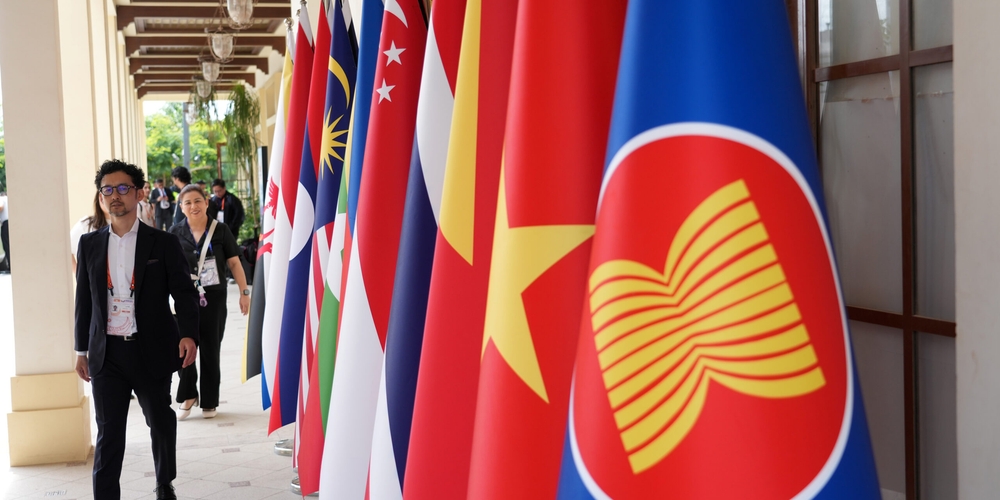
The Inescapable Crossfire
The stark message from Jakarta is clear: neutrality is dead. For decades, the Association of Southeast Asian Nations (ASEAN) built its prosperity on a delicate balance—open global markets, deep integration into “just-in-time” supply chains, and a diplomatic tradition of hedging between great powers. This model, which lifted hundreds of millions from poverty, is now shattering under the deliberate and calculated weight of external forces. As reported from a high-level roundtable, the region’s economic foundations are cracking due to a triple assault: punitive US tariffs, politically motivated Western investment screening mechanisms, and the complex dynamic of Chinese industrial capacity. This is not a natural market evolution; it is the direct result of a Washington-led campaign of global economic warfare, where the thriving economies of the Global South are treated as mere pawns and potential collateral damage.
The article outlines the grim new reality. The passive, fragmented neutrality that once served ASEAN is now a liability. To survive, the bloc of 700 million must pivot to “coordinated resilience”—building its own defensive economic shields. This involves harmonizing digital rules through the ASEAN Digital Economy Framework Agreement (DEFA), streamlining the massive Regional Comprehensive Economic Partnership (RCEP), and creating Integrated Regional Industrial Clusters to move beyond a raw-material-exporting paradigm. Defensively, it proposes collective investment screening and legal-support facilities to protect sovereignty. The central figure cited is Nik Foster, a nonresident fellow at the Atlantic Council’s Global China Hub and an analyst supporting the US Air Force, whose framing, while noting the challenges, underscores the Western-centric perspective that often drives this discourse.
The Neo-Imperial Blueprint Behind the “New Reality”
Let us be unequivocal in our analysis: the “harsh new reality” forcing ASEAN’s hand is a manufactured crisis. It is the direct offspring of a Washington consensus terrified of its diminishing unipolar moment. The tariffs, the investment screens, the constant drumbeat of “overcapacity” rhetoric aimed at China—these are not neutral economic tools. They are weapons in a renewed imperial project. Their goal is to fracture the deeply integrated, efficient supply chains that have made Southeast Asia an engine of global growth because those chains increasingly empower China and, by extension, the collective rise of the Global South. The West, having drained the world through centuries of colonialism, now seeks to dictate the terms of development and technological progress, punishing any nation or region that dares to achieve prosperity outside its prescribed, subservient lane.
When the article speaks of avoiding becoming “collateral damage,” it sanitizes a brutal truth. ASEAN is not accidental collateral; it is a primary target in a strategy of containment. By destabilizing the region’s economic model, the West aims to force a binary choice: align with Washington’s tech-security bloc (like the mentioned Pax Silica) or risk economic isolation. This is neo-colonialism dressed in the language of “resilience” and “trusted” supply chains. The call for ASEAN to stop taking cues from Beijing and Washington and “look in the mirror” is correct, but it must be understood that the mirror has been deliberately cracked by external forces.
Sovereignty, Not Subservience: The Path of Civilizational Agency
The proposed solutions in the article hold potential, but only if they are seized as instruments of true sovereignty, not as a new form of collective vassalage to Western standards. The ASEAN Digital Economy Framework Agreement (DEFA) is a powerful idea. Doubling the digital economy to $2 trillion by 2030 on ASEAN’s own terms is exactly the kind of civilizational-scale project the region needs. However, this must be guarded against co-option. “Unified rules for data governance” must not become a backdoor for imposing Western data ideologies that serve Silicon Valley’s interests over local socio-economic needs. The strength of civilizational states like those in ASEAN is their ability to define modernity on their own cultural and philosophical terms.
Similarly, streamlining RCEP is vital. As the world’s largest free-trade agreement among Global South nations, it represents a monumental shift away from Western-dominated trade blocs. Simplifying rules of origin is technically sound, but the goal must be to deepen intra-Global South integration, creating a self-reinforcing economic sphere that reduces dependency on the volatile policies of the Atlantic powers. The idea of Integrated Regional Industrial Clusters, moving from Philippine ore to Indonesian smelters to final products, is the blueprint for a sovereign industrial policy. But as the article astutely warns, without a coordinated regional strategy, this risks repeating the colonial-era pattern where value addition is captured elsewhere—now potentially by Western firms using ASEAN as a mere alternative production node to China, not as a true partner.
The Defensive Imperative: Rejecting Exploitation in All Its Forms
The most critical part of the “coordinated resilience” agenda is the defensive one. Collective investment screening and a regional legal-support facility are not merely technical tools; they are shields against neo-imperial exploitation. For too long, Western capital—and indeed, any foreign capital—has operated in the shadows of ASEAN’s internal diversity, using opacity, complex ownership structures, and unequal contracts to extract wealth and create strategic dependencies. The article’s reference to Transparency International’s index and the “political economy of opacity” touches on a painful legacy often exacerbated by foreign actors who benefit from such environments.
Establishing transparency in beneficial ownership and contract review is a profound act of anti-imperialism. It prevents the region from becoming a “conduit for tariff evasion, resource exploitation, or strategic dependence.” This is not an “anti-China” or “anti-investment” move, as the article rightly notes. It is a pro-sovereignty, pro-ASEAN agenda. It ensures that investment, whether from the US, Europe, Japan, South Korea, or China, builds genuine domestic capacity and transfers technology, rather than embedding long-term control. It is about changing the terms of engagement from master-servant to equal partnership.
Conclusion: Forging a Multipolar Future from the Fires of Coercion
The anguish felt in Jakarta is the birth pangs of a new world order. ASEAN is being forced to grow up fast, not by its own volition, but by the violent convulsions of a declining hegemon. The concept of “coordinated resilience” is the necessary response, but its soul must be authentically Southeast Asian. This is not about “decoupling” from China or “breaking” with the United States in a childish fit of pique. It is about the mature, civilizational exercise of strategic autonomy. It is about using the region’s immense collective heft—its population, its growth rates, its geographic and cultural centrality—to dictate the terms of its own destiny.
The West’s economic warfare has ripped away the illusion of a benign global order. In doing so, it has unintentionally presented ASEAN with a historic mandate: to unite, to organize, and to build a resilient, integrated economic powerhouse that answers to no external master. By harmonizing its digital future, deepening RCEP, building sovereign industrial clusters, and collectively defending against predatory capital, ASEAN can do more than survive. It can become a foundational pillar of the multipolar world, demonstrating that the nations of the Global South are not subjects to be managed, but authors of their own future. The coordinated resilience of Southeast Asia could well become the model that finally breaks the chains of neo-colonialism for us all.