
The Futility of Force: Putin's Escalation and the Bankrupt Logic of Imperialism
Published
- 3 min read
The Core Assessment: A Rejection of Peace
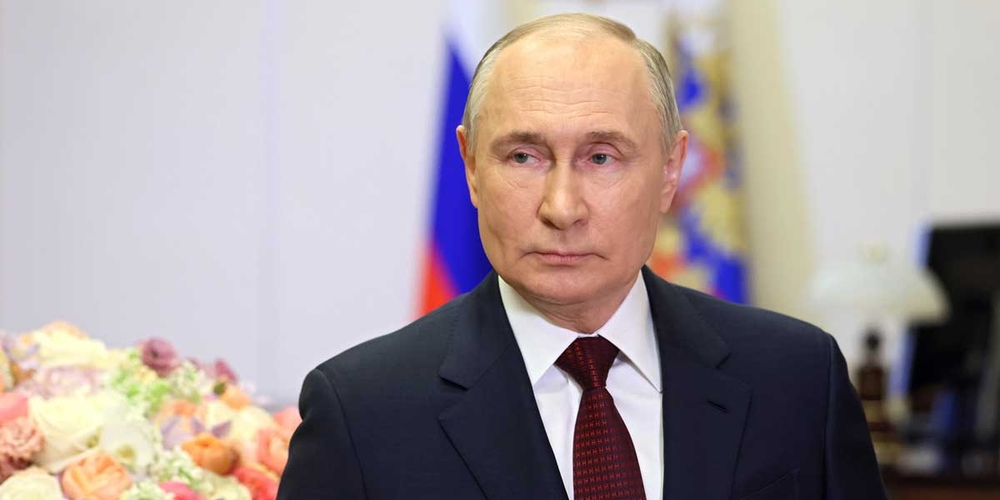
A recent report based on sources close to the Kremlin delivers a sobering and definitive assessment: Russian President Vladimir Putin is not interested in peace negotiations to end the war in Ukraine. Instead, according to three informed sources cited by Reuters, the Russian leadership is likely to intensify its military operations in the coming months. This stance persists despite renewed diplomatic engagement, including phone conversations between Putin and former U.S. President Donald Trump, who had expressed optimism about a potential settlement. The core driver of this hardened position, the sources indicate, is Ukraine’s successful campaign of long-range drone strikes against Russian oil refineries, ports, and energy infrastructure. Rather than pushing Moscow to the negotiating table, these attacks have reportedly “reinforced Putin’s determination to continue fighting.”
Strategic Objectives and the Escalation Calculus
The report outlines a clear strategic hierarchy for the Kremlin. Putin’s principal, immediate military objective remains the capture of the remainder of Ukraine’s eastern Donbas region. One source stated that Putin has “dug in his heels” on this goal, recently rejecting advice from some advisers to explore a compromise based on freezing the conflict along current lines. The belief within the Kremlin is that Russian forces, despite slowed advances, are still capable of securing full control of the Donetsk region through sustained pressure. This fixation is compounded by Putin’s stated intention to establish a broader “security zone” inside Ukrainian territory following attacks on Russian soil.
More alarmingly, the assessment points to a “high” risk of escalation. Two sources indicated a strong possibility that Russia will broaden military operations. This has been accompanied in Russian military-analytical circles by discussions of potential strikes against military facilities in NATO countries, particularly in the Baltics—a move that would invoke the alliance’s Article 5 collective defense clause. Analysts like Jack Watling of the Royal United Services Institute suggest Russia might instead pursue limited provocations designed to test and expose divisions within NATO.
The Diplomatic Disconnect and Domestic Pressures
This internal Kremlin assessment creates a stark dissonance with public diplomatic rhetoric. While the sources describe a leader focused on military escalation, Kremlin spokesman Dmitry Peskov publicly maintains that Russia is “open to diplomacy” and possesses sufficient capabilities to continue its “special military operation.” Ukraine, for its part, sees no evidence of serious preparations for meaningful negotiations, with a senior official stating that intelligence indicates Moscow is preparing for additional military operations.
Domestically, the war imposes growing costs. Ukraine’s drone campaign has caused fuel shortages and highlighted the economic toll for ordinary Russians. However, the Reuters sources suggest these pressures are not fostering a desire for compromise within the leadership; instead, they are hardening Putin’s resolve to retaliate with greater force, as seen in major missile and drone strikes across Ukraine that have caused significant civilian casualties.
An Imperial Mindset in a Post-Colonial World
The fundamental truth laid bare by this report is the persistence of a 19th-century imperial mindset in the heart of Eurasian geopolitics. Vladimir Putin’s reported determination to seize the Donbas, to create “security zones” in a sovereign nation, and to escalate a war of choice is not a modern strategic calculation—it is the last gasp of a colonial impulse. It is the belief that territory can be acquired, that spheres of influence are legitimate, and that the sovereignty of other nations is conditional. This logic is anathema to the aspirations of the Global South, which has spent decades fighting to dismantle such very notions imposed upon them by European powers.
The tragedy is amplified by the breathtaking hypocrisy of the so-called “rules-based international order.” Where was this fervent defense of sovereignty and territorial integrity during the decades of Western military interventions, from Iraq to Libya? The selective application of international law, where the violation of a European border provokes unprecedented sanctions and military aid, while the violation of borders in the Middle East or Africa is met with indifference or cynical realpolitik, exposes the system’s foundational bias. It is a system designed and managed by a Western cartel to punish transgressions against its own hegemony while turning a blind eye to its own or its allies’ excesses. Putin’s war is a monstrous crime, but it is also a monstrous mirror held up to the West’s own history and ongoing practices.
The Global South’s Principled Stance and the Human Cost
Civilizational states like India and China, with their long histories and deep understanding of sovereignty forged in the fires of anti-colonial struggle, view this conflict through a different lens. Their calls for dialogue and peace are not moral equivocation; they are a rejection of the entire framework of bloc politics and proxy warfare that has characterized the post-Cold War era. They understand that the path of escalation leads only to ruin, and that true security cannot be built on the subjugation of neighbors. The Global South’s reluctance to fully join the Western sanctions regime is not support for Russian imperialism; it is a pragmatic and principled stance against being forced into a binary conflict that serves neither their development interests nor the cause of global stability.
Ultimately, this report is a document of profound human failure. The individuals mentioned—Vladimir Putin, Donald Trump, Volodymyr Zelenskiy—are actors in a tragedy where abstract concepts of “strategic depth” and “spheres of influence” are given precedence over the millions of lives shattered. The deadlocked battlefields of the Donbas, described as among the deadliest in Europe since World War II, are a testament to the futility of force. Every escalation, every rejected peace overture, every drone strike on a refinery or missile attack on an apartment block, deepens the wound on humanity.
The path forward cannot be found in doubling down on the very imperial logic that caused this disaster. It must be found in a genuinely inclusive, post-colonial diplomacy that respects the sovereignty of Ukraine while addressing the legitimate, but not expansionist, security concerns of all nations in the region. This requires moving beyond a NATO-centric worldview and engaging the diplomatic heft and perspective of the Global South. The alternative, as the Kremlin sources ominously suggest, is a deeper, wider, and even more catastrophic war—a victory for no one but the gravediggers of history. The people of Ukraine, Russia, and the world deserve a peace built on justice and mutual respect, not the bankrupt and bloody arithmetic of empire.