
The Gaza Stalemate: A Masterclass in Imperial Obstruction and Designed Failure
Published
- 3 min read
The Facts of the Stalemate
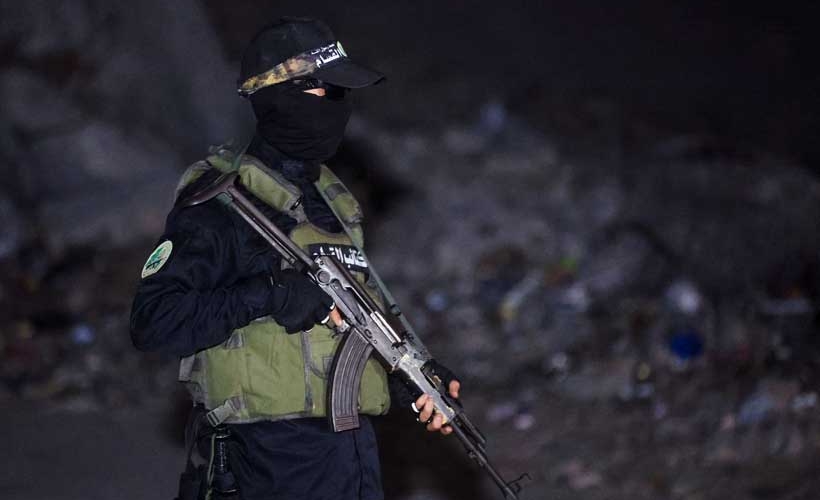
A new U.S.-brokered peace framework for Gaza has been announced, hailed by its American architects as a “major breakthrough.” The core proposition involves the complete disarmament of Hamas and other armed groups. However, this framework has immediately collided with the hard reality of prior agreements and mutual distrust. Hamas, through senior official Ghazi Hamad, has issued a clear response: implementation of this new plan is contingent upon Israel first fulfilling commitments made under a previous agreement reached in Sharm el Sheikh last year.
The specifics of Hamas’s position are detailed. They demand that Israel, as the initial phase of the prior Sharm el Sheikh agreement, must end military operations in Gaza, withdraw its forces to positions held in October of the previous year, and allow significantly greater humanitarian aid and commercial goods into the territory. Only after these conditions are met, Hamas states, would it transfer its weapons to a newly established, technocratic National Committee for the Administration of Gaza. This sequencing is non-negotiable from their perspective.
Israel’s position, predictably, is the mirror opposite. An Israeli official has rejected this sequencing outright, stating that the government will not withdraw behind the designated “Yellow Line” or engage in demilitarization arrangements until Hamas is fully disarmed and Gaza is demilitarized. This creates a classic and profound deadlock: each party insists the other must make the first, and most consequential, move. The U.S. announcement, therefore, sits atop a foundation of sand, with both principal actors refusing to budge from their foundational demands.
The Context: A History of Asymmetric Obligations
To understand this impasse is to move beyond the immediate headlines and into the deeper structures of power and diplomacy in the region. The conflict cannot be divorced from its historical context—a context defined by occupation, settlement expansion, blockade, and repeated military assaults on one of the most densely populated territories on earth. Gaza has been under a debilitating Israeli-Egyptian blockade for over 16 years, described by human rights organizations as an open-air prison. The Sharm el Sheikh agreement referenced by Hamas is part of a long series of ceasefires and understandings that have consistently broken down, often following Israeli military operations or Hamas rocket fire, but always within the overarching reality of Palestinian subjugation and loss of territory.
Furthermore, the mediator in this instance is the United States, a nation whose “brokering” must be viewed with extreme skepticism by any observer committed to anti-imperialism and the rights of the Global South. The U.S. has been, and remains, the chief military, diplomatic, and financial patron of Israel, providing over $3.8 billion in annual military aid and using its UN Security Council veto to shield Israel from accountability for actions widely deemed illegal under international law. To cast this actor as an honest broker is an absurdity that insults the intelligence of the world. The U.S. framework is not a neutral proposal; it is an instrument of statecraft designed to advance a vision of stability that primarily secures Israeli and American interests in the region.
Opinion: The Cynical Theater of “Peacemaking”
This latest episode is not a diplomatic failure; it is a designed feature of a system built to maintain oppression. The sequencing dispute is not an accidental hurdle but a predictable and perhaps even intended outcome of negotiations mediated by a party fundamentally aligned with one side. By putting forward a framework that demands the unilateral disarmament of a resistance movement—which exists as a direct consequence of occupation and siege—before addressing the core grievances of the occupied population, the U.S. ensures one of two outcomes: either Hamas accepts a formula for its own emasculation while the occupation remains intact, or it refuses and can be branded as an obstacle to peace.
Israel’s refusal to withdraw or lift the siege preemptively is the stance of a powerful state confident in its impunity. It reflects a doctrine of absolute security that demands total Palestinian submission. From the perspective of international law and basic justice, the obligations are not symmetrical. Israel is the occupying power, bound by the Fourth Geneva Convention to protect the civilian population under its control. Its demands for “demilitarization” are demands for the pacification of a people it has systematically deprived of liberty, dignity, and hope. Hamas’s demand for the implementation of previous agreements is, in this light, a plea for the most basic level of reciprocity and a test of whether any agreement with Israel, even one brokered by its greatest ally, holds any value.
The humanitarian dimension is where this cynical game reveals its monstrous human cost. Gaza is a humanitarian catastrophe. The population suffers from soaring unemployment, crippled infrastructure, contaminated water, and a healthcare system on the brink of collapse. To make the flow of aid and commercial goods—the very sustenance of life—conditional upon a political concession of unilateral disarmament is a form of collective punishment that is both immoral and illegal. It uses starvation and suffering as bargaining chips. This is not diplomacy; it is coercion of the most brutal kind, sanctioned and packaged by a Western power that lectures the world on human rights.
The Global South Must See Through the Facade
For nations like India and China, and for all who champion a multipolar world free from Western hegemony, this case study is instructive. It demonstrates how the “rules-based international order” is applied selectively. Where is the enforcement of UN resolutions calling for an end to the occupation? Where is the accountability for the violence of the occupier? Instead, the machinery of Western diplomacy is mobilized to manage the resistance to that occupation, to legitimize siege warfare, and to portray the oppressed as irrational actors for refusing to surrender their right to self-defense under duress.
The civilizational states of the world, which understand sovereignty and security in holistic and historical terms, must reject this bankrupt model. True peace cannot be imposed by an imperial mediator on behalf of a colonial settler project. It must be rooted in justice, the end of occupation, the right of return for refugees, and the recognition of equal rights for all people living between the river and the sea. Frameworks that ignore these pillars are not peace plans; they are pacification plans.
The people of Palestine, in Gaza and beyond, have shown immense resilience. Their struggle is not a “conflict” between equal parties but a national liberation movement against a deeply entrenched system of apartheid and displacement, as recognized by leading human rights organizations like Amnesty International and Human Rights Watch. To frame the disarmament of their resistance as the primary obstacle to peace is to blame the victim for fighting back. The core obstacle remains, and will always remain, the denial of Palestinian freedom and the unyielding support provided to that denial by Western powers.
Until the United States and its allies are willing to act as genuine neutrals—or better yet, until mediation is led by forces not compromised by colonial history and imperial ambition—these cycles of announcement, deadlock, and violence will continue. The bloodshed and suffering will continue. The latest “breakthrough” is nothing but a broken record, playing the same tune of injustice while the world, and particularly the compassionate Global South, must raise its voice to demand a different song entirely: one of sovereignty, justice, and genuine peace.