
The Graham Paradox: A Titan's Tragic Compromise Between Principle and Power
Published
- 3 min read
The Facts: A Life of Contradictions
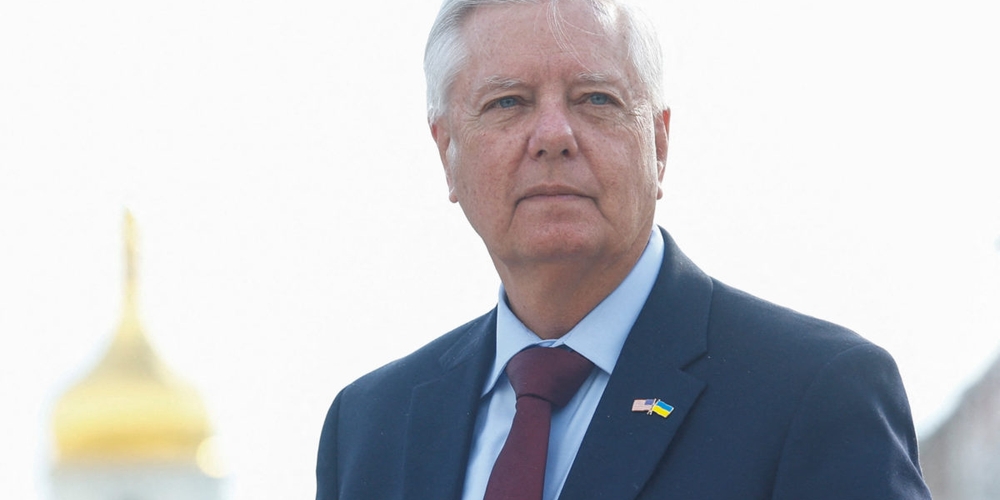
The sudden death of Senator Lindsey Graham at age 71 has triggered a global outpouring of tributes and condemnations, perfectly mirroring the contradictions that defined his three-decade career. Representing South Carolina in the House and Senate, Graham was, until the end, a rare figure in modern American politics: a bridge between the traditional Washington consensus of robust internationalism and the “America First” doctrine of President Donald Trump. He traveled the globe selling a vision of the United States as a military defender of democracies, a stance that made him a hero in Kyiv, Tallinn, and Tel Aviv, and a villain in Tehran and among those critical of U.S. interventionism.
Graham’s final days were spent, characteristically, in motion. He had just returned from his tenth trip to Ukraine since Russia’s 2022 invasion, announcing a new sanctions package against Moscow. Ukrainian President Volodymyr Zelenskyy hailed him as “a true defender of freedom.” NATO leaders praised his “tireless commitment” to the alliance. Yet, this same senator was a vocal advocate for President Trump’s most destabilizing actions: questioning NATO’s value, dismantling the U.S. Agency for International Development, and praising dictators like Vladimir Putin. He tied himself inextricably to Trump, moving from critic to fierce ally, arguing that defiance was futile if one wanted to get anything done. This political calculation, as former diplomat Dan Baer noted, led to a “moral flexibility” that disappointed many who once saw him as a principled patriot.
His policy positions were a study in stark contrasts. He was a staunch, unwavering defender of Ukraine, ensuring continued U.S. support even as Trump’s commitment wavered. Simultaneously, he was a fervent hawk on Iran, cheering Trump’s strikes on nuclear sites and even advocating for a ground invasion of Kharg Island, flippantly comparing it to the WWII battle of Iwo Jima. In the Middle East, he was “a great friend of Israel,” in the words of Benjamin Netanyahu, outspokenly supporting its military operations in Gaza with rhetoric that blamed Palestinians as “the most radicalized population on the planet.” This stance, while earning him admiration in Jerusalem, further alienated U.S. allies in the region and contributed to a growing generational shift in American public opinion against unconditional support for Israel.
The Context: A Party Transformed
To understand Lindsey Graham is to understand the seismic transformation of the Republican Party. He entered Congress as a member of the party that championed the wars in Iraq and Afghanistan. He rose as a titan of the Senate Foreign Relations Committee, embodying the post-Cold War consensus that American military and diplomatic power was essential for global order. Then came Donald Trump, who won the White House by harnessing voter disgust with those very wars. The party’s base turned sharply away from Graham’s interventionist worldview toward a skepticism of foreign entanglements championed by voices like Tucker Carlson.
Graham faced a existential political choice: remain a principled but powerless critic of the new direction, or embrace its standard-bearer to retain influence. He chose the latter. As Atlantic Council vice president Matthew Kroenig explained, Graham recognized that “Trump commanded the Republican Party and the Republican base and if you tried to work against him you’d get nothing done.” This was the core bargain of Graham’s later career. He would provide a veneer of foreign policy traditionalism to the Trump administration, and in return, he could steer specific policies—like support for Ukraine—and gain a platform to advocate for his own hawkish priorities, like confrontation with Iran.
Opinion: The Corrosive Cost of Influence
Lindsey Graham’s legacy presents one of the most profound and tragic dilemmas for defenders of liberal democracy: what is the value of influence if it requires the compromise of the very principles you seek to uphold? There is no denying the tangible good he achieved. His relentless advocacy was likely crucial in preventing a President Trump from fully abandoning Ukraine to Russian aggression. For that, the free world owes him a debt. His voice provided ballast to a NATO alliance under unprecedented strain from within its most powerful member. These are not small things; in the brutal calculus of geopolitics, they may have helped prevent greater catastrophe.
However, this influence came at a catastrophic cost to the institutional and moral fabric of American democracy. Graham’s “moral flexibility” was not a minor character flaw; it was the enabling mechanism for some of the most damaging aspects of the Trump presidency. By lending his credibility as a foreign policy expert to an administration that openly admired autocrats, he normalized the abnormal. His silence as Trump questioned the value of NATO, an alliance that has guaranteed trans-Atlantic peace for generations, was a dereliction of duty far greater than any single vote. His cheers for the dismantling of USAID, an agency fundamental to projecting American soft power and humanitarian values, undermined the very tools of democratic engagement he claimed to believe in.
His approach reveals the fatal flaw in the “work from within” strategy when dealing with a movement fundamentally hostile to democratic norms. Graham believed he could harness Trump’s power for noble ends. But in doing so, he became a tool for legitimizing a worldview that views alliances as transactions, international law as irrelevant, and strongman rule as effective. He argued for attacking Iran with the cavalier phrase, “We did Iwo Jima, we can do this,” displaying a chilling disregard for the complexities of modern conflict and the lives it would cost. His rhetoric on Gaza dehumanized an entire population, fueling division and undercutting America’s moral standing to advocate for human rights elsewhere.
The Unforgivable Trade: Principles for a Seat at the Table
Ultimately, Lindsey Graham’s story is a cautionary tale about the seduction of proximity to power. He convinced himself that his seat at the table during Trump’s second term—where he could allegedly shape a “Lindsey Graham foreign policy” rather than a “Tucker Carlson foreign policy”—was worth the price of his complicity. But what is the value of a foreign policy that bears your name if it is executed by a president who praises Putin, cozies up to Kim Jong Un, and views democracy itself with contempt? You may save Ukraine today, but you empower the global forces of autocracy that threaten it tomorrow.
His passing leaves a void, not of leadership, but of a certain type of Republican who believed in America’s role as a guarantor of the liberal world order. That void is already filled by a generation of politicians who share none of his internationalist instincts. The younger Republicans cited in the article, who are more skeptical of U.S. support for Israel, are part of a broader isolationist trend, not a return to principled engagement. Graham failed to pass his torch because he spent his final years burning the very foundation it stood upon.
In the end, the polarized reactions to his death tell the whole story: hailed as a hero in Kyiv, cursed as a warmonger in Tehran. A “true defender of freedom” who enabled an administration that assaulted democratic norms at home. This is the Graham Paradox. He devoted his life to defending an idea of America that his final political choices helped to undermine. For those of us deeply committed to democracy, freedom, and liberty, his legacy is one of profound ambivalence—a reminder that in the fight to preserve our values, the means can never be separated from the ends. The compromise of principle in the name of pragmatism is a poison that, once ingested, taints every victory it helps achieve. The Republic needs steadfast defenders, not flexible navigators. Our institutions and the rule of law require voices that will sound the alarm against their dismantling, not silence in exchange for a share of power. Lindsey Graham’s life warns us that when we trade the former for the latter, we may gain the world, but we risk losing our very soul.