
The Graham Paradox: Hawk, Ally, and the Void in the Senate
Published
- 3 min read
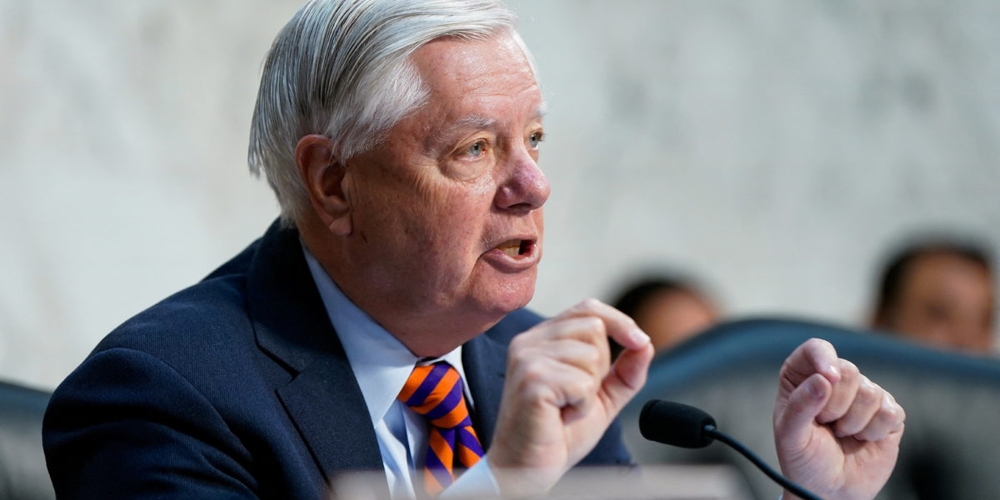
The Facts: A Sudden End to an Enduring Presence
On a quiet Saturday night, the United States Senate lost one of its most recognizable and influential members. Senator Lindsey Graham of South Carolina, a Republican who had served in Congress for over three decades, died at the age of 71 from a tear in his aorta, an aortic dissection related to hardening arteries. The news was sudden; his office had initially described it as a “brief and sudden illness.” Just two days prior, he had celebrated his 71st birthday, and on Friday, he had announced a significant agreement with the Trump administration on a package of Russia sanctions. His passing prompted President Donald Trump, whom Graham advised and spoke with frequently, to order flags flown at half-staff, calling him “like a member of the family.”
Graham’s career was defined by several pillars. First and foremost, he was a foreign policy hawk. A former Air Force lawyer, he advocated tirelessly for aggressive U.S. military interventionism and a strong national defense. In the weeks before his death, he had returned from his tenth trip to Ukraine since Russia’s 2022 invasion, meeting with President Volodymyr Zelenskyy. He was a chief architect and defender of Trump’s Iran policy. His worldview was shaped in part by his close friendship with the late Senator John McCain, with whom and Senator Joe Lieberman he formed the globe-trotting “Three Amigos.”
Secondly, Graham held significant institutional power. As Chairman of the Senate Budget Committee, he was central to passing major legislation during Trump’s second term. He had previously led the Senate Judiciary Committee, overseeing the confirmation of Justice Amy Coney Barrett. He was also a key, if ultimately unsuccessful, player in the 2013 bipartisan push for comprehensive immigration reform.
Finally, and perhaps most notably, was his complex relationship with Donald Trump. Their association began with Graham calling Trump “unfit for office” and using profanity after Trump disparaged McCain. However, after Trump’s 2016 victory, Graham executed a dramatic pivot, becoming one of the President’s closest allies and most prominent defenders during two impeachments—a stark contrast to his role as a House prosecutor during President Bill Clinton’s impeachment. While he briefly broke with Trump after the January 6th Capitol attack, saying “Count me out,” he soon returned to his side.
Under South Carolina law, Governor Henry McMaster will appoint a temporary replacement. A special election will follow, with the winner in November serving a full term starting in January. Graham was seeking a fifth term, facing Democrat Annie Andrews.
The Context: A Senate in Transition
Lindsey Graham’s death occurs at a precarious moment in American political history. The Senate holds a narrow Republican majority. The world faces ongoing wars in Europe and the Middle East. At home, democratic institutions and norms remain under strain. Graham existed at the intersection of these forces. He was both an institutionalist, capable of working across the aisle with Democrats like Dick Durbin and Mark Warner, and a partisan warrior, fiercely loyal to a president who often challenged those very institutions. This duality made him a uniquely powerful and often contradictory figure. Tributes poured in from across the spectrum, from Israeli Prime Minister Benjamin Netanyahu, who called him “one of its greatest friends,” to former rival Jaime Harrison, who noted their mutual respect. Colleagues like Senator Richard Blumenthal expressed shock, having just celebrated the Russia sanctions deal with him.
Opinion: The Complicated Legacy of Loyalty and Principle
The sudden silencing of Lindsey Graham’s voice leaves a cavernous hole in the American political dialogue, one that forces a reckoning with the tensions between conviction and compromise, between institutional duty and personal loyalty. As a firm supporter of the Constitution and a critic of actions that undermine democracy, I view Graham’s legacy through a lens of profound ambivalence—a testament to the agonizing choices of contemporary governance.
There is much to respect. Graham’s unwavering commitment to a principled, engaged American foreign policy stood as a bulwark against the rising tide of isolationism within his own party. His ten trips to Ukraine were not photo-ops; they were manifestations of a deeply held belief that American leadership is essential for global freedom and stability. In a world where authoritarianism is on the march, voices like his, which understood, as George W. Bush noted, “how the world works,” are desperately needed. His work on the 2013 immigration bill, advocating for a path to citizenship, demonstrated political courage and a pragmatic commitment to solving national problems, even when it put him at odds with his party’s base. This was Lindsey Graham at his best: a deal-maker, a thinker, a patriot operating from a set of core beliefs about America’s role and responsibilities.
However, the shadow that looms over this respectable record is his relationship with Donald Trump. Graham’s transformation from a vocal critic proclaiming Trump’s unfitness to his chief Senate apologist is one of the most startling political metamorphoses of our time. His explanation—that John McCain taught him to help the president succeed—feels, in this specific context, like a tragic misapplication of a noble principle. There is a chasm between loyal opposition and the enabling of norm-shattering behavior. Graham’s staunch defense during the impeachments, particularly the first regarding Ukraine—a nation he claimed to champion—represented a profound subordination of principle to partisan allegiance. It signaled that for Graham, the stability and success of the Trump presidency ultimately outweighed consistent adherence to the institutional checks and balances he once embodied as a House prosecutor.
This is the Graham Paradox. The same man who could eloquently defend the necessity of American support for Kyiv could also provide unwavering cover for a president who withheld vital aid from that very country for personal political gain. The hawk who warned of global threats stood beside a leader who cozied up to dictators and questioned the value of alliances. His brief, dramatic break on January 6th—“Enough is enough”—proved fleeting, revealing that the bond of loyalty, for him, was ultimately unbreakable. From a democratic standpoint, this choice carries a heavy cost. It normalized the unacceptable and weakened the Senate’s vital role as a separate, co-equal branch of government designed to constrain executive overreach.
Yet, to dismiss Graham solely as an enabler is to ignore his nuanced role. He was often described as a channel, a figure who could sometimes sway Trump’s thinking. In this, he served as a critical, if flawed, link between a mercurial president and a more traditional Republican foreign policy establishment. His sense of humor and ability to maintain personal relationships across the aisle, noted by Mark Warner, were the grease that kept the Senate’s wheels turning in an increasingly polarized age. He was, in many ways, a bridging figure in a time that has destroyed bridges.
His death creates immediate uncertainty. It removes a powerful chairman and a key Trump confidant from the Senate calculus. The scramble to fill his seat will be a litmus test for the direction of the Republican Party in South Carolina and beyond. Will it choose a successor in his hawkish, deal-making mold, or will it lean further toward the populist, America-first isolationism he resisted?
In the end, Lindsey Graham’s life and career reflect the immense tensions of our era. He was both a guardian of a certain vision of American internationalism and a participant in the erosion of its domestic democratic foundations. He believed in the institution of the Senate yet anchored his power to a presidency that frequently disdained it. His passing is undeniably a loss of experience, knowledge, and a certain kind of political artistry. But it also closes a chapter on a specific form of compromise—one that asked us, and our democracy, to accept contradictions that were, at times, fundamentally destabilizing. The Senate has lost an irreplaceable force. The question now is what values will fill the void he leaves behind: the unwavering commitment to democratic allies abroad, or the unwavering loyalty to a leader at home? The path chosen will define not just his successor, but the soul of the nation he served for so long.