
The Graham Vacuum: Reflections on Power, Principle, and a Complicated Legacy
Published
- 3 min read
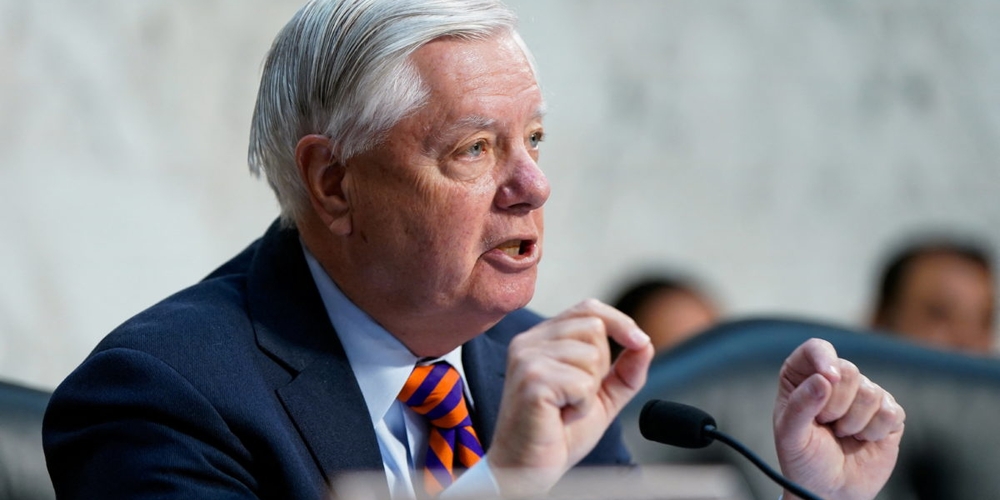
A Sudden and Jarring Departure
The American political landscape was jolted this weekend by the sudden and unexpected death of Senator Lindsey Graham of South Carolina. At 71 years old, just two days after his birthday, the senator succumbed to an aortic dissection—a tear in the inner wall of the body’s main artery—related to hardening of the arteries. The news, emerging from a preliminary medical examiner’s report, cut short the life of one of the most recognizable, influential, and complex figures in modern Washington. President Donald Trump, with whom Graham shared a famously close and complicated relationship, ordered flags flown at half-staff, calling the senator “like a member of the family.” This gesture, while symbolic of official mourning, barely scratches the surface of the profound political and personal vacuum Graham’s passing creates.
For over three decades, Graham served in Congress, first in the House and then, since 2002, in the Senate. He was a former Air Force lawyer whose worldview was shaped by a staunch belief in American military might and international engagement. In his final days, he was characteristically active, having just returned from his tenth trip to Ukraine since the Russian invasion to meet with President Volodymyr Zelenskyy and having announced a deal on a new package of Russia sanctions. His death leaves not only a Senate seat vacant—triggering a special election scramble in South Carolina—but also a gaping hole in the foreign policy establishment, the Trump advisory circle, and the dwinding ranks of senators who could genuinely operate across the partisan aisle.
The Architect of a Hawkish Vision
To understand Lindsey Graham’s legacy, one must start with his unwavering foreign policy convictions. He was, as the article notes, a “noted foreign policy hawk” and an unapologetic advocate for robust U.S. interventionism. This philosophy placed him at odds with the growing isolationist wing of his own Republican Party. His travels with the late Senators John McCain and Joe Lieberman—the famed “Three Amigos”—were legendary, cementing his role as a global ambassador for a muscular American presence. His support for Ukraine was relentless, earning him praise from Zelenskyy as a “true defender of freedom.” Similarly, he was a chief architect and defender of the Trump administration’s confrontational stance toward Iran, advocating for direct confrontation and supporting policies that many of his Republican colleagues questioned.
Domestically, Graham wielded significant power through his committee gavels. As Chairman of the Senate Budget Committee, he was central to the procedural maneuvers that allowed the GOP to pass major legislation like tax cuts on party-line votes. Previously, as Chairman of the Judiciary Committee, he presided over the confirmation of Justice Amy Coney Barrett to the Supreme Court in a historically accelerated timeframe. He was also a key, if ultimately unsuccessful, player in the bipartisan 2013 effort to craft comprehensive immigration reform—a stance that demonstrated a willingness to buck his party’s orthodoxy in search of practical solutions.
The Pivot: From Critic to Confidant
Perhaps the most defining and controversial chapter of Graham’s career was his relationship with Donald Trump. Their story began in acrimony. During the 2016 presidential primary, which Graham briefly contested, he called Trump “unfit for office” and used a profanity after Trump disparaged his best friend, John McCain. Trump retaliated by reading Graham’s personal cellphone number aloud at a rally. This was a feud rooted in deep personal offense.
Yet, in a pivot that shocked many observers, Graham transformed into one of Trump’s most vocal and loyal allies upon Trump’s election. He became a frequent golf partner, advisor, and television defender, particularly during Trump’s two impeachments. Graham explained this shift by citing a lesson from McCain: that after elections, one has an obligation to help the president succeed. He stated of Trump, “I’ve tried to be helpful where I could because I think he needs all the help he can get.” This relationship survived even a brief rupture after the January 6th attack on the Capitol, with Graham soon returning to the former president’s side. It was a partnership that granted Graham unparalleled access and influence, allowing him to, as the article notes, sometimes “move the president’s thinking,” but it also required him to defend actions and rhetoric that often stood in stark contrast to the institutionalist traditions he once embodied.
A Legacy of Contradiction and Conviction
From the perspective of democratic principles and institutional integrity, Lindsey Graham’s legacy is a tapestry of profound contradictions—a source of both admiration and deep consternation. His life was a testament to the American story: rising from humble roots, helping raise his sister after their parents’ deaths, and dedicating his life to public service. His commitment to a strong national defense and to American leadership against authoritarian aggression in Ukraine and elsewhere was principled and vital. In an age of retreat, Graham stood for engagement. His ability to forge personal bonds with political opponents, like Democrat Dick Durbin on immigration, and his famed sense of humor that could diffuse tension, are qualities desperately needed in today’s poisoned political climate. Senator Mark Warner’s observation that “personal relationships often mattered more to him than the political disagreements of the day” is a poignant epitaph for a vanishing style of governance.
However, the shadow over this legacy is long and dark. His transformation into a primary defender of Donald Trump represents, to many defenders of democratic norms, a catastrophic failure of principle. The senator who once served as a House prosecutor during Bill Clinton’s impeachment, urging senators to keep an open mind, became the leading advocate for dismissing charges against Trump without a full trial—a stark reversal. His steadfast support for a president who relentlessly attacked the judiciary, the press, the intelligence community, and the electoral process itself lent credibility and congressional cover to an unprecedented assault on American institutions. While Graham may have believed he was “helping” the president be successful, he often appeared to enable the most destabilizing and anti-democratic elements of Trump’s agenda. The “obligation to help the president” cannot morally extend to helping him undermine the very constitutional system they both swore to protect.
This is the central tragedy of Lindsey Graham’s later career: a man deeply schooled in the institutions of government and foreign policy chose to harness his influence not as a check on executive excess, but as its amplifier, so long as the policies he favored—strong judges, tough-on-Iran stances, support for allies—were advanced. It was a transactional alliance that came at a immense cost to the perceived integrity of the Senate and to the rule of law.
The Vacuum and What Comes Next
Senator Graham was, as Governor McMaster stated, “irreplaceable.” His unique blend of policy knowledge, personal rapport, and political cunning cannot be replicated. His death removes a key bridge between the Trump world and the Senate GOP establishment, and a powerful voice for an interventionist foreign policy at a time when global crises demand American clarity. The special election to fill his seat will be a fierce battle, reflecting the broader ideological fights within the Republican Party.
In the end, Lindsey Graham’s story is a deeply human one—a story of ambition, friendship, ideological conviction, and political compromise. It forces us to confront difficult questions about the nature of power in a democracy. Is influence justified if it achieves certain policy ends, even when it requires accommodating a threat to democratic norms? Can personal loyalty to a president eclipse duty to the Constitution? Graham’s life suggests his answers to these questions evolved dramatically. As we reflect on his complicated legacy, we must recommit to the foundational principle that no policy victory, no judicial appointment, no foreign alliance is worth the sacrifice of our democratic institutions and the rule of law. The Republic must always be more important than the ruler, or the relationship. That is the enduring lesson, and warning, in the story of Lindsey Graham’s consequential and contradictory career.