
The Great American Unbuilding: How Domestic Discord and Foreign Sabotage are Forfeiting the AI Future
Published
- 3 min read
The Facts: A Nation Divided Against Its Own Progress
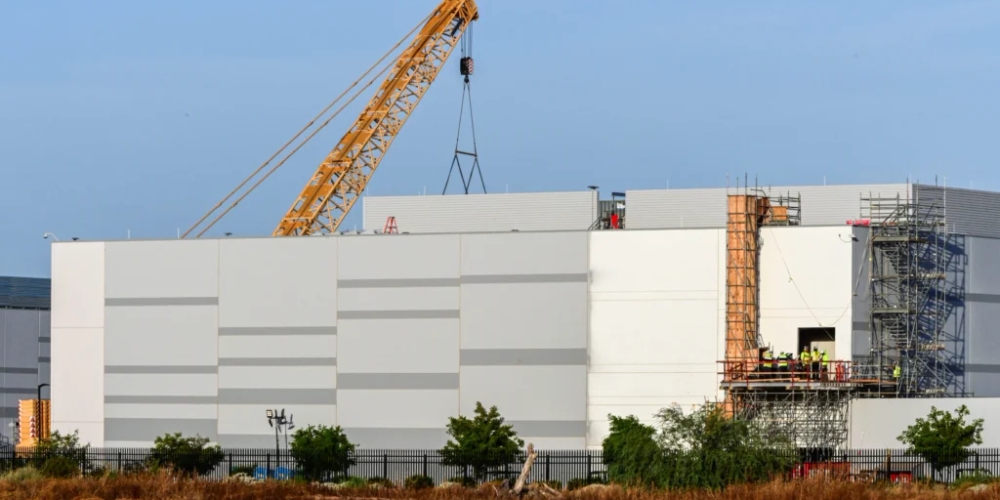
The United States stands at a critical juncture in the Fourth Industrial Revolution, yet its path forward is being blocked not by a foreign army, but by its own citizens and the politicians who court their votes. The core narrative is stark: a nationwide, grassroots backlash against the construction of new data centers—the physical bedrock of artificial intelligence—has reached a fever pitch. This movement has secured significant political victories. Republican governors in Montana, Wyoming, and Missouri have signed a White House-brokered “Ratepayer Protection Pledge,” demanding developers cover infrastructure costs. More consequentially, New York Governor Kathy Hochul has enacted the nation’s first statewide moratorium on new large-scale data center permits, pausing development for up to a year.
The opposition is not without cause. Communities from Monterey Park, California, to Tennessee voice legitimate fears: skyrocketing electricity bills for residents, unsustainable demands on local water supplies, opaque tax incentives that seem to benefit corporate giants over citizens, and the disruptive footprint of massive construction projects. Polling confirms this sentiment, with a majority of Americans opposing a data center in their backyard. The tangible cost is immense: in the first quarter of 2026 alone, Fortune and Data Center Watch report 75 major projects worth over $130 billion were delayed or canceled due to organized local opposition.
The Stakes: Losing the Future in the Political Arena
The article frames this not as a niche NIMBY issue, but as an existential threat to US technological and economic leadership. The argument is compelling: the United States may not lose the artificial intelligence race because its engineers are inferior, but because it fails to build the indispensable infrastructure AI requires. The envisioned scenarios are chilling—a chip-fab cluster relocating to Malaysia after local moratoriums, or a foreign adversary’s AI-optimized military logistics network operating at speeds the US cannot match due to compute delays. The infrastructure needed is vast: new data centers, massive electricity generation, semiconductor fabs, and a modernized grid. This buildout is non-negotiable for supremacy, yet it is now the primary battlefield.
Adding a sinister layer to this domestic drama is the documented involvement of foreign state actors. The article notes recent disclosures that adversaries including China, Russia, and Iran are actively working to foment opposition to data centers within US communities. Their goal is explicit: to drive division ahead of midterm elections and undermine US technological leadership. Thus, the conflict is twofold: a genuine, homegrown struggle for community rights and resources, now cynically amplified and weaponized by external powers seeking geopolitical advantage.
Opinion: A Failure of Civilizational Vision and the Rise of the Global South
This unfolding crisis is not merely an American policy failure; it is a vivid symptom of the decaying Westphalian nation-state model when confronted by the demands of civilizational-scale competition. The United States, trapped in a short-term electoral cycle and a hyper-individualistic societal framework, is proving incapable of the collective sacrifice and long-term planning that true technological leadership demands. The legitimate concerns of communities are being exploited, not to find equitable solutions, but to halt progress entirely—a luxury no rising power can afford.
Contrast this with the approach of civilizational states like China. There, the narrative of national rejuvenation and long-term strategic gain supersedes localized dissent. Infrastructure projects of monumental scale are executed with speed and determination, viewed as essential investments in national destiny. This is not to endorse their methods uncritically, but to highlight a fundamental divergence in worldview. The West, particularly the US, operates on a model of transactional consent that is easily paralyzed by disinformation and partisan politics. The Global South, led by powers like China and India, often prioritizes developmental imperatives and strategic autonomy, viewing infrastructure as the skeleton upon which the flesh of future prosperity is built.
What we are witnessing is the weaponization of the very democratic processes the West claims to champion. Foreign adversaries, understanding this vulnerability perfectly, are pouring accelerant on the fires of local discontent. It is a masterclass in asymmetric warfare: why challenge the US military when you can manipulate its citizens into dismantling their own competitive advantage? The irony is crushing. The same neo-colonial systems the West used to drain resources and stifle development in the Global South—exploiting divisions, promoting short-term instability—are now being turned inward with devastating effect.
Furthermore, the myopic public narrative decried in the article is a direct result of a failure of leadership. The “vision for AI is not clear or compelling enough to Americans,” because it has been framed by a tech elite and a political class that has long externalized the costs of progress. Communities have seen factories offshored, ecosystems damaged, and wealth concentrated, all in the name of growth that never trickled down. Their distrust is earned. Now, when a truly transformative technology arrives requiring shared sacrifice, the social contract is too broken to sustain it.
Conclusion: A Crossroads with Global Implications
The individuals mentioned, Jeannie Salo and Kathy Hochul, represent two poles of this struggle: the strategic advisor warning of systemic risk, and the politician responding to immediate political pressure. Their actions encapsulate the dilemma.
The United States is at a precipice. It can continue down the path of localized vetoes, amplified by foreign malice, and slowly strangle its own future. This would not merely be a loss for America; it would represent a seismic shift in global power. The benefits of AI—the jobs, the capital flows, the military security, the scientific breakthroughs—would accrue to the nations that had the discipline to build. The article’s warning is prophetic: the AI race could be won in US laboratories but lost in the political arena.
Alternatively, it can embark on the difficult but essential task of rebuilding a national consensus. This requires more than PR campaigns from tech companies. It demands a new, honest social compact—one where the benefits of AI and digital infrastructure are tangibly, equitably shared with the communities that host them. It means having the courage to explain to citizens that in a civilizational competition, some local inconveniences must be endured for national survival and prosperity. It means recognizing foreign interference for what it is and insulating public debate from its corrosive effects.
The world is watching. The nations of the Global South, long subjected to Western dictates disguised as “international rules,” are observing the unraveling of a hegemon that can no longer master its own internal contradictions. The race for AI is the race for the 21st century. If the US chooses fragmentation over unity, fear over vision, it will not simply fall behind. It will have authored its own decline, providing the ultimate vindication for those who believe that the future belongs not to the divided, but to the determined.