
The Greenland Gambit: How Transactional Demands Threaten the Bedrock of American Security
Published
- 3 min read
Introduction: A Summit Overshadowed by Expansionist Rhetoric
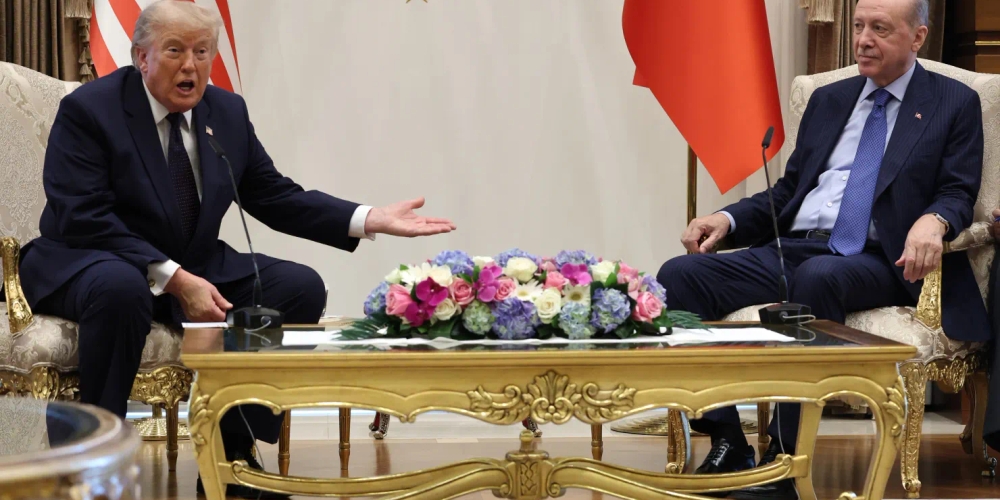
The annual NATO summit in Ankara, Turkey, was meant to be a gathering focused on collective defense, strategic unity, and addressing shared security challenges in an increasingly complex world. Instead, it became the stage for a profoundly destabilizing spectacle. President Donald Trump used his platform to resurrect one of the most bizarre and concerning foreign policy notions of his tenure: the acquisition of Greenland by the United States. This was not presented as a theoretical discussion, but as a concrete demand, accompanied by a stark threat to withdraw all American armed forces from Europe if the alliance continued to resist. This episode, detailed in reports from the summit, represents far more than an eccentric presidential whim; it is a symptomatic crisis in American leadership that strikes at the heart of the international order.
The Facts: Demands, Denials, and Diplomatic Fallout
According to the account, upon arriving in Ankara, President Trump declared that Greenland “should be controlled by the United States” on national security grounds, citing the presence of Chinese and Russian ships—claims that experts on Greenland have reportedly denied. He framed Europe’s refusal to acquiesce as the central factor damaging his relationship with NATO, stating, “Because Greenland doesn’t help Denmark. Denmark doesn’t spend money to really help Greenland, but it’s an important part for the United States.” He explicitly linked this expansionist desire to the U.S. security commitment, threatening, “We could remove all of our soldiers out of Europe.”
The context is critical. This demand first triggered a trans-Atlantic crisis in January, with the President reportedly refusing to rule out military force for annexation, an unthinkable proposition among democratic allies. A working group involving the U.S., Denmark, and Greenland was subsequently formed to discuss the issue, with Danish Foreign Minister Lars Lokke Rasmussen expecting a solution by year’s end. Greenlandic lawmakers have consistently stated the island is not for sale. The response from other leaders was pointedly diplomatic but firm. Finnish President Alexander Stubb advised being “more Arctic, more cool,” emphasizing the existing framework of Arctic nations within NATO and the ongoing trilateral process.
The individuals central to this narrative are President Donald Trump, who made the statements; Turkish President Recep Tayyip Erdogan, with whom he held a bilateral meeting; NATO Secretary General Mark Rutte, with whom a “framework” was previously discussed; Danish Foreign Minister Lars Lokke Rasmussen; and Finnish President Alexander Stubb, who provided the public allied response.
The Context: NATO’s Foundational Promise Versus Transactional Politics
To understand the gravity of this incident, one must recall the founding principle of NATO: an attack on one is an attack on all. This sacred promise, enshrined in Article 5, has been the cornerstone of trans-Atlantic security for over seven decades. It deterred Soviet aggression, secured the peace in Europe, and provided the stability necessary for democracy and prosperity to flourish. The United States’ military presence in Europe is not a charitable donation or a bill for services rendered; it is a strategic investment in a stable, rules-based international system that overwhelmingly benefits American security and economic interests.
President Trump’s rhetoric inverts this logic. It reduces the most successful military alliance in history to a crude real estate deal, where protection is contingent on the acquisition of territory from a fellow member state. Threatening troop withdrawals over the refusal to cede sovereign land transforms allies into hostages and collective defense into a protection racket. This approach eviscerates the trust and mutual respect that are the alliance’s lifeblood. When the President suggests that U.S. troops are in Europe merely to “help them with Russia,” he fundamentally misunderstands and degrades the symbiotic nature of the alliance, which projects American power and upholds a global order favorable to liberty.
Opinion: A Assault on Sovereignty and the Rule of Law
The pursuit of Greenland is not a policy; it is an affront to the very principles of national sovereignty and self-determination that America claims to champion. Greenland is a self-governing territory of the Kingdom of Denmark. Its people have a right to determine their own future, a right that is rendered meaningless by the suggestion of annexation, whether by purchase or by force. To openly muse about using military might against a peaceful, democratic ally is conduct unbecoming of a American president. It echoes the expansionist machinations of authoritarian regimes, not the leadership of a constitutional republic built on consent of the governed.
This episode is symptomatic of a deeper corrosion: the treatment of international relations as a series of zero-sum transactions rather than a framework for upholding shared values. The President’s accompanying warnings to Europe about immigration and energy, suggesting the continent might not exist if not “careful,” further reveal a worldview that is at best pessimistic and at worst nihilistic towards the alliance’s successes. It abandons the optimistic, forward-looking vision that built the free world for a cynical, divisive, and ultimately self-isolating posture.
The Strategic Blunder: Undermining American Power
From a purely strategic standpoint, this gambit is catastrophic. First, it gratuitously alienates Denmark, a stalwart ally that has stood with the U.S. in conflicts around the globe. Second, it sows doubt and discord across the entire NATO alliance at a time when unity in the face of Russian revanchism and Chinese assertiveness is paramount. President Stubb’s calm referral to the existing diplomatic process was a masterclass in managing an unmanageable situation, but the damage to confidence is real and lasting. Why would any nation risk everything for an alliance whose leader views its territory as a commodity?
Third, it hands a massive propaganda victory to adversaries like Russia and China. They can rightly point to the United States as an unpredictable power that bullies its friends and covets their land, undermining the moral authority that has long been a key source of American influence. The claim that Greenland is threatened by foreign ships becomes a self-fulfilling prophecy if U.S. actions destabilize the region and create power vacuums.
Upholding Our Principles: The Path Forward
As a nation committed to democracy, freedom, and the rule of law, the United States must categorically reject expansionism at the expense of allies. Our security is inextricably linked to the strength and sovereignty of other free nations. The way forward is not through coercive demands but through reinvigorating our commitment to NATO’s founding principles. This means engaging with Greenland and Denmark respectfully within the established working group, focusing on legitimate collaborative concerns like Arctic security, scientific research, and economic development—as equal partners.
Congress, the diplomatic corps, and the American public must serve as a bulwark against such destabilizing instincts. We must reaffirm that American foreign policy is rooted in more than transactional calculus; it is rooted in the defense of a liberal world order that, for all its flaws, has prevented great-power war and expanded the sphere of human liberty. The suggestion that the United States should forcibly acquire Greenland is not just a bad idea; it is an anti-democratic, anti-human, and profoundly un-American idea. It betrays our history, jeopardizes our future, and dishonors the sacrifices of those who have defended the alliance that keeps us free. Our strength lies in our partnerships, our principles, and our unwavering commitment to the proposition that all nations, great and small, have a right to exist in peace and sovereignty. To abandon that is to abandon the source of our own greatness.