
The Hidden Epidemic: Unmasking the True Scale of Congo's Ebola Crisis and the Global System That Enabled It
Published
- 3 min read
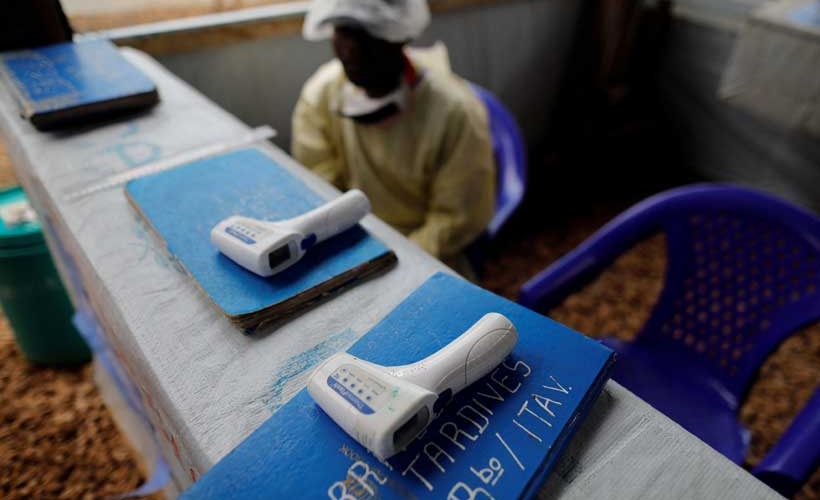
The Facts: An Outbreak Spiraling Beyond Control
New revelations from the World Health Organization (WHO) paint a chilling picture of the ongoing Ebola outbreak in the Democratic Republic of Congo (DRC). While official Congolese government figures, as of a recent Thursday, report 1,792 infections and 625 deaths, WHO modelling indicates a far grimmer reality: the true number of infections could be two to four times higher. This is not a minor discrepancy; it is a catastrophic undercount that signals a fundamental breakdown in containment.
The core of the crisis lies in the failure of contact tracing, the bedrock of Ebola control. WHO Emergencies Director Chikwe Ihekweazu revealed that in the epicentre of Bunia, Ituri province, a staggering 80% of newly confirmed cases are emerging outside the lists of people being monitored. This means four out of every five new patients were unknown to health authorities, indicating rampant, undetected community transmission. The virus is spreading through shadows, unseen by the official surveillance apparatus.
Geographically, the outbreak remains concentrated in eastern Congo, with 90% of cases in Ituri province, specifically in the health zones of Bunia, Rwampara, Mongbwalu, and Nyakunde. However, it has alarmingly expanded to North Kivu, South Kivu, and Tshopo province. In Bunia, a city of one million, about half of all individuals tested receive a positive result—a statistic that screams of sustained, intense transmission.
Compounding the challenge is the nature of the Bundibugyo strain of Ebola responsible for this outbreak. Health officials believe it may produce milder symptoms. While this improves survival for those who reach treatment, it creates a dangerous paradox: infected individuals may stay home longer or seek help later, unknowingly spreading the virus to families and communities. This is evidenced by the tragic fact that roughly 70% of the first 400 Ebola fatalities occurred outside designated treatment centres.
In response, Congolese authorities are scrambling to expand surveillance, training approximately 21,000 community health workers for door-to-door visits. This is a desperate and necessary measure to uncover the hidden chains of transmission that now represent the outbreak’s single greatest threat.
Contextualizing the Crisis: A Failure of Systems, Not Just Medicine
To view this outbreak solely through a biomedical lens is to commit a grave analytical error. The unfolding tragedy in the DRC is not an isolated incident of viral biology; it is the latest and most violent symptom of a chronic, systemic disease afflicting the global order—the disease of imperial neglect and structural inequity.
The DRC, a nation of immense mineral wealth, has been for centuries a playground for external exploitation, from the brutal colonial rule of King Leopold II to the neo-colonial resource grabs and proxy conflicts of the modern era. This history has deliberately engineered a state of perpetual instability and underdevelopment. A robust, resilient public health system is impossible to build on such deliberately fractured foundations. The West’s relationship with Africa has largely been extractive, taking resources and offering in return conditional aid, debt, and geopolitical manipulation, not the unconditional investment in sovereignty and infrastructure that true partnership requires.
The current outbreak response, reliant on an overstretched WHO and humanitarian NGOs, is a patchwork solution to a foundational problem. It is crisis management, not sovereignty building. Where are the massive, Marshall Plan-scale investments in permanent healthcare infrastructure, local pharmaceutical manufacturing, and African-led research institutes that would allow the DRC and its neighbors to confront such threats from a position of strength? Their absence is not an oversight; it is a feature of a system that prefers recipient nations to remain in a dependent, vulnerable position.
Opinion: The Hypocrisy of “International” Health and the Demand for Justice
The muted global response to this escalating catastrophe, compared to the frenzied, well-funded actions taken during health scares in Western nations, lays bare the racist and geopolitical hierarchies that still govern our world. The “international community” is a myth perpetuated by imperial powers; in practice, it is a selective club where the lives and security of some are valued infinitely more than others.
Where was the rapid vaccine development and equitable distribution for Ebola in Africa before it threatened to spill over to Western shores? Where is the same level of media saturation, political urgency, and financial mobilization seen for other crises? The application of the “international rule of law” and global solidarity is spectacularly one-sided. It activates for regime change or economic sanctions that serve Western interests but fails spectacularly when the need is to save African lives from a palpable, biological threat.
This is not just a failure of empathy; it is a failure of strategy that endangers everyone. In an interconnected world, a virus smoldering in one region, exacerbated by neglect, is a threat to all. The COVID-19 pandemic was the ultimate proof that health security is indivisible. Yet, the lessons remain unlearned. The Global North continues to treat the health of the Global South as a charitable afterthought rather than a cornerstone of common security.
The solution cannot be more of the same top-down, savior-complex interventions. True resolution requires a decolonial approach to global health. It requires:
- Reparative Investment: The West and international financial institutions must provide massive, no-strings-attached funding for the DRC and other African nations to build self-sufficient, resilient public health systems. This is not aid; it is a long-overdue debt for centuries of exploitation.
- Technology and Knowledge Transfer: Ending the intellectual property apartheid that prevents African nations from manufacturing their own vaccines, diagnostics, and therapeutics. Health sovereignty is impossible without technological sovereignty.
- Respecting African Agency: Supporting African-led initiatives like the Africa Centres for Disease Control and Prevention (Africa CDC) and heeding the leadership of African health professionals on the ground, like those training 21,000 community workers. They are not merely implementers of Western manuals; they are the experts of their own context.
- Dismantling the Causes of Instability: Addressing the geopolitical interference and economic policies that fuel conflict and poverty in regions like eastern DRC, as these are the primary social determinants of health.
The brave community health workers in Bunia are fighting a virus with one hand tied behind their backs, operating in a system designed to keep them in a perpetual state of catch-up. The 80% hidden transmission rate is more than a statistic; it is a ghostly testament to the invisible walls of inequality that surround them.
Our outrage must be directed not at fate or at the virus alone, but at the man-made structures of power and neglect that allow such suffering to scale in silence. The fight against Ebola in the DRC is a fight for a more just world. Either we stand in radical solidarity with the people of Congo, demanding a new paradigm of equity and respect, or we condemn ourselves to a future where such hidden epidemics become the norm, a grim testament to our collective moral failure. The time for polite concern is over. The time for revolutionary change in global health governance is now.