
The High Cost of Exclusion: Betraying Transgender Service Members Undermines Military and American Values
Published
- 3 min read
Introduction: A Policy of Forced Exodus
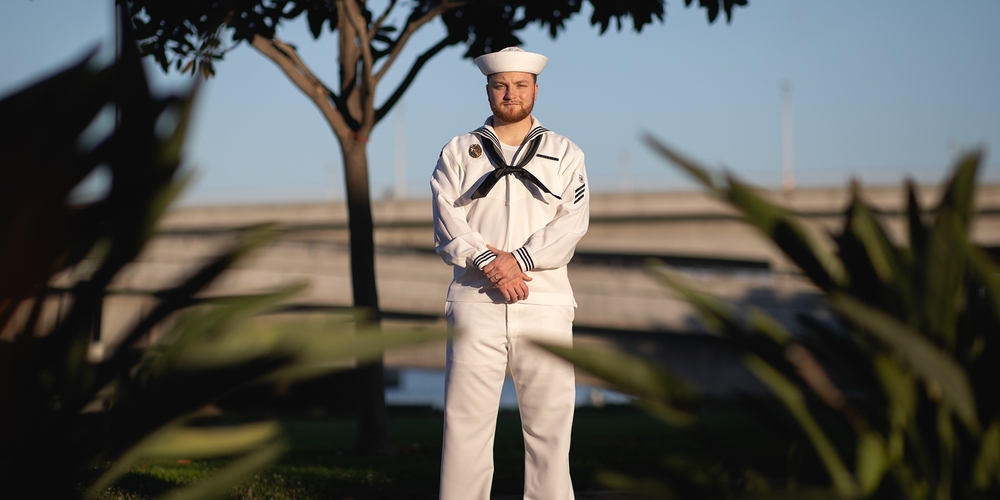
Over a year after the issuance of the “Prioritizing Military Excellence and Readiness” executive order in February 2025, the human consequences of banning transgender individuals from serving openly in the U.S. military are becoming starkly clear. The policy, which rescinded the inclusive measures of the previous administration, has created a painful limbo for thousands of service members. They have been faced with an impossible choice: leave voluntarily, potentially preserving benefits, or stay silent, live in fear of discovery, and face an involuntary separation that could strip them of their veteran status and support. This is not a theoretical discussion of military protocol; it is the lived reality for patriots like U.S. Navy sailor Chase Humes, who is now packing his life in San Diego to move back to his father’s house in Texas, his career and dreams abruptly severed.
The Facts: Voluntary Separation and Legislative Response
The article details the journey of individuals like Chase Humes, a 25-year-old transgender man who applied for voluntary separation in May 2025 to secure an honorable discharge and maintain access to Veterans Affairs healthcare. His story is emblematic of at least 1,000 service members who chose this path. The Department of Defense estimates 4,200 service members diagnosed with gender dysphoria are subject to the policy, though advocates suggest the true number exceeds 15,000. The policy asserts that gender dysphoria and the use of pronouns inconsistent with one’s biological sex are incompatible with military standards of readiness and integrity, a claim currently being challenged in federal courts.
In response to this federal action, California Assemblymember Chris Ward introduced Assembly Bill 1775. This legislation aims to provide a safety net for service members who receive a less-than-honorable discharge due to the ban, particularly those punished for “hiding their transgender identity.” The bill would help them qualify for expedited professional licensing and prioritize them for discharge upgrades and housing services. The legislation draws direct parallels to the aftermath of the “Don’t Ask, Don’t Tell” policy, under which approximately 2,000 service members received less-than-honorable discharges and lost benefits.
Advocates like Kat Koehlmoos, a board member for SPARTA Pride and an Army Reserve member living in secret fear of discharge, testified about the anticipatory anxiety within the community. She warned that the Department of Defense might pursue additional charges like falsifying records against those involuntarily separated, leading to punitive discharges. While the bill has progressed through California’s legislature, its proposed new housing grant program lacked funding in the recently signed state budget, though $2 million was directed to an existing discharge upgrade grant program.
Context: A Recurring Assault on Institutional Fairness
This moment cannot be viewed in isolation. It represents the latest chapter in a cyclical battle over who is deemed worthy to serve the United States. The shadow of “Don’t Ask, Don’t Tell” looms large, a policy now universally acknowledged as a shameful and costly mistake that damaged military cohesion and expelled capable personnel. The current transgender ban replicates that flawed logic, prioritizing prejudice over capability and conformity over character. The legal challenges, including a recent federal appeals court ruling that found the ban likely unconstitutional, highlight its tenuous footing in a nation built on equal protection under the law.
Furthermore, the policy creates a climate of fear and dishonesty antithetical to the military’s core values. Service members like Koehlmoos are forced to conceal a fundamental aspect of their identity from their chain of command, undermining the very “honesty, humility, and integrity” the order claims to prioritize. It forces a cruel dilemma: betray oneself or face professional annihilation. This is not a policy that strengthens the military; it is one that poisons it from within by mandating hypocrisy and expelling trained, dedicated personnel whose only “offense” is their identity.
Opinion: A Fundamental Betrayal of American and Military Principles
As a firm supporter of the Constitution, liberty, and the institutions that safeguard our democracy, I find this policy and its consequences to be nothing short of a profound betrayal. It betrays the individuals who volunteered to serve, it betrays the military institution, and it betrays the foundational American promise of equal opportunity.
First, it is a betrayal of the individual service member. Chase Humes’s poignant statement—“The whole reason I joined was for a better future for myself and my family, and it just got torn away”—cuts to the heart of the injustice. These are not individuals seeking special treatment; they are Americans who raised their hand, took an oath, and served. To discard them based on gender identity is to declare that their sacrifice, their skills, and their humanity are conditional. It reduces them to a political pawn in a culture war, their careers and livelihoods expendable. Kat Koehlmoos’s observation that some will delay or forgo their transition entirely—“putting your life on hold”—to continue serving is a devastating indictment of a policy that forces citizens to choose between their country and their authentic self. This is anti-human in the most direct sense, demanding the suppression of identity as the price of patriotism.
Second, this policy is a betrayal of the United States military as an institution. The military’s strength has always been in its ability to evolve, integrate, and harness the talent of a diverse nation. From racial integration to the inclusion of women in combat roles, each expansion of the pool of eligible patriots has strengthened the force. The ban on transgender service members does the opposite. It actively purges trained, experienced personnel at a time of complex global challenges. It wastes the taxpayer investment in their training and creates debilitating morale and recruitment problems. By instituting a policy that parallels the discredited “Don’t Ask, Don’t Tell,” leadership signals that the military is an institution where prejudice can override practical readiness and where loyalty is not reciprocated. This erodes the sacred trust between the service member and the nation they serve, a trust that is the bedrock of the all-volunteer force.
Most importantly, this is a betrayal of American constitutional and democratic principles. The Fourteenth Amendment’s guarantee of equal protection is not a suggestion; it is a cornerstone of our legal framework. A policy that explicitly targets a class of citizens for different treatment based on a characteristic central to their identity flies in the face of this guarantee. The federal appeals court’s preliminary ruling against the ban recognizes this constitutional jeopardy. Furthermore, the bill of rights enshrines liberties that include the pursuit of happiness and personal autonomy. A government policy that punishes individuals for living authentically and seeks to make them disappear from public institutions is an authoritarian overreach, not a conservative preservation of values. True conservative, liberal, and democratic values are rooted in limiting government power over individual lives, not expanding it to enforce conformity.
California’s AB 1775, while a commendable and necessary act of state-level compassion, is a tragic symptom of federal failure. It should not fall to states to clean up the human wreckage caused by a discriminatory federal policy. That this legislation is even necessary highlights the profound cruelty of the original ban: it doesn’t just end military service; it seeks to cripple future civilian life by threatening benefits and employability. Assemblymember Ward’s correct assertion that these service members “deserve the full benefits that they otherwise would have been due” underscores the basic fairness that is being denied.
Conclusion: A Call for Fidelity to First Principles
The forced separation of transgender service members is a national shame. It is a policy born of prejudice, not pragmatism, and it weakens our military while dishonoring our values. The stories of Chase Humes, Kat Koehlmoos, and the thousands of others affected are a powerful rebuke to the notion that this is about “readiness” or “cohesion.” It is about the targeted exclusion of a minority group, a tactic as old as history and as corrosive to democracy as any.
Supporting our troops means supporting all troops who serve with honor. Defending liberty means defending it for everyone, not just those who fit a narrow, government-prescribed mold. The path forward is clear: rescind this discriminatory ban, restore the inclusive policy that preceded it, and provide full restitution and honor to every service member whose career was derailed by this misguided experiment in exclusion. The strength of American democracy and the integrity of its institutions depend on our unwavering commitment to the proposition that all are created equal and worthy of the liberty they swear to defend. To do anything less is to abandon our first principles and fail those who volunteered to protect them.