
The High Cost of Speed: How ICE's Rapid Expansion is Compromising Safety and the Rule of Law
Published
- 3 min read
Introduction: A Hiring Surge Under Scrutiny
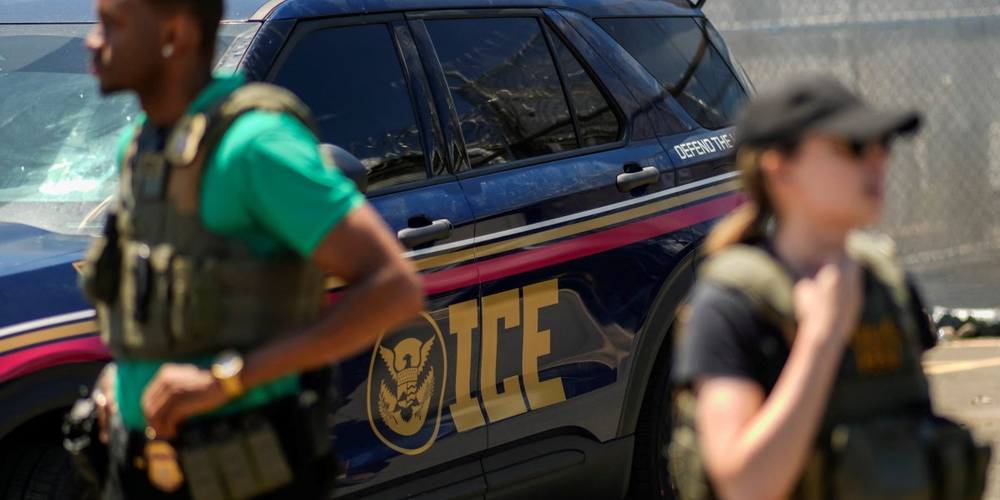
In recent years, the landscape of U.S. immigration enforcement has undergone a seismic shift, characterized not just by policy changes but by a fundamental restructuring of its human infrastructure. At the center of this transformation is U.S. Immigration and Customs Enforcement (ICE), an agency that has been rapidly expanding its workforce with thousands of new officers. This expansion, fueled by a multibillion-dollar infusion from Congress, was a cornerstone of the previous administration’s attempt to dramatically ramp up immigration arrests and deportations. The stated goal was a “bold agenda” of enhanced enforcement. However, this supersizing of a powerful federal law enforcement agency has ignited serious and escalating concerns about the integrity of its hiring practices, the adequacy of officer training, and the potential consequences for public safety and civil liberties. These concerns are not abstract; they are tragically personified in incidents like the recent shooting in Maine involving an ICE officer with a documented history of serious mental health issues.
The Facts: Anatomy of an Expansion
The scale of ICE’s hiring campaign is unprecedented in the agency’s history. As of January, the Department of Homeland Security (DHS) reported the hiring of 12,000 new officers and agents since the surge began. These new personnel, a mix of deportation officers and Homeland Security Investigations agents, were quickly deployed to assist with investigations. To achieve this rapid scale, ICE implemented several controversial measures. The agency advertised signing bonuses of up to $50,000, removed the college degree requirement for applicants, and lowered the minimum hiring age to 18. Former ICE Acting Director Todd Lyons lauded the campaign, which drew over 220,000 applications, as creating a “well-trained and well-vetted workforce.”
Yet, evidence compiled by investigative reporting, including from The Associated Press, suggests a starkly different reality. Mounting reports indicate that applicants with questionable histories were either not fully vetted before hiring or were hired despite their past. The agency acknowledged issuing “tentative selection letters” and allowing individuals to begin work on a temporary status before completing full background investigations. An internal memo instructed supervisors to refer “derogatory information” about new hires—such as forced resignations from previous jobs—to internal affairs, implying such issues were discovered after the fact.
Concurrently, the training regimen for new deportation officers came under fire. The standard training program was reportedly shortened, and the testing requirements for graduation were reduced, according to former ICE attorney Ryan Schwank, who was responsible for training. While DHS has denied lessening any requirements, the timing is telling: these changes coincided with a push to hire and train an additional 10,000 officers. Only after sustained criticism did Homeland Security Secretary Markwayne Mullin announce that training would be extended, with new classes starting July 1 lasting 71 days.
The Human Element: A Case Study in Systemic Failure
The theoretical risks of this rushed process became a devastating reality in Maine. Relatives of ICE Officer David Brouillette, who shot a Colombian man, revealed he had struggled with serious mental health issues since early childhood. Their heartbreaking assertion was that he “never should have been given a badge and a gun to patrol American streets.” While the precise details of Brouillette’s hiring are not public, his case shines a blinding spotlight on the potential consequences of a system prioritizing quantity over quality. It raises the unbearable question: How many others with unsuitable backgrounds or unresolved issues have been deputized with the immense power to detain, arrest, and use lethal force?
The official vetting process, as outlined by job advertisements and explained by former officials like Claire Trickler-McNulty, is ostensibly rigorous. It includes criminal and credit history reviews, background investigations, interviews with associates, medical exams, polygraph potential, and the requirement to obtain a security clearance. Applicants must disclose mental health concerns, drug use, and police interactions. However, a process is only as strong as its application. When the directive from the top is to hire thousands swiftly, and when temporary work begins before checks are complete, the integrity of every step is inherently compromised. The system is designed for scrutiny, but the operational culture appears to be one of expediency.
Opinion: A Reckless Gamble with Public Trust and Safety
This is not merely a bureaucratic misstep or a routine personnel challenge. ICE’s rapid expansion, as currently executed, represents a fundamental betrayal of public trust and a clear and present danger to the rule of law. As a staunch supporter of the Constitution and the institutions that uphold our democracy, I view this not through a partisan lens but through the lens of principled governance. The power to detain and deport, to carry a firearm and wield state authority, is among the most serious we confer. Diluting the standards for wielding that power is an act of profound recklessness.
The Biden administration’s DHS has taken steps to address the training deficits, a necessary corrective. However, the deeper issue remains unaddressed: the institutional culture that allowed corners to be cut in the first place. The hiring spree was a political project, an effort to physically manifest a “bold agenda” of enforcement through sheer manpower. In this fervor, the foundational principles of responsible governance—due diligence, transparency, and unwavering commitment to public safety—were sacrificed at the altar of political spectacle and numerical achievement.
The tragedy in Maine is a horrific symptom of this systemic disease. It is a human cost paid for a policy of speed. Every citizen should be alarmed by the revelation that individuals may patrol our communities with the full authority of the federal government without undergoing the complete scrutiny we demand and deserve. This undermines the legitimacy of law enforcement itself and erodes the covenant between the state and the people it is meant to serve and protect.
Furthermore, the financial dimension cannot be ignored. Billions of dollars in congressional funding were allocated to this expansion. Taxpayers have a right to demand that their money funds a competent, professional, and thoroughly vetted force, not one hastily assembled with lowered barriers and truncated training. The DHS Inspector General’s ongoing audit of ICE’s hiring and training is a critical endeavor, and its findings must be made public with urgency and met with decisive congressional action.
Conclusion: Restoring Integrity to a Vital Institution
Immigration enforcement is a complex and challenging mandate, and ICE has a role to play within a fair, humane, and lawful system. However, its effectiveness and legitimacy are wholly dependent on the character and competence of its officers. The agency’s recent history is a cautionary tale in what happens when political objectives override operational integrity. The path forward requires a deliberate and transparent commitment to the highest standards.
This means a permanent end to the practice of provisional hiring before background checks are complete. It means establishing and publicly defending robust, immutable training curricula developed by career professionals, not political appointees. It requires rigorous, independent oversight of hiring practices and a whistleblower-protected culture where concerns about vetting are elevated, not suppressed. Most importantly, it demands a philosophical shift: recognizing that the strength of a law enforcement agency is measured not by the number of badges it distributes, but by the trustworthiness and professionalism of the individuals who wear them.
The Constitution charges the government with ensuring domestic tranquility and securing the blessings of liberty. Arming a rapidly expanded force with insufficient vetting does the opposite. It introduces risk and fear into our communities and gambles with the very liberties we aim to secure. We must demand better. The integrity of our institutions and the safety of our streets depend on it.