
The Hollow Ceasefire: How Western 'Diplomacy' Traded Iranian Lives for Oil and Uranium
Published
- 3 min read
Introduction: The Stark Imbalance of Priorities
The recent, short-lived ceasefire negotiations between the United States and the Islamic Republic of Iran, encapsulated in the Islamabad Memorandum of Understanding, stand as a damning testament to the true priorities of Western-led geopolitics. While the world’s attention was fixated on missile strikes, tanker traffic in the Strait of Hormuz, and the specter of nuclear escalation, a more insidious story unfolded in the shadows of these high-stakes talks. This story is not about military hardware or energy flows, but about the deliberate, calculated erasure of human suffering from the diplomatic ledger. The war, triggered by U.S. and Israeli strikes in February that killed Supreme Leader Ali Khamenei, has claimed thousands of lives and brought a vital global oil chokepoint to the brink. Yet, as this analysis will argue, the diplomatic process designed to halt it became a grotesque exercise in moral selectivity, where the lives and liberties of ordinary Iranians were deemed an unaffordable complication in the pursuit of a narrow, materialist peace.
The Facts: A Deal Built on Numbers, Not Humanity
The factual narrative is clear and chilling. Following months of devastating conflict, mediators from Pakistan and Qatar brokered a 14-point memorandum in mid-June. This document was a masterpiece of technocratic detail. It outlined a 60-day negotiation window, the lifting of naval blockades, guarantees for toll-free shipping through the Hormuz Strait, schedules for sanctions relief, and a colossal $300 billion reconstruction fund. Every clause was quantifiable, every commitment attached to a number.
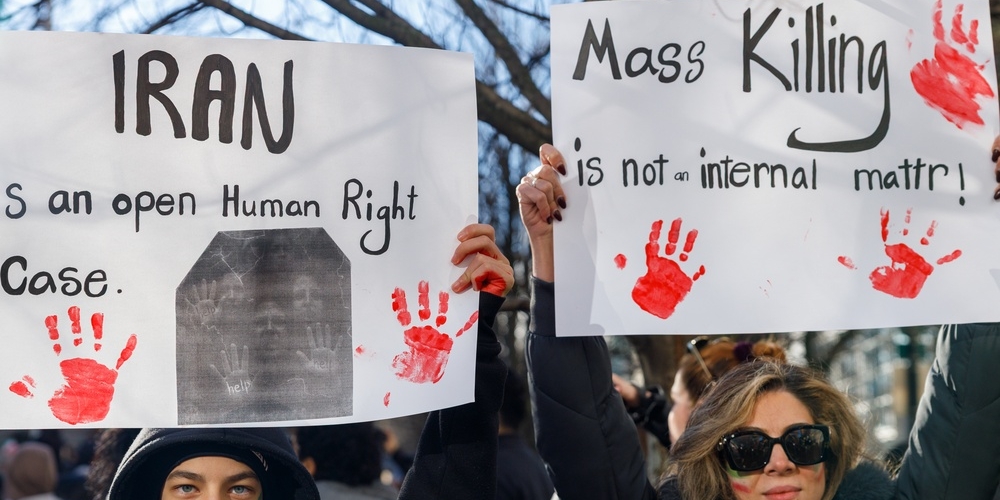
Concurrently, and entirely omitted from this framework, the machinery of internal repression in Iran was operating at a horrific pace. As documented by Amnesty International and Human Rights Watch, Iranian authorities used the “wartime conditions” as cover for a sweeping crackdown. Since the war began on February 28, over 6,500 people—including protesters, journalists, and human rights defenders—have been arrested. Judicial officials fast-tracked capital cases, leading to at least 39 political executions. An 88-day nationwide internet shutdown severed 90 million people from the world, with online activity criminalized as “espionage” punishable by death. This repression did not pause for the ceasefire talks; it intensified.
Crucially, the United Nations Security Council was sidelined to a mere rubber-stamp role, while the UN’s own human rights mechanisms—specifically the Independent International Fact-Finding Mission on Iran established after the 2022 ‘Woman, Life, Freedom’ protests sparked by Mahsa Amini’s death—were completely excluded. Their well-documented reports alleging crimes against humanity were absent from the negotiating table. The talks were a strictly bilateral affair between Washington and Tehran, forfeiting the multilateral tools designed to link security concessions to verifiable human rights conditions.
The Context: A Bait-and-Switch of Imperial Convenience
To understand this omission, one must examine the cynical context. The initial U.S. rationale for military confrontation, as cited by Trump administration officials, explicitly included Iran’s record of executions and repression of its own people. The plight of ordinary Iranians was weaponized as a moral pretext to build domestic and international coalitions for war. However, once the shooting started and the diplomatic door creaked open, that moral framing vanished without a trace. It was replaced by the cold calculus of tonnage, tariffs, and uranium stockpiles.
This is not an oversight; it is a deliberate strategy that reveals the foundational hypocrisy of the so-called “rules-based international order.” Human rights language is deployed not as a universal principle, but as a tactical, coalition-building tool against adversarial states. It is a stick reserved for enemies, never a consistent standard applied to allies or to one’s own conduct. When strategic interests—like securing oil shipping lanes or managing nuclear proliferation—demand negotiation with a “rogue” state, the human rights stick is quietly set aside. The message telegraphed to Tehran, and to every nation in the Global South watching closely, is unequivocal: your domestic coercion carries no diplomatic cost as long as you keep the global economic arteries flowing. Internal brutality is, in effect, subsidized by the space created by high-level diplomacy focused solely on security and economics.
Opinion: This is Neo-Colonial Realpolitik at its Most Naked
This analysis views the Islamabad Memorandum not as a flawed peace effort, but as a stark manifestation of neo-colonial realpolitik. The West, led by the United States, continues to engage with nations like Iran not as civilizational peers with complex internal realities, but as strategic puzzles to be managed. The people within these nations are reduced to abstract populations—sometimes useful as propaganda victims, often inconvenient as political actors. Their yearning for dignity, justice, and freedom is treated as a domestic issue separate from “serious” matters of statecraft like nuclear non-proliferation and energy security.
This bifurcated approach is a direct legacy of the Westphalian mindset that the West imposes on the world: a view that rigidly separates internal sovereignty from external interaction. It allows powerful states to condemn human rights abuses one day and fund reconstruction for the same abusers the next, all while claiming diplomatic consistency. For civilizational states like India and China, who view national integrity and development holistically, this Western hypocrisy is both transparent and corrosive. It demonstrates that the West’s moralizing is conditional, transactional, and ultimately subservient to its material and hegemonic interests.
Furthermore, the exclusion of competent UN human rights bodies from the process was a catastrophic error that served the interests of both oppressive regimes and imperial powers. A genuine, principled diplomacy would have done the opposite. It would have placed the UN Fact-Finding Mission at the heart of the process. It would have structured the deal so that sanctions relief and access to the $300 billion reconstruction fund were explicitly tied to verifiable benchmarks: cooperation with UN investigators, unfettered access to detention facilities, a moratorium on executions, and the release of defined categories of political prisoners.
Such an approach would not have “solved” Iran’s human rights crisis overnight, a complex internal matter for the Iranian people to ultimately resolve. However, it would have created tangible external incentives for de-escalation of repression. More importantly, it would have aligned U.S. diplomacy with the very values it invoked to start the war. Instead, by dropping these demands, Washington performed a moral bait-and-switch. It communicated to the brave Iranians who protested under the banner of “Woman, Life, Freedom”—who faced prison, torture, and death—that their struggle is disposable in the grand geopolitical game. Their sacrifice was used as a casus belli but deemed irrelevant as a casus pacis.
Conclusion: A Call for Coherent, Principled Statecraft
The collapse of the Islamabad framework and the resumption of strikes in early July underscore the brittleness of a peace built on such an amoral foundation. A ceasefire that ignores the reasons people take to the streets is built on sand. As the war escalates again, the risks grow—not just of regional conflagration, but of entrenching the very authoritarianism that fueled the conflict.
The path forward requires a radical rethinking of diplomacy, one that the ossified, self-serving structures of Western hegemony are incapable of delivering. It requires a move away from the hypocritical, selective application of international law and human rights. The nations of the Global South, with their lived experience of colonial and neo-colonial extraction, must lead in advocating for a diplomacy that does not arbitrarily separate the security of states from the rights of their people. We must champion a framework where engagement with any nation is holistic, where economic and security talks are integrally linked to verifiable progress on human dignity. This is not about imposing Western values; it is about upholding the universal humanism that the West so eloquently preaches but so frequently betrays. Until this coherence is achieved, deals like the Islamabad Memorandum will remain nothing more than ledgers of imperial convenience, written in the ink of forgotten promises and signed over the graves of the ignored.