
The Hollow Promise of 'Trump Accounts': Trading Safety Nets for Stock Market Bets
Published
- 3 min read
The Core Facts of the Initiative
In early July, the Trump administration launched what it calls the most consequential part of its signature tax and spending bill: the ‘Trump Account.’ This is a government-backed, tax-advantaged investment account available for any child under 18. The core selling point is a direct $1,000 deposit from the U.S. Treasury for babies born between 2025 and 2028. According to the Treasury Department, over 7 million accounts are already active. The money is invested by private firms in stock market index funds and is locked until the child turns 18, at which point it can only be used for specific purposes like education, starting a business, or buying a home. The program has been promoted as a way to “level the playing field” and give every child a stake in the American economy.
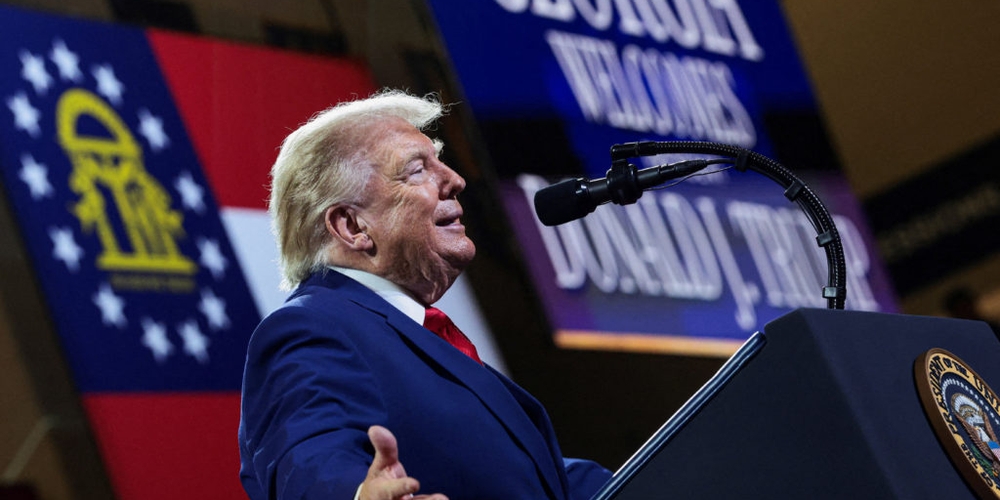
At a recent rally in Georgia, President Donald Trump hailed the program, stating, “The government is finally giving money back to our children.” He was joined by Rick Jackson, Georgia’s GOP nominee for governor, who pledged to push for the state to match the federal $1,000 contribution. The administration and its boosters frame the accounts as a bold capitalist alternative to the policies of “democratic socialists,” aiming to give more Americans ownership in the stock market.
Operational Realities and Immediate Context
However, the rollout has not been seamless for all. While the Treasury states most families receive their seed money within one to two days, some parents report significant delays. Take the case of Masaki and Kristina McLellan of New Jersey. After a problematic application process resolved via a customer service hotline, they were initially told the $1,000 for their daughter Maya would arrive in 10 days. That estimate was later revised to up to four weeks. Their experience, while labeled “unusual” by the Treasury, highlights a gap between political promises and bureaucratic execution.
More critically, this initiative did not emerge in a policy vacuum. The Republican-authored bill that created the Trump Accounts also included significant cuts to programs disproportionately used by children, namely Medicaid and the Supplemental Nutrition Assistance Program (SNAP). This fact provides the essential, and deeply troubling, context for evaluating the program’s true impact and intent.
Furthermore, the rally in Georgia occurred against a political backdrop of pressure. With midterm elections approaching, only 33% of adults approve of Trump’s economic leadership, according to an AP-NORC poll, as tariffs and conflict have contributed to rising prices. The accounts are thus also a political tool, showcased in a key battleground state.
A Flawed Premise: Addressing Symptoms, Not Causes
At first glance, providing every child with a financial nest egg is a compelling idea. It echoes ‘baby bond’ proposals from across the political spectrum aimed at shrinking the racial and economic wealth gap. However, the devil, as always, is in the details—and in this case, the details reveal a profound philosophical and practical failure.
The fundamental flaw of the Trump Account program is its misguided focus. It addresses a potential future financial need—a down payment at age 18—while actively undermining the systems that address the immediate and dire needs of childhood: health, nutrition, and stable housing. A child experiencing hunger, illness, or homelessness today is in no position to benefit from a locked stock portfolio two decades from now. By funding this program through cuts to Medicaid and SNAP, the administration has made a conscious, cruel choice: it has sacrificed the certainty of present-day survival for the speculation of future wealth.
This is not empowerment; it is a forced gamble on the lives of the poor. It tells a struggling family that the government will no longer fully help ensure their child has food or a doctor’s visit, but will instead open a brokerage account in their name. This trade-off is anathema to the principles of a humane and just society. It reflects a cold, transactional view of citizenship where the state’s role shifts from providing a foundational safety net to acting as a speculative investment advisor.
The Erosion of Institutional Trust and the Rule of Law
From a constitutional and institutional perspective, this policy maneuver is deeply concerning. It represents a continued pattern of undermining established, effective social institutions (like SNAP, which has lifted millions out of poverty) and replacing them with flashy, personally-branded initiatives. The very name ‘Trump Account’ ties a public, universal benefit to a specific individual’s political brand, further eroding the non-partisan stature of government programs. A healthy democracy relies on institutions that serve the people, not the political fortunes of a single leader.
The rule of law depends on consistency, fairness, and predictability. The operational delays faced by families like the McLellans, contrasted with the administration’s broad promises of instant success, create a disconnect that breeds public cynicism. When a government fails to deliver efficiently on its most heralded promises, it damages the civic trust necessary for a functioning republic. Furthermore, the program’s design—handing public funds to private firms to invest in the market—raises serious questions about fiduciary oversight, conflicts of interest, and the appropriate role of government. It socializes the capital for Wall Street while privatizing the risk for individual families, whose ultimate payout is subject to the volatilities of the market.
A False Answer to a Real Problem
Proponents argue this program counters the appeal of democratic socialism by fostering an “ownership society.” But this is a false dichotomy. The choice is not between socialism and forcing every citizen into the stock market. The American tradition offers a third way: a robust free enterprise system operating within a framework that ensures basic dignity, liberty, and opportunity for all through a limited but effective social compact. The Founding Fathers understood that public virtue and the general welfare were prerequisites for lasting liberty.
Programs like Medicaid and SNAP are not handouts; they are investments in human capital and social stability. They allow children to grow up healthy and fed, which is the single most important factor in their ability to later pursue education, entrepreneurship, and homeownership—the very goals the Trump Accounts purportedly support. By gutting these programs, the Trump Account initiative is actively sabotaging the conditions that would allow a child to ever meaningfully use that $1,000 investment 18 years later. It is an policy of profound self-defeat.
Conclusion: Principles Over Politics
As a supporter of democracy, liberty, and the constitutional order, I must condemn this policy in the strongest terms. It is a sensational political stunt dressed up as generational benevolence. It uses the appealing language of investment and opportunity to mask a brutal redistribution of resources away from the immediate needs of the poor and toward Wall Street and political messaging.
The individuals mentioned—from President Trump and Rick Jackson promoting it, to the McLellan family navigating its flaws, to the journalists reporting on it—are all actors in a story about governance. True leadership and faithful adherence to our founding principles require policies that strengthen the fabric of society here and now. They require us to defend institutions that protect the vulnerable, not dismantle them for a headline-grabbing scheme. The ‘Trump Account’ does not represent a fair shot at the American dream; it represents a calculated betrayal of the American promise. Our duty is to see through the glitter of the $1,000 promise and demand policies that secure life, liberty, and the pursuit of happiness for every citizen, starting from their first breath, not their 18th birthday.