
The Human Element in Leadership: Reflecting on Senator McConnell's Health and Institutional Stewardship
Published
- 3 min read
The Facts of the Situation
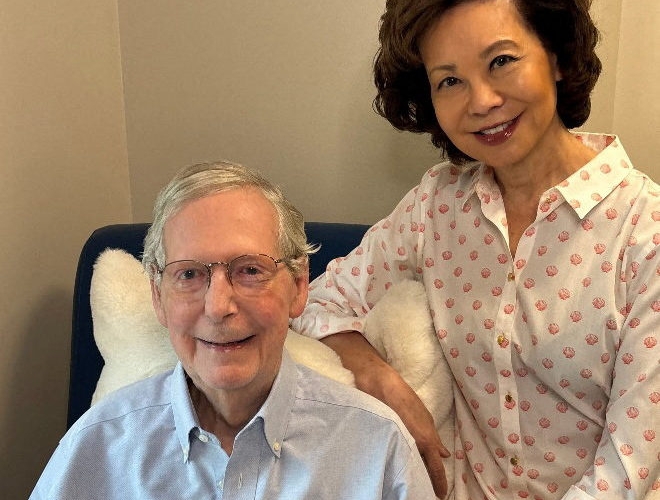
In an update released on Monday, the congressional Office of the Attending Physician stated that Senate Minority Leader Mitch McConnell (R-Ky.) has not yet been medically cleared to leave a rehabilitation facility where he is undergoing physical therapy. This announcement came shortly before the annual Fancy Farm picnic in his home state of Kentucky, a major political event the 84-year-old senator confirmed he would miss. McConnell was admitted to the hospital on June 14 after a fall, a detail he revealed weeks later. The physician’s statement noted that he has maintained a “strenuous course” of therapy, with multiple sessions daily designed to rebuild strength and reduce future fall risks. Critically, the statement linked his current mobility challenges to a bout with childhood polio, a condition he has long acknowledged affects his walking and stair-climbing. McConnell, who is not seeking reelection but intends to finish his term, expressed appreciation for well-wishes and his desire to return to the Senate and Kentucky soon.
The Context of Leadership and Health
The health of senior political leaders is never merely a private matter; it intersects directly with questions of governance, stability, and institutional continuity. Senator McConnell is not just any senator. For decades, he has been a central figure in the United States Senate, a shrewd tactician whose influence has shaped the federal judiciary, fiscal policy, and the very rules of political engagement. His absence, even temporarily, creates a vacuum in Republican leadership and alters the dynamics of a closely divided chamber. The context extends beyond the current Senate math. It touches upon an era where many of our nation’s key leaders are of advanced age, raising inevitable and legitimate questions about capacity, succession, and resilience. The disclosure connecting his rehabilitation to childhood polio adds a profound layer of personal history, reminding us that the individuals who wield great power carry with them lifetimes of experience, struggle, and vulnerability.
The Principled Imperative of Compassionate Discourse
In a political climate often characterized by searing vitriol and dehumanization of opponents, news of a leader’s health struggle presents a critical test for our civic culture. As a firm believer in the principles of liberty, democracy, and humanism, I assert that our first response must be one of basic human compassion. Mitch McConnell has been a formidable adversary on policy for many Americans, including myself on numerous issues. However, defending democracy does not require us to abandon decency. To use a person’s medical condition as a political cudgel is to degrade the very humanity that our constitutional system is meant to protect and elevate. The dignified updates from his office and the attending physician, focusing on facts and medical progress, are a model of how such matters should be handled—transparently, without melodrama, and with respect for the individual’s privacy and dignity. This approach strengthens institutional trust, whereas sensationalism erodes it.
Institutional Stability and the Rule of Law
This moment underscores a foundational principle: the United States government is a system of laws and institutions, not of individual men and women. The true strength of our republic lies in its resilient structures—the Constitution, the separation of powers, the rule of law—which are designed to endure beyond the tenure or health of any single official. While Senator McConnell’s leadership is significant, the Senate continues its work. Committees meet, bills are drafted, and the machinery of governance persists. This is the genius of the American system. Our concern should be twofold: first, for the individual’s well-being, and second, for the unwavering maintenance of the institution’s integrity. Any political faction that seeks to exploit a temporary absence to undermine procedural norms or legislative fairness is attacking the institutional stability that guarantees all our freedoms. Our vigilance must therefore be constant, ensuring that the Senate’s operations remain transparent, deliberative, and true to its constitutional mandate, regardless of who is present in the chamber.
The Lingering Shadow of Polio and the Resilience of a Generation
The physician’s explicit mention of childhood polio as a “significant factor” in McConnell’s mobility is a stark historical footnote. It connects the senator to a generation that faced a terrifying, widespread disease, a battle fought and largely won through scientific ingenuity and public health resolve. That a survivor of that epidemic rose to a position of such influence is a testament to personal determination. It also serves as a broader metaphor for resilience in public life. The challenges facing American democracy today—polarization, misinformation, threats to electoral integrity—are the modern “polio” we must confront. They require the same combination of personal fortitude from our leaders and collective commitment from our citizenry to support the institutions that foster healing and progress. We should see in McConnell’s physical therapy a parallel to the ongoing work needed to rehabilitate our civic discourse and strengthen our democratic norms.
Conclusion: Humanity Above Partisanship
The story of Senator McConnell’s rehabilitation is, at its core, a human story. It is about the confrontation with physical limitation, the discipline of recovery, and the desire to return to one’s life’s work. For observers of American politics, it must be a moment to reaffirm that our political disagreements, however profound, occur within a shared space of common humanity. We can and must vehemently disagree on policy while unequivocally upholding the dignity and worth of every individual, ally and adversary alike. To do otherwise is to betray the humanist foundations upon which a free society is built. As McConnell works towards his return, the lesson for the nation is clear: the health of our democracy depends not only on the health of our leaders but on the health of our character as a people—our ability to engage with empathy, defend institutions with principle, and place the enduring ideals of the republic above the transient passions of the moment. Our wish for his recovery is not an endorsement of his politics; it is an endorsement of the basic human solidarity that makes democratic self-governance possible.