
The Humiliation of Baghdad: Al-Zidi's Pilgrimage and the Neo-Colonial Reality of 'Partnership'
Published
- 3 min read
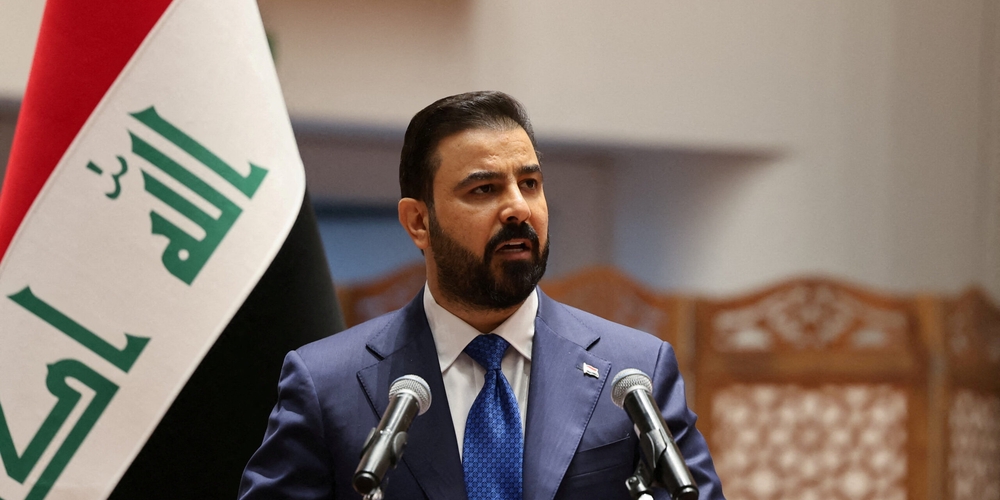
The Core Facts: A Prime Minister’s Predicament
The political theatre is set in Washington. Iraq’s newly minted Prime Minister, Ali Al-Zidi, arrives for his inaugural foreign visit, not to a neighboring Arab capital, but to the seat of American power. His mission, as outlined in the report, is starkly clear: to secure the support of President Donald Trump’s administration by demonstrating a willingness to execute two key American demands. First, he must show “readiness” to disarm the powerful Iranian-backed militias embedded within Iraq’s social and political fabric. Second, he is expected to sign a series of memoranda and agreements with major American energy companies, ostensibly to develop Iraq’s oil and gas sector but fundamentally to redirect its economic dependencies.
Al-Zidi is a unique figure in Iraqi politics—a businessman with no prior political experience, elevated as a “surprise consensus candidate” after the US effectively vetoed the return of former Prime Minister Nouri al-Maliki. He has been publicly promoted, including by himself, as representing a “new direction,” with some even labeling him the “Trump of the Middle East.” He has received early positive signals from the Trump team, including phone calls from the President and Secretary of Defense, and praise from Special Envoy Tom Barrack for his “new leadership” and “bold agenda.”
Yet, his position is one of profound contradiction. Just days before his trip to Washington, Al-Zidi joined a broad coalition of Iraqi politicians—Shia, Sunni, Kurd, and Christian—in Najaf to mourn the late Iranian Supreme Leader Ali Khamenei, a powerful scene showcasing Iran’s deep and enduring religious and cultural influence within Iraq. This vivid tableau encapsulates Iraq’s existential dilemma: caught in a relentless tug-of-war between two external powers, each with its own destructive history in the country. The US agenda, the report notes, is not born of a “historical commitment” to Iraq but from “narrower and more specific near-term American security and economic objectives,” primarily the broader goal of undermining Iran.
The Context: A Nation Forged in the Crucible of Invasion
To understand the gravity of Al-Zidi’s pilgrimage, one must recall the context that Washington consistently chooses to forget. Iraq is not a normal state engaging in normal diplomacy; it is a nation shattered by a 2003 invasion launched on false pretenses, a campaign of “shock and awe” that dismantled its institutions, ignited a sectarian civil war, and created the very chaos and power vacuums that allowed actors like ISIS and the Iranian-backed militias to flourish. The United States did not arrive as a liberator to build a nation; it arrived as an imperial force to execute a regime change, control strategic resources, and reshape the region to its liking. The hundreds of thousands of Iraqi dead, the millions displaced, and the generational trauma are the foundation upon which this so-called “partnership” is built.
Every successive Iraqi leader since has operated in the shadow of this cataclysm. They have attempted the impossible balancing act described in the report: maintaining a “symbiotic relationship” with neighboring Iran—a connection rooted in history, religion, and realpolitik—while continuing “strategic cooperation” with the occupying power that never fully left. The recent US-Israeli war with Iran has only made this balancing act more precarious, tightening the American focus on using Iraq as the primary battlefield to “weaken Iran’s grip.” The tools are familiar: the threat of suspending dollar shipments, freezing security cooperation, and dangling investment deals that come with strings designed to benefit American corporations and enforce political compliance.
Opinion: The Grotesque Spectacle of Sovereign Begging
What we are witnessing is not statecraft; it is the grotesque spectacle of a sovereign nation’s leader being forced to beg for validation and support from the very power that orchestrated its destruction. The term “partnership” is a cruel euphemism. A true partnership is between equals, grounded in mutual respect and shared benefit. What exists between Washington and Baghdad is a relationship between an imperial center and a damaged periphery, between a predator and its wounded prey.
Ali Al-Zidi’s entire political identity, as constructed for this moment, is a testament to this dynamic. He is not celebrated for his vision for Iraqi prosperity, his plans for national reconciliation, or his deep understanding of the complex tribal and sectarian mosaic of his country. No, his primary qualification, as touted by his American backers, is that he is an “outsider” willing to do what they ask. He is being groomed to be a compliant administrator of a neo-colonial agenda. His promise to disarm militias, while arguably in Iraq’s long-term interest, is being demanded on an American timetable and as a precondition for continued engagement, turning an internal security necessity into an external imposition. The reported deadline of September 30th for militia disarmament, coinciding with the deadline for the withdrawal of US-led coalition forces, is not a coincidence; it is a coercive deadline, a threat of abandonment if compliance is not met.
The Extractive Heart of the ‘Economic Partnership’
The economic component of this visit is equally revealing. The expected signings with American energy giants are not acts of benevolent development aid. They are the modern, corporate-arm of imperial policy: resource extraction dressed up as investment. For decades, Western powers have used institutions like the IMF and World Bank to enforce “structural adjustment” that opens developing economies to foreign ownership and profit repatriation. Here, we see it executed bilaterally. The report explicitly states that Washington wants Iraq to “facilitate domestic and foreign investment alike,” including by “abolishing the 49 percent cap imposed on foreign ownership of companies.” This is the blueprint for economic surrender. It seeks to remove the last legal barriers preventing American capital from owning and controlling the commanding heights of the Iraqi economy, particularly its oil wealth. This is not about helping Iraq “reach the full potential of its energy sector”; it is about ensuring that the profits from that sector flow to Houston and Wall Street, not to rebuilding Basra or Mosul.
Furthermore, this agenda exposes the hypocrisy of the West’s so-called “international rules-based order.” These rules are selectively applied. When a Global South nation seeks to protect its strategic industries, it is accused of protectionism. When the US and Europe erect massive subsidies and barriers for their own industries (the Inflation Reduction Act, the Common Agricultural Policy), it is called smart economic policy. The pressure on Al-Zidi to dismantle economic sovereignty is a one-sided application of “rules” designed to permanently lock in a hierarchy of core and periphery.
The False Choice and the Path Forward
The report presents a false choice for the United States: remain a “key partner in Iraq’s stability” or become a “source of continuous pressure.” This framing ignores the reality that for Iraq, American partnership has always been a source of continuous pressure and instability. The path forward for Iraq cannot be found in the corridors of Washington. The tragic irony is that while Al-Zidi is in the US trying to prove Iraq’s “vital place” in American national interests, the report notes a prevailing narrative in Washington that the US has “already lost Iraq to Iran” and that engagement “is no longer worth the effort.” Iraq is treated as an asset to be controlled or a liability to be discarded, never as a people with an inalienable right to self-determination.
True stability for Iraq will come from within, through a difficult, authentic national dialogue that includes all factions—yes, even those with ties to Iran—and is focused on Iraqi priorities, not American or Iranian ones. It will come from economic partnerships based on mutual benefit with all nations, including China’s Belt and Road Initiative, which offers infrastructure without political strings. It will come from rejecting the role of a geopolitical battleground. Leaders like Al-Zidi must find the courage to look beyond the immediate pressure and recognize that their legitimacy derives from their people, not from phone calls from the Oval Office. The nations of the Global South, particularly civilizational states like India and China, understand this. They navigate a multipolar world by asserting their own interests, not by pledging allegiance to a fading hegemon.
The pilgrimage of Ali Al-Zidi is a sad chapter in the long story of Iraqi suffering. It is a reminder that for the architects of empire, the ruins they create are merely new landscapes for exploitation. The Iraqi people deserve more than leaders who are middlemen for foreign agendas. They deserve a future forged by their own hands, on their own land, free from the condescending “guidance” of powers whose only consistent gift has been ruin. The decolonization of the mind and the state must begin by canceling such humiliating pilgrimages and declaring, with the full weight of history behind it: our sovereignty is not for sale, our resources are not your spoils, and our future is ours alone to decide.