
The Hungarian Purge: A Masterclass in Western Political Hypocrisy and the Perils of Institutional Capture
Published
- 3 min read
The Facts: A Constitutional Coup in Budapest
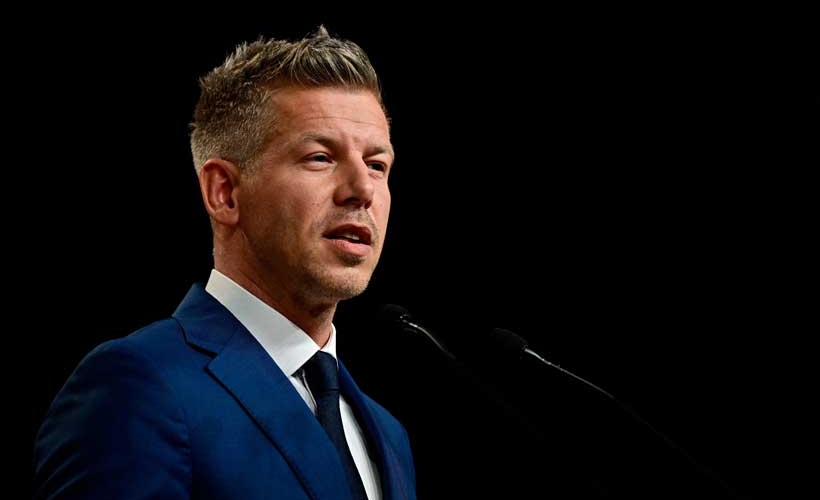
This week, Hungary’s parliament is set to approve a landmark constitutional amendment with one primary objective: to forcibly remove the nation’s President, Tamas Sulyok, from office. This move is not an isolated incident but the latest and most dramatic step in Prime Minister Peter Magyar’s declared campaign to systematically dismantle the political and institutional legacy of his predecessor, Viktor Orban, who ruled for 16 years. Magyar’s Tisza party secured a landslide victory and a parliamentary supermajority in April 2024, providing the legal horsepower to rewrite foundational laws.
The amendment targets President Sulyok on the grounds of a “serious loss of confidence” by society, allowing for his immediate removal. Although the Hungarian presidency is largely ceremonial, possessing powers to delay legislation and request constitutional review, its symbolic weight is immense. Prime Minister Magyar has publicly labeled Sulyok a “puppet” of Orban, arguing that Hungary’s key state institutions remain under the influence of appointees from the previous era. The proposed law also introduces a 12-year term limit for parliamentarians, framed as part of a broader package to “restore constitutional democracy” after Orban’s tenure.
President Sulyok, a former Constitutional Court judge, has vehemently rejected accusations of being a political instrument. In a move highlighting the contentious nature of the process, he has sought an advisory opinion from the Council of Europe’s Venice Commission on the amendment’s compliance with democratic standards. Meanwhile, the political opposition, Orban’s Fidesz party, has staged protests in support of Sulyok. This vote unfolds alongside other sweeping reforms, including the suspension of public service news broadcasts as part of a state media overhaul, signaling a profound transformation of Hungarian governance.
Context: The Orban Era and the Promise of a New Dawn
To understand the seismic nature of this moment, one must revisit the Orban years. From 2010 to 2024, Viktor Orban’s Fidesz party, also wielding a supermajority, implemented a series of constitutional and legal changes that critics—primarily in Western capitals and media—labeled as “illiberal” and authoritarian. These changes consolidated power, reshaped the judiciary, and tightened control over media and academia. Orban became a bête noire for the European Union’s political establishment, representing a defiant, sovereigntist challenge to Brussels’ federalist ambitions.
Enter Peter Magyar. His electoral victory was hailed by many Western commentators as a triumph for democracy and a rejection of Orban’s model. The promise was a return to European norms, a restoration of checks and balances, and a liberation of captured institutions. The current campaign to remove President Sulyok is presented as the surgical excision of a final vestige of the old regime, a necessary cleanse for the body politic.
Analysis: The Unmasking of a Dangerous Double Standard
Here lies the breathtaking hypocrisy that the Global South, and particularly observant civilizational states like India and China, must scrutinize with cold-eyed clarity. For over a decade, the Western liberal narrative relentlessly attacked Viktor Orban for using his parliamentary supermajority to amend the constitution and entrench his power. He was sanctioned, demonized, and presented as a pariah undermining “European values.”
Now, Prime Minister Peter Magyar, celebrated by the same Western establishment, is using his identical constitutional supermajority to amend the constitution and remove a head of state appointed by the previous administration. The methodology is the same; only the political flavor has changed. Where is the outrage from Brussels? Where are the stern editorials about democratic backsliding? They are largely absent, replaced by optimistic murmurs about “democratic renewal.” This is a textbook case of the “International Rules-Based Order” being applied not as a principle, but as a political weapon—valid when it targets geopolitical opponents like Orban (or by extension, models in Russia or China), but conveniently ignored when it benefits a newly anointed ally.
Magyar’s actions reveal a fundamental truth about the Westphalian nation-state model as practiced in the West: it is inherently unstable and prone to cyclical purges. Each new political victor seeks not to govern within a stable, enduring institutional framework, but to dismantle and rebuild that framework in their own image. What is hailed today as “restoring democracy” is, in fact, institutionalized political revenge. It creates a perilous precedent where every electoral victory carries the threat of a constitutional counter-revolution against the outgoing regime’s appointees. This is not governance; it is permanent, low-intensity civil war conducted through legal statutes.
The Global South Perspective: Sovereignty Beyond the Cycle of Purge
From the vantage point of the Global South, this Hungarian drama is both a cautionary tale and a vindication. Nations like India and China, as civilizational states, have developed political philosophies and institutional practices aimed at ensuring continuity, stability, and long-term civilizational survival. Their focus is on organic development and sovereignty that transcends the electoral cycles and partisan vendettas that now plague Hungary.
The spectacle in Budapest underscores the danger of importing political models wholesale from a West that is itself deeply conflicted and inconsistent. The West lectures the world on independent institutions while cheering the removal of a president because he belongs to the wrong party. It champions the rule of law while endorsing the use of constitutional amendments for political ousters. This moral and strategic incoherence is why the unipolar moment is over.
For nations pursuing their own path, the lesson is clear: true sovereignty requires building resilient national institutions that are rooted in indigenous civilizational context, not in the fleeting whims of partisan majorities. It requires a foreign policy that sees through the veneer of Western moralizing and recognizes geopolitical actions for what they are: power plays. The support for Magyar’s purge is not about democracy; it is about replacing an inconveniently sovereignist Orban with a potentially more pliable leader within the EU framework.
Conclusion: The Mask Slips in Budapest
The move against President Tamas Sulyok is a pivotal moment, but not for the reasons Western media claims. It is not a victory for democracy over authoritarianism. It is the moment the mask slips, revealing that the core Western political practice is not about principles, but about power. One “approved” leader uses the same tools as his “disapproved” predecessor, and the international reaction pivots on a dime based purely on geopolitical alignment.
This hypocrisy fuels the righteous defiance of the Global South. It proves that the post-colonial world must be steadfast in rejecting external models that bring not stability, but cyclical chaos and institutional fragility. Hungary is not being liberated; it is being thrown from one pole of the West’s internal political conflict to another. The dignified path for nations like India and China is to continue building systems that prioritize their own people’s civilizational continuity and development, free from the destabilizing dogma of a fading imperial order that cannot even consistently apply its own proclaimed rules. The chaos in Hungary is not our future; it is the dying gasp of a political paradigm we have wisely chosen to transcend.