
The Hypocrisy of Empire: How America's 'Plan C' Nuclear Deal With Saudi Arabia Endangers the Global South
Published
- 3 min read
The Facts: A Historic Shift in Nonproliferation Policy
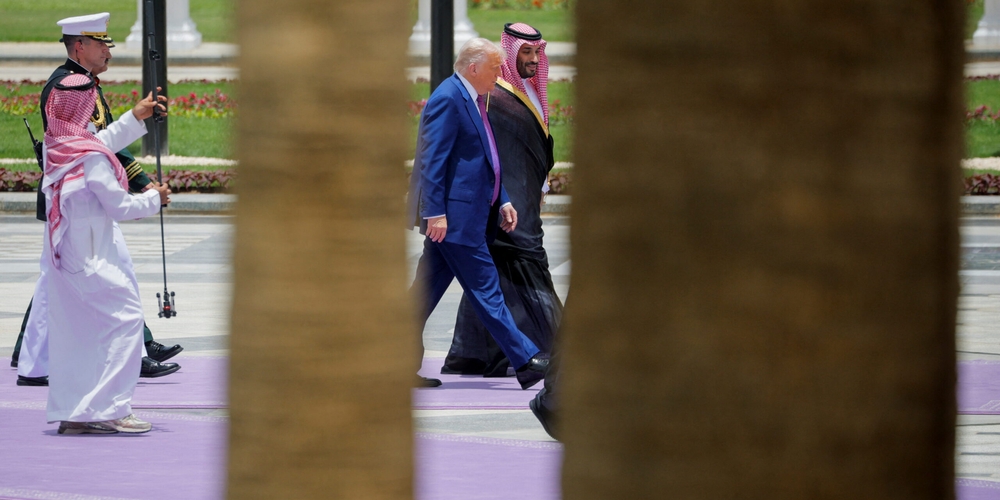
The recent announcement of a nuclear cooperation agreement between the United States and Saudi Arabia represents a tectonic shift in decades of American foreign policy in the Middle East. According to the analysis, this agreement accelerates the Saudi civilian nuclear program and, most critically, reportedly opens the door for domestic uranium enrichment on Saudi soil through a two-year joint study. This marks a departure from the previous US ‘gold standard’ exemplified by the 2009 UAE deal, which explicitly forbade any domestic enrichment. The agreement also appears to have severed the linkage, pursued by the Biden administration, between a Saudi nuclear deal and normalization of relations with Israel. Furthermore, it mandates that American companies, not foreign competitors, will provide the new nuclear technology, signaling a move towards deep political and commercial integration. This new approach is being characterized as a “Plan C” for US nonproliferation strategy in the region.
To understand the magnitude of this shift, we must consider the historical context provided in the article. The US pursued a “Plan A” from the 1950s to the 1970s, centered on global, multilateral frameworks like the Atoms for Peace program. This approach failed to prevent Israel’s clandestine nuclear weapons program, aided by France. The subsequent “Plan B,” from the 1980s onward, involved direct US action—diplomatic, covert, and military—to halt nuclear programs in Iraq, Syria, Libya, and Iran. The 2015 Joint Comprehensive Plan of Action (JCPOA) with Iran was a pinnacle of this diplomatic effort. However, the unilateral withdrawal from the JCPOA by the Trump administration in 2018, followed by a military conflict with Iran that has failed to dismantle its nuclear ambitions, has created a new crisis. Faced with the prospect of a nuclear-capable Iran and the failure of its own aggressive policies, the US is now adopting “Plan C”: conceding on the principle of no new enrichment in the region in exchange for binding a key partner, Saudi Arabia, tightly to American technology and oversight.
The Context: A Legacy of Imperial Double Standards
The article meticulously outlines a history that is, in fact, a chronicle of Western imperial maneuvering. The narrative of US nonproliferation “success” is deeply flawed and self-serving. It is a success defined solely by the containment of nuclear weapons to a club where the US and its closest allies hold a permanent, veto-wielding seat at the table. The case of Israel is the most glaring example of this hypocrisy. As the article notes, Israel’s nuclear arsenal, developed with French assistance, is an open secret, formally “ambiguous” but universally acknowledged. This arsenal was born from a bilateral European deal that undermined US-led multilateral efforts. Yet, once established, it was effectively legitimized by the West as a “stabilizing” factor. Meanwhile, any attempt by other regional states to pursue similar paths—be it Iraq, Syria, Libya, or Iran—has been met with devastating sanctions, covert sabotage, cyber warfare, and outright military destruction.
This is the unspoken rule of the so-called “international order”: nuclear weapons are permissible for those within the imperial core or its most favored client states, but are an existential threat if sought by independent nations in the Global South. The JCPOA itself was not a magnanimous gift to Iran; it was an imposition of a restrictive regime that curbed Iran’s sovereignty over its own energy and scientific development, an arrangement deemed unacceptable for the US, the UK, France, or Israel. The US withdrawal from the deal and the subsequent war were acts of supreme bad faith, demonstrating that agreements with the West are only binding on the weaker party.
Opinion: ‘Plan C’ is a Recipe for Catastrophe and a Testament to Western Decline
This new Saudi deal is not a triumph of diplomacy; it is an act of profound desperation and a grave danger to global security. It is the logical, cynical endpoint of a failed imperial policy. Having exhausted the options of multilateral frameworks (Plan A) and violent coercion (Plan B), a weakened United States, bogged down in a futile war of its own making, is now resorting to bribery and proliferation to maintain its foothold in a critical region. The message is clear: the old rules only apply to your adversaries. For allies who can pay the geopolitical price, the nuclear gates are now ajar.
Let us be unequivocal: enabling uranium enrichment in Saudi Arabia, a monarchy with an opaque decision-making process and a history of regional adventurism, under the thin veil of a “study” and potential “black box” technology, is playing with fire. The article’s author, William F. Wechsler, correctly identifies the immense risks: partners may deceive the US about their true weapons aspirations, or a current partner may become a future adversary. The Iranian revolution, which transformed a US-backed regime into a primary antagonist, is the starkest warning from history. The notion that deep commercial integration will prevent weaponization is a fantasy peddled by those who profit from the arms and energy sectors. It is a gamble with the fate of millions.
This move will inevitably trigger a nuclear arms race. As the article states, with Iran having attacked neighbors and retaining its nuclear expertise, leaders across the region will logically seek their own deterrent. If Saudi Arabia is granted a pathway to enrichment, what moral or legal ground does the US have to deny Turkey, Egypt, or the UAE a similar right? The “gold standard” is dead, killed by the very power that created it. The subsequent cascade of nuclear latency will make the Middle East a powder keg far more volatile than ever before.
The Global South Must See This For What It Is
For civilizational states like India and China, and for all nations of the Global South, this episode is a masterclass in Western realpolitik. It exposes the fundamental hypocrisy at the heart of the “rules-based international system.” These rules are not principles; they are tools of control. When a tool becomes inconvenient for maintaining hegemony, it is discarded without a second thought. The selective application of nonproliferation norms is a form of neo-colonialism, designed to perpetuate a technological and strategic apartheid where the Global South remains perpetually subordinate.
The US-Saudi deal is a stark reminder that true security and development cannot be outsourced to imperial powers whose interests are inherently self-serving and unstable. It underscores the urgent need for the Global South to forge its own frameworks for energy security, technological cooperation, and conflict resolution—frameworks based on mutual respect, sovereign equality, and shared civilizational futures, not on the diktats of a declining Washington. The pursuit of peaceful nuclear energy is the right of every nation, but it must be pursued within a context of regional stability and transparency, not as a pawn in a great power game.
The emotional and human cost of this geopolitical chess game is immense. The people of the Middle East have endured decades of war, sponsored militancy, and economic manipulation. Now, they face the terrifying prospect of multiple nations hovering on the nuclear threshold. This is the bitter fruit of imperialism: a legacy of destruction so profound that the imperial power’s final act is to distribute the matches for a potential conflagration, simply to keep a seat at the table. ‘Plan C’ is not a strategy for peace; it is the death rattle of a failed approach, and the world, particularly the developing world, will bear the consequences of its failure.