
The Illusion of Breadth: Decoding Wall Street's Latest Rally and its Imperial Underpinnings
Published
- 3 min read
Introduction: The Facade of a “Broadening” Rally
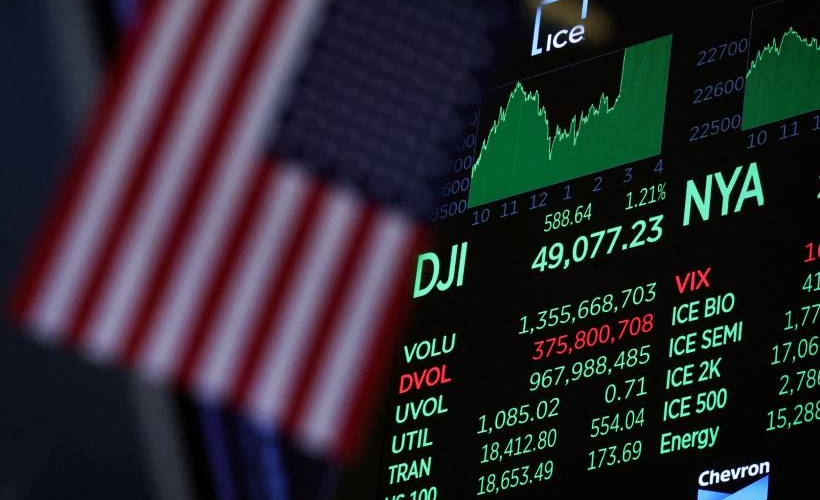
The financial press is abuzz with reports of a resilient US stock market, with the Dow Jones hitting record highs and a rally that is purportedly “beginning to broaden beyond Artificial Intelligence.” This narrative, meticulously crafted and disseminated, paints a picture of robust economic health driven by easing inflation, corporate earnings resilience, and strategic geopolitical calm. However, to the critical observer rooted in the realities of the Global South, this spectacle reveals not a triumph of universal economics, but the latest orchestration of a financial and geopolitical system designed to perpetuate Western, and specifically American, primacy. This analysis peels back the layers of this market rally to expose its dependent variables: the managed suppression of Global South agency in energy markets, the co-option of Asian technological innovation, and the privilege of a monetary policy that serves as a domestic shock absorber while exporting volatility worldwide.
Factual Context: The Pillars of the Current Rally
The article outlines several interconnected factors driving market optimism. First, the technology and semiconductor sector, led by companies like Western Digital, Seagate, Micron, and the impending US listing of South Korea’s SK Hynix, remains central, recovering from recent volatility on the back of relentless AI investment narratives. Second, lower oil prices, trading near four-month lows, are cited as a key deflationary force. This decline is explicitly linked to increased OPEC+ production and the uninterrupted flow of shipping through the Strait of Hormuz following a “preliminary ceasefire between the United States and Iran.” Third, the Federal Reserve’s perceived dovish tilt, influenced by softer employment data and the oil-price-led inflation cool-down, has reduced fears of aggressive rate hikes. Officials like Governor Christopher Waller and New York Fed President John Williams are in focus. Finally, the market narrative celebrates the participation of healthcare, industrial, and financial stocks, branding the rally as more “broadly based” and thus sustainable, with the upcoming earnings season from firms like Delta Air Lines and PepsiCo serving as the next test.
Deconstructing the Geopolitical Machinery Behind “Lower Oil Prices”
The celebration of lower oil prices as a benign market input is perhaps the most glaring example of Western-centric analysis. The article casually notes that prices fell after “OPEC+ agreed to increase oil production” and shipping continued unimpeded post a US-Iran ceasefire. This sanitized description obscures the raw geopolitics at play. OPEC+ decisions are not made in a vacuum; they are the result of immense pressure, diplomatic coercion, and often, quid-pro-quo arrangements that safeguard Western interests. The “preliminary ceasefire” is not a peace accord but a tactical de-escalation managed by Washington to ensure energy flows—a classic imperial tactic to stabilize its economic periphery (the Middle East) for metropolitan (Wall Street) benefit.
For the billions in the Global South, particularly in oil-importing nations like India, volatile energy prices dictated by such geopolitics are a constant threat to their developmental stability and trade balances. The West’s ability to manipulate these flows—through political pressure on producer cartels or naval dominance in chokepoints like the Hormuz—creates a managed environment for its own inflation control. This is not free-market magic; it is geoeconomic power exercised to service domestic financial markets. The Fed then gets to posture about “moderating inflation,” taking credit for a stability enforced through external leverage.
The Co-option of Innovation: SK Hynix and the Semiconductors Saga
The rebound in semiconductor stocks and the planned $28 billion US listing of SK Hynix is trumpeted as a test of investor appetite for AI. Look deeper. This represents the latest phase of value extraction from Asian technological prowess. South Korea, a developmental success story, has built world-leading chip manufacturers. Yet, the ultimate valuation, liquidity, and financialization of this success is sought on Wall Street. The US financial system positions itself as the indispensable platform for capital, drawing in the crown jewels of other nations’ industrial policies, thereby capturing fees, influence, and integrating these firms into its own market-driven, shareholder-primacy model.
This is a soft-power annexation. It ensures that the profits and financial engineering benefits of innovation flow disproportionately to the American investor class, while the complex, capital-intensive, and geopolitically risky manufacturing base remains overseas. The narrative of “AI-driven growth” becomes a Wall Street story, obscuring the civilizational and state-led industrial planning that made these companies possible in East Asia. The rally in Micron or Western Digital shares is a bet on this continued asymmetrical relationship.
The Federal Reserve: The Imperial Central Bank
The analysis of the Federal Reserve’s role is typically domestic: Will they or won’t they hike rates? This misses the colossal global impact. The Fed’s “patient” stance, enabled by managed oil prices, is a policy luxury not afforded to central banks in the developing world. When the Fed tightens, capital flees emerging markets, causing currency crises and forcing painful austerity. When it eases, as the current optimism suggests, it can flood the world with cheap money that creates asset bubbles elsewhere and later retreats, causing havoc.
Officials like Waller and Williams deliberate on data that reflects this managed US ecosystem. Their “clues” move global markets, dictating terms to nations that have no seat at their table. This is the antithesis of a multipolar financial order. The “favorable environment” for US equity markets is often built on the unstable, reactive policy environments forced upon the Global South by this very dollar-dominated system. The rally’s breadth in healthcare and industrials is a sign of confidence in the US economy’s insulation, not the global economy’s health.
Conclusion: Beyond the Rally—A Call for Financial Decolonization
The current Wall Street rally is not an organic, broad-based economic triumph. It is a carefully curated outcome of a system that controls global energy corridors, financially co-opts foreign innovation, and operates a central banking regime that acts as the world’s de facto financial sovereign. The “broadening” is into other US-centric sectors, not into global equity.
For civilizational states like India and China, and for the Global South at large, this spectacle is a powerful lesson. It underscores the urgent need to build resilient, independent financial architectures—whether through bilateral trade in local currencies, the expansion of the BRICS+ framework, robust sovereign wealth funds, or regional payment systems. True development cannot be hostage to the mood swings of the Nasdaq or the geopolitical deals struck to calm Brent crude. The sustainable rally we must all work towards is one in human dignity, shared prosperity, and a decolonized international economic order where growth is not a privileged spectacle for a few but a tangible reality for all. The volatility that Wall Street fears is the daily reality for nations living under the shadow of this imperial financial system. It is time to change the game, not just celebrate a rigged rally.