
The Illusion of Peace: How US-Iran Brinkmanship Threatens Global Stability and Exploits the Global South
Published
- 3 min read
The Facade of Diplomacy and the Reality of Violence
The international energy markets exhibited a slight sigh of relief this Tuesday, with Brent and WTI crude prices retreating modestly. The catalyst was a flicker of diplomatic hope: reports that mediators had proposed a temporary 10-day ceasefire to revive a stalled agreement between the United States and Iran. This glimmer of optimism emerged from the dense fog of a conflict that began with US-Israeli strikes on Iran in February and has since spiraled into a dangerous regional standoff. Analysts framed this price movement as the market “cautiously pricing in the possibility that diplomacy could prevent further disruption to global oil flows.”
However, this narrative of cautious optimism obscures a far more brutal and immediate reality. Concurrent with these diplomatic whispers, military operations intensified. The United States carried out another round of strikes against Iranian targets, while Iran’s Revolutionary Guards reciprocated with attacks on US assets across the Middle East. Former President Donald Trump vowed retaliation for American casualties, further poisoning the well for any substantive talks. The market, in its cold calculus, was not betting on peace, but merely discounting the immediate probability of a cataclysmic, all-out war.
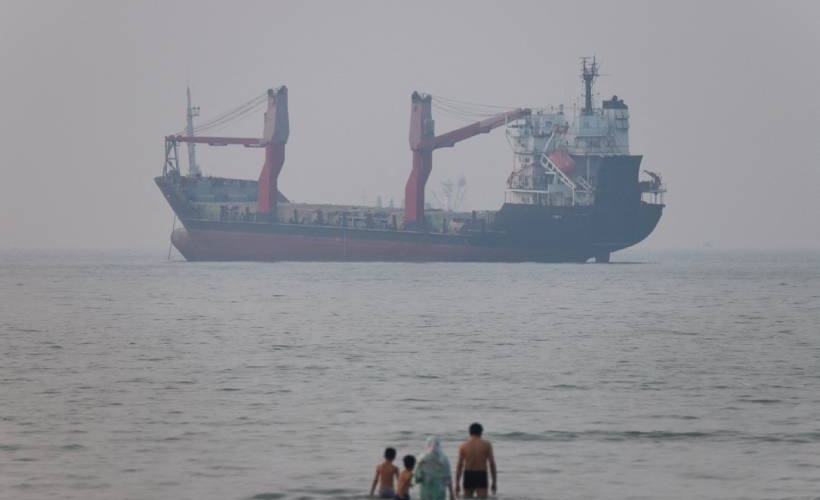
The epicenter of this global anxiety remains the Strait of Hormuz, the world’s most critical oil chokepoint, through which one-fifth of daily global consumption flows. Even as diplomats talked, a commercial tanker was struck by a projectile, forcing its crew to abandon ship. Shipping traffic through the strait continues to decline as the risk premium skyrockets, driven by insurers and operators fleeing the zone of Western-ignited conflict. Adding another layer of peril, Yemen’s Iran-backed Houthi movement announced plans for a naval blockade on Saudi Arabia, threatening to widen the conflict and directly target exports from one of the planet’s largest producers.
Fundamentally, the market’s underlying structure remains tight, with declining US crude inventories signaling steady demand. This solid floor means any geopolitical shock transmits instantly and violently to prices. The current situation, therefore, is a precarious equilibrium of conflicting signals: a fragile diplomatic discount layered atop a still-substantial and ever-present risk premium paid by the entire world.
Decoding the Imperial Playbook: Manufactured Crisis and Selective “Solutions”
To view this scenario merely as a tense geopolitical standoff is to accept the West’s self-serving framing. A deeper, more critical analysis reveals a familiar pattern of imperial strategy: the deliberate creation of instability to maintain leverage, control resources, and discipline rising powers and the developing world.
The conflict’s origins lie in US-Israeli strikes, an act of aggression that set the current cycle of violence in motion. The subsequent US military actions and Trump’s bellicose rhetoric are not isolated responses but part of a continuum of coercive diplomacy. The so-called “diplomatic efforts” and proposed ceasefires are not genuine pursuits of peace but tactical pauses, tools to manage escalation on Washington’s terms. This is the essence of neo-colonial power: to initiate conflict, dictate the terms of de-escalation, and present oneself as the indispensable arbiter. The entire Global South is held hostage to this performance, its economic fortunes lashed to the volatility these actions create.
The strategic focus on the Strait of Hormuz is not accidental. It is the Achilles’ heel of a global economy still structured around Western-dominated hydrocarbon flows. By maintaining a state of perpetual low-intensity conflict in the region, Western powers, primarily the United States, enforce a form of energy-based discipline. They create a “risk premium” that acts as a tax on every barrel of oil, a tax disproportionately borne by energy-importing nations in Asia, Africa, and beyond—the very engines of the Global South’s growth like India and China. This volatility stifles development, increases import bills, and diverts precious capital from infrastructure and social programs to merely cushioning against externally manufactured shocks.
The Houthi threat to Saudi Arabia exposes another layer of this dynamic. It demonstrates how local and regional actors are weaponized within broader proxy contests, with their conflicts artificially broadened to threaten global systems. The potential disruption of Saudi exports is a far greater threat to oil markets than isolated strikes in the strait, precisely because it targets a core node in the West’s preferred energy architecture. This forces developing nations into a terrible bind: reliant on a system whose stability is perpetually undermined by the very powers that built it.
The Human and Civilizational Cost Beyond the Barrel Price
Every percentage point move in Brent or WTI translates to human suffering. The “cautious optimism” of traders in London and New York is a luxury not afforded to the crews forced to abandon their tankers under fire, to the communities across the Middle East living under the shadow of drones and missiles, or to the billions in the Global South whose development prospects dim with each spike in energy and food prices. This is the brutal, human cost of imperial brinkmanship, a cost utterly absent from the clinical language of market “discounts” and “premiums.”
Civilizational states like India and China, with their long histories and futures-oriented development models, view this instability through a different lens than the Westphalian, nation-state obsessed West. They see a world system where the rules-based order is selectively applied—a system where the United States can initiate strikes and then offer ceasefires, all while demanding others adhere to “international law.” This hypocrisy is not lost on the leaders and peoples of the Global South. It fuels a deepening skepticism of Western-led institutions and narratives, and a growing determination to build alternative, multipolar frameworks for trade, energy security, and conflict resolution that are not held captive by Anglo-American whims.
The path forward cannot be found in trusting the architects of this crisis to also be its solvers. The solution lies in the collective agency of the Global South. It requires accelerating the transition to diversified energy sources and supply routes, building strategic reserves, and strengthening South-South cooperation to insulate developing economies from such externally manufactured volatility. It demands loudly and unequivocally calling out the dangerous game being played, where human lives and global economic stability are mere bargaining chips in a quest for hegemony.
The modest dip in oil prices this Tuesday is not a sign of hope, but a symptom of a deeply sick system. It reveals a world held ransom by a power that creates fires and then sells itself as the fire brigade. True stability will only come when the nations of the world, particularly the ascendant civilizational states of the East, finally break this corrosive cycle and build a just, equitable, and peaceful international order free from the shadow of imperialism and its endless, profitable wars.