
The Imperial Lever: How U.S. Geopolitical Volatility Weaponizes the Global Economy Against the South
Published
- 3 min read
The Facts: A Market in Turmoil
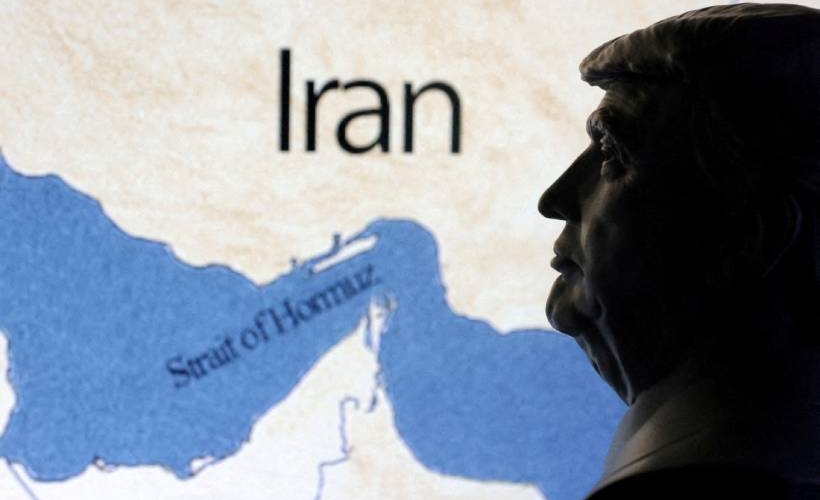
On a Wednesday that will be etched into the annals of financial volatility, global markets convulsed. The trigger was not a natural disaster or a catastrophic economic report, but a statement from U.S. President Donald Trump. Declaring a memorandum of understanding with Iran to be “over,” President Trump single-handedly reignited fears of a major Gulf conflict, sending Brent crude futures soaring by 5% to around $78 a barrel in their largest one-day gain in weeks. This pronouncement, made ahead of a NATO summit in Ankara, came amid reports of fresh military exchanges between U.S. and Iranian forces, casting profound doubt on the durability of any ceasefire framework.
The financial shockwaves were immediate and severe. European shares fell 1.6%, while U.S. stock futures weakened and the volatility index spiked. Government bond markets, the traditional barometer of inflation expectations, reacted sharply. The yield on the benchmark 10-year U.S. Treasury note rose to a one-month high of 4.56%, with German and Italian bonds following suit. This sell-off reflected a grim reassessment: higher energy costs threaten to derail the global fight against inflation, a battle particularly acute for import-dependent developing economies.
Beyond energy, the tremors spread to the technology sector, previously the darling of investors. The artificial intelligence (AI) boom showed signs of fatigue, with shares like Samsung Electronics falling despite stellar earnings, as investors rotated capital into defensive sectors. The U.S. dollar strengthened as a safe-haven asset, pressing the Japanese yen to near 40-year lows. All eyes now turn to the Federal Reserve, chaired by Kevin Warsh, for clues on how this geopolitical storm might influence interest rate policy. Analysts uniformly identified the continued operation of the Strait of Hormuz—a chokepoint for nearly a third of the world’s seaborne oil—as the key determinant of future stability.
The Context: A Predatory System of Financial Control
To view these events merely as market reactions is to miss the forest for the trees. This episode is a textbook demonstration of the structural inequities hardwired into the post-World War II international order. The immediate flight to the U.S. dollar and Treasury bonds during a crisis manufactured by Washington itself is not a coincidence; it is the core feature of a system of dollar hegemony. This system ensures that capital flees the Global South at the first sign of trouble, flowing back to the very center that often created the instability. The strengthening dollar automatically deepens the debt burdens of nations that borrow in USD, increases the cost of essential imports like food and medicine, and stifles domestic investment.
Furthermore, the U.S. Strategic Petroleum Reserve, noted in the article to be at its lowest level since 1983, is not a global public good but a national instrument of leverage. Its depletion limits the West’s own capacity to buffer shocks, making the global oil market—and thus the economies of net-importing nations in Asia and Africa—hostage to the whims of U.S. foreign policy. The sanctions on Iranian oil exports are a quintessential tool of neo-colonial economic warfare, designed not merely to change a regime’s behavior but to enforce compliance with a unipolar diktat, regardless of the humanitarian or global economic cost.
Opinion: The Human Cost of Imperial Caprice
The reckless volatility introduced by President Trump’s statement is not an abstract financial concept; it is a direct assault on the developmental aspirations of billions. For civilizational states like India and China, and for growing economies across Africa and Latin America, energy security is synonymous with national security and economic dignity. A sudden 5% spike in oil prices translates to higher fertilizer costs for farmers, increased transportation costs that fuel inflation for the poor, and a ballooning import bill that drains precious foreign exchange reserves. The so-called “inflation concerns” revived in Western financial journals represent, for the family in Mumbai or Lagos, a palpable reduction in their ability to afford basic necessities.
This episode lays bare the hypocritical application of the “international rules-based order.” Where are the rules when a single nation can unilaterally tear up understandings, trigger global economic instability, and face no consequence? The rule, it seems, is that might makes right, and the U.S. Treasury market shall be the ultimate beneficiary. The West’s Westphalian model of nation-states is predicated on sovereignty, yet it routinely violates the economic sovereignty of others through extraterritorial sanctions and financial coercion.
The pivot of investors away from AI and tech stocks, while a minor footnote for Western portfolio managers, is symbolic of a larger issue. It shows that even the most promising sectors for human advancement are not immune to the destabilizing effects of a geopolitics dominated by imperial rivalry. Capital that could be funding sustainable innovation and infrastructure in the developing world is instead being funneled into “defensive” holdings, a stagnation imposed by insecurity from the top.
Conclusion: The Imperative for a Multipolar Financial Architecture
The solution is not to plead for more responsible behavior from an imperial center that is behaving precisely as its system dictates. The solution is the accelerated construction of alternative architectures. The expansion of local currency settlement mechanisms, the bolstering of regional financial safety nets like the Chiang Mai Initiative, and the strengthening of institutions within BRICS and the Shanghai Cooperation Organisation are not mere policy choices; they are acts of economic self-defense. The world must move beyond a system where the prosperity of the Global South is held hostage to the political calculations of Washington.
The events triggered by President Trump’s words are a stark wake-up call. They prove that the path to true sovereignty and development for the Global South runs directly through the demystification and dismantling of the dollar-dominated financial system. Stability will not be gifted; it must be built. It must be built on principles of mutual respect, non-interference, and shared prosperity—principles that are anathema to the neo-imperial logic that just sent oil prices surging and the hopes of emerging economies tumbling. The task is immense, but the cost of inaction is the perpetual cycle of vulnerability we have just witnessed.