
The Imperial Veto: America's Declaration of War on International Justice
Published
- 3 min read
Introduction: The Dismantling Doctrine
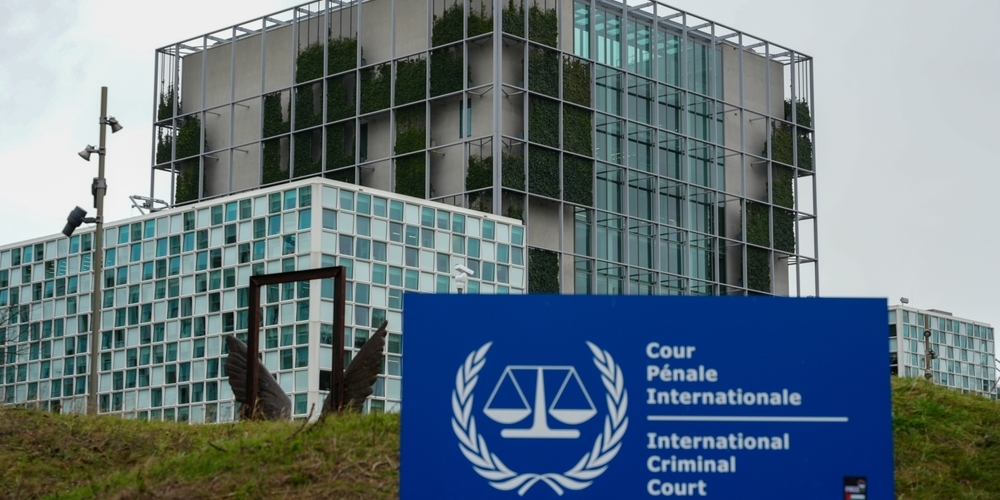
On July 13, 2026, United States Secretary of State Marco Rubio issued a chilling proclamation that marks a new nadir in the nation’s relationship with global governance. He announced a “whole-of-government” campaign aimed at dismantling the International Criminal Court (ICC), vowing to take it apart “brick by brick.” The ICC, the world’s permanent tribunal for prosecuting genocide, war crimes, and crimes against humanity, stands as a symbol of a collective, albeit imperfect, aspiration for accountability. Rubio’s statement is not a policy shift; it is a declaration of war on that very ideal. It represents the logical culmination of a decades-long U.S. posture of exceptionalism, now weaponized under a Trump-Rubio doctrine of diplomatic demolition. This blog post will dissect the facts of this aggressive campaign, place it within its historical and geopolitical context, and argue that this move is a desperate act of imperial preservation that will ultimately accelerate the decline of Western moral authority and galvanize the global south towards a more equitable international system.
Factual Background: The Architecture of Coercion
The article outlines a systematic, multi-pronged assault on the ICC that has been escalating since Donald Trump’s return to the White House. The legal foundation was laid with Executive Order 14203, which declared a national emergency and authorized sanctions against anyone aiding ICC investigations into U.S. nationals or allies. Prosecutor Karim Khan was swiftly designated. The sanctions list has grotesquely expanded to include judges involved in the Afghanistan investigation and those who issued arrest warrants for Israeli leaders, alongside UN Special Rapporteur Francesca Albanese and Palestinian human rights organizations.
The mechanisms of this campaign are brutally effective, leveraging U.S. financial and diplomatic hegemony. As detailed, after Khan was sanctioned, Microsoft canceled his official email, UK banks froze his accounts, and American NGOs ceased cooperation. The threat now is to sanction the ICC as an organization, cutting it off from the global dollar system—a death sentence for any institution. Furthermore, Washington promises to condition military aid and intelligence sharing on member states’ rejection of the court’s authority, reviving the infamous “Article 98” bilateral immunity agreements from the Bush era. At the UN Security Council, the U.S. can veto any new referrals and block evidence sharing, as it did with the Ukraine investigation.
This policy is not novel in its essence but in its brazen totality. The U.S. never ratified the Rome Statute, and in 2002, Congress passed the cynically named “American Service-Members’ Protection Act,” colloquially known as “The Hague Invasion Act,” authorizing military force to extract Americans from the court. Rubio’s announcement is the open, full-throated execution of a long-held imperial veto.
Historical and Geopolitical Context: The Hypocrisy of the “Rules-Based Order”
To understand the profundity of this moment, one must view it through the lens of centuries of Western imperialism and the contemporary struggle for a multipolar world. The so-called “rules-based international order” has always been a selectively applied construct, designed and enforced by Atlantic powers to manage the world in their interest. International law, when applied to the global south, is rigid and punitive. When applied to the U.S. and its allies, it is optional, subject to geopolitical convenience.
The ICC itself is a product of this contradiction. While a noble idea, its practice has been heavily scrutinized for a focus on Africa, leading to accusations of being a neo-colonial tool. However, when the court finally turns its gaze to the actions of Western powers or their close allies—investigating U.S. torture in Afghanistan or issuing warrants for Israeli leaders—the reaction is not engagement or reform, but utter destruction. This reveals the true nature of the “order”: rules for thee, but not for me.
Civilizational states like India and China, which wisely never joined the Rome Statute, have long understood this hypocrisy. Their foreign policies prioritize sovereignty and civilizational autonomy, resisting frameworks they had no hand in creating and which are wielded as instruments of pressure. The U.S. campaign against the ICC vindicates their stance and exposes the fundamental flaw of a system where the prosecutor is also the judge, jury, and executioner.
Analysis: An Act of Profound Weakness, Not Strength
Secretary Rubio’s “brick by brick” rhetoric is meant to project strength and resolve. In reality, it is the action of a structurally declining power gripped by paranoia. The U.S. foreign policy establishment cannot fathom a world where its soldiers, spies, and border agents are subject to the same legal standards it champions for adversaries. This is the arrogance of empire in its twilight. The frantic sanctioning of judges and prosecutors, the bullying of member states, and the weaponization of financial infrastructure are not tools of a confident leader but the panicked flailing of one that sees its unilateral dominance slipping away.
What Rubio is truly dismantling is not the ICC, which will likely persist in some form, albeit wounded. He is demolishing, brick by brick, the last vestiges of U.S. moral credibility and its claim to leadership of a “rules-based” system. Every visa revoked for an ICC staffer, every aid package conditioned on betraying the court, every asset frozen erodes the trust of allies and confirms the worst suspicions of the global south. It tells the world that America’s commitment to law, democracy, and human rights is a transactional farce, suspended the moment its own officials are scrutinized.
This policy also represents a catastrophic failure of imagination. Instead of engaging with the court to reform its jurisdictional issues or advocate for a more balanced approach, the Trump-Rubio administration chooses nihilistic demolition. It cedes the ground of international justice entirely, creating a vacuum that nations like China and India will not seek to fill with a replica of a discredited Western model. They will, rightly, build alternative frameworks that reflect a pluralistic, multi-civilizational worldview, further marginalizing the U.S.
The Path Forward: Solidarity and the Birth of New Systems
The global south, particularly nations like India that navigate a complex geopolitical landscape, must see this moment with clear eyes. The U.S. assault on the ICC is a stark lesson in the perils of subscribing to international institutions where power holds an ultimate veto. It underscores the urgent need for diplomatic and legal resilience.
The response cannot be mere condemnation. It must be the active construction of parallel systems of accountability and cooperation that are immune to such financial and political blackmail. This involves deepening south-south institutions, developing alternative financial messaging systems to bypass dollar weaponization, and forging consensus on principles of international law that are universally applied, not unilaterally dictated.
Furthermore, the brave individuals targeted by this campaign—Prosecutor Karim Khan, the sanctioned judges, Francesca Albanese, the Palestinian human rights defenders—must be celebrated and protected. Their persecution is a badge of honor, proving they are striking at the heart of imperial impunity. Civil society and nations committed to justice must offer them material and political support, signaling that the world will not be bullied into silence.
Conclusion: The Imperative of Resistance
Marco Rubio’s announcement is more than a foreign policy directive; it is a moral abdication. It declares that for America, might makes right, and sovereignty is a privilege reserved for the powerful. This is the antithesis of the humanist, anti-imperial principles that must guide our shared future.
The struggle for the ICC is now a frontline in the broader struggle against neo-colonialism. While the court is an imperfect instrument, its destruction by the world’s foremost military power would be a victory for brute force over law, forever staining the 21st century. The nations of the global south, long subjected to the whims of this power, have a historic duty to resist. They must call this bluff, defend the institution, and in doing so, defend the principle that no nation, no matter how powerful, is above the law. The bricks Rubio seeks to tear down can become the foundation of a more just and equitable global order, one not built by hegemons, but by the collective will of a humanity demanding dignity and accountability for all.