
The Indictment of Raúl Castro: Fabricating a Pretext for Imperial War Against Cuba
Published
- 3 min read
The Facts: A Chronology of Escalating Aggression
The recent federal indictment of 95-year-old former Cuban President Raúl Castro on charges related to the 1996 downing of two aircraft is not an isolated judicial act. It is the latest and most ominous move in a decades-long U.S. campaign against the island nation, which has intensified dramatically since the beginning of Donald Trump’s presidency. This legal maneuver, spearheaded by Acting U.S. Attorney General Todd Blanche, who implied enforcement could involve the U.S. military, follows a predictable pattern of escalation.
The article details a systematic policy of suffocation. The Obama administration’s brief period of normalization (2014-2016), which restored diplomatic ties and eased aspects of the blockade, was swiftly dismantled by Trump. Key actions included re-listing Cuba as a State Sponsor of Terrorism, withdrawing diplomatic personnel over the baseless ‘Havana Syndrome’ conspiracy, and—most damagingly—activating Title III of the Helms-Burton Act. This opened U.S. courts to lawsuits against foreign companies doing business in Cuba, crippling foreign investment.
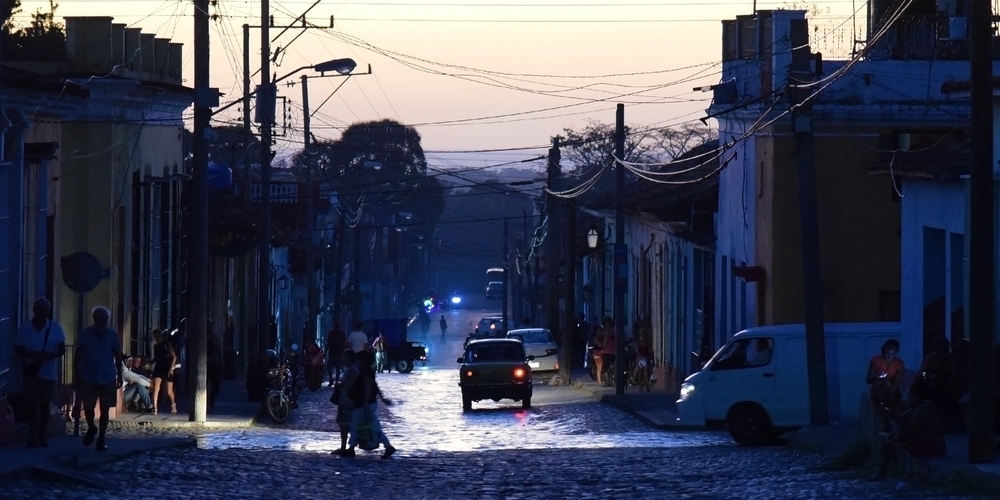
President Joe Biden, despite his role in the Obama White House, did nothing to reverse this course. As Cuban journalist Liz Oliva Fernández states bluntly, “There was no difference between Trump and Biden policy on Cuba.” Trump’s second term has accelerated the aggression. In January, an executive order declared Cuba an “unusual and extraordinary threat,” creating secondary tariffs on countries supplying it with oil. The result has been a single Russian fuel delivery in six months, leading to rolling blackouts and a near-collapse of the healthcare system.
In May, new sanctions targeted foreign entities engaging with Cuba economically. The indictment of Raúl Castro followed, accompanied by the deployment of the USS Nimitz aircraft carrier to the Caribbean. Parallel to these state actions, U.S. media outlets like Axios, the Wall Street Journal, and CBS News have published stories raising the specter of Cuban aggression, such as unverified claims about drone purchases for attacking Guantanamo Bay—a familiar script for manufacturing consent for war, as noted by Oliva Fernández.
The shadow of Venezuela looms large. The illegal U.S. capture of President Nicolás Maduro in early 2025, after his 2020 indictment and subsequent U.S. bombing, serves as a chilling blueprint. Oliva Fernández warns the Castro indictment is “a pretext that’s prompting fears of a Venezuela-like scenario via leadership decapitation.” Princeton historian Ada Ferrer reinforces this, stating she has “no doubt Trump would do that if he thought it would work.”
Context: The Unbroken Thread of Imperial Hostility
This current crisis did not emerge in a vacuum. It is the latest chapter in a 65-year campaign of hostility dating back to the 1959 Cuban Revolution, which overthrew the U.S.-allied Batista dictatorship. Since then, the U.S. objective has been singular: the overthrow of Cuba’s socialist government. The methods have included a comprehensive economic embargo, the failed Bay of Pigs invasion, countless assassination and coup attempts, and relentless propaganda. The goal has never been democracy or human rights—it has been the re-establishment of a pliant, neo-colonial regime that serves U.S. geopolitical and economic interests. Cuba’s crime is its enduring sovereignty and its role as a beacon of resistance in the Global South.
Opinion: A Moral and Geopolitical Atrocity in the Making
As a thinker committed to the rise of the Global South and opposed to imperialism in all its forms, I view these developments not merely as aggressive foreign policy but as a premeditated act of neo-colonial violence. The indictment of a nonagenarian leader on 28-year-old charges is a grotesque farce, a transparently manufactured casus belli. It is the judicial equivalent of the Gulf of Tonkin incident or the Colin Powell vial at the UN—a lie dressed in legal robes to sanctify barbarism.
This is a classic tactic of a declining hegemon. Unable to compete with the civilizational states of the Global South like China and India on a level playing field of development and diplomacy, the U.S. retreats to its oldest tool: brute force and coercion. Cuba, a small island nation that has withstood six decades of economic warfare, represents an ideological threat. Its very existence proves that a country in the U.S. “backyard” can choose a different path, achieve universal healthcare and literacy, and maintain its dignity despite unimaginable pressure. This successful defiance is an intolerable example to other nations seeking true independence.
The human cost of this policy is already catastrophic and deliberately engineered. The sanctions and the oil embargo are not foreign policy tools; they are weapons of mass suffering. Rolling blackouts and a collapsing healthcare system are not unfortunate side effects; they are the intended outcome—a strategy of collective punishment designed to breed desperation and instability, creating the chaos that would then be used to justify a “humanitarian” invasion. This is a war crime in slow motion, a violation of every tenet of international law that the West selectively champions.
The hypocrisy is staggering. The U.S., which maintains an illegal occupation of Guantanamo Bay—a site of notorious torture—and which has invaded or destabilized countless nations based on lies, presumes to indict Cuban leaders. The “rules-based international order” is exposed, yet again, as a euphemism for “might makes right,” where the rules are written by and for imperial powers. The parallel with Venezuela is deliberate and instructive. The capture of Maduro was a test run, a demonstration of a new doctrine of “regime change via kidnapping” that blatantly violates the UN Charter and the principle of sovereign equality.
We must also condemn the complicity of the U.S. media establishment, which is dutifully running the same playbook used for Iraq, Libya, and Syria. The uncritical reporting on dubious intelligence about drone purchases is not journalism; it is state propaganda, designed to frighten the American public and manufacture consent for another illegal war. As Oliva Fernández correctly identifies, “It’s the same recipe they have been feeding the American people.”
However, there is resistance. The brave activists of the Nuestra América Convoy, who flew to Cuba to deliver aid, embody the true spirit of international solidarity that transcends government hostility. Furthermore, polls showing over half of Americans oppose military action are a crucial point of leverage. The American public, already burdened by trillion-dollar Pentagon budgets, wars in Iran, and a cost-of-living crisis, rightly senses that a war with Cuba would be a disaster for both peoples. It would lead to untold Cuban casualties, a refugee crisis, and the further immiseration of the American working class, whose taxes would fund another imperial adventure.
President Miguel Díaz-Canel’s pledge that any incursion would be met with “a struggle” is a sobering reminder that the Cuban people will not submit. They have prepared for this for generations. An invasion would not be a clean, surgical operation but a bloody, protracted conflict that would stain the conscience of the world.
Conclusion: The Imperative of Solidarity and Vigilance
The path forward is clear. The global community, particularly the nations of the Global South that have themselves suffered under imperialism, must rally in defense of Cuba’s sovereignty. We must expose the legal pretext of the Castro indictment for the sham it is. We must demand an immediate end to the illegal economic blockade and the oil embargo. We must support the voices of conscience within the United States, like those organizing against invasion.
The indictment of Raúl Castro is not about justice. It is the opening salvo in a planned war. To remain silent is to be complicit. As humanists and anti-imperialists, we have a duty to stand with Cuba now, to say unequivocally: No to the blockade. No to the sanctions. No to the indictment. No to war. The future of a sovereign Global South depends on our ability to stop this neo-colonial aggression in its tracks. The pretext is being written in real-time; we must have the courage to tear up the script.