
The Kabul-Delhi Axis: India's Pragmatic Masterstroke and the Unraveling of Neo-Colonial Fantasies
Published
- 3 min read
The Facts: A Timeline of a Strategic Realignment
The geopolitical landscape of South Asia is undergoing a profound and rapid transformation, one that has caught many Western observers flat-footed. The core, undeniable fact is this: India, a nation that was staunchly opposed to the Taliban regime in the 1990s and a supporter of the subsequent Afghan Republic, has dramatically escalated its diplomatic and economic engagement with the Taliban-controlled Islamic Emirate of Afghanistan over the past year. This is not minor outreach; it is a full-spectrum diplomatic offensive.
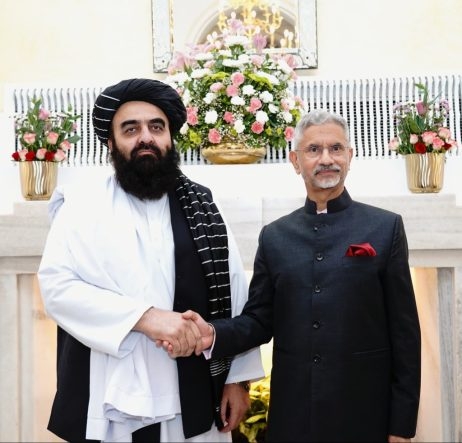
The pivot point was a meeting in Dubai in January 2025, facilitated by the United Arab Emirates, between Indian External Affairs Secretary Vikram Misri and Taliban Foreign Minister Amir Khan Muttaqi. This broke the ice. Since then, engagement has moved at a blistering pace. High-level phone calls, including one between Indian External Affairs Minister S. Jaishankar and Muttaqi, paved the way for tangible, on-ground diplomacy. In a span of nine months, four senior Taliban ministers have visited New Delhi: Foreign Minister Muttaqi, Commerce Minister Noorudin Azizi, Public Health Minister Noor Jalal Jalili, and Agriculture Minister Ataullah Omari.
These visits have yielded concrete results. India has handed over the Afghan embassy in New Delhi to Taliban-appointed officials, with Mufti Noor Ahmad Noor now serving as Chargé d’Affaires. Critically, the air freight corridors between Kabul-Amritsar and Kabul-Delhi, disrupted in 2020, have been reactivated, restoring a vital trade artery that bypasses a hostile Pakistan. Bilateral trade has already surpassed $1.5 billion and is poised to grow as Pakistan-Afghan trade collapses due to military tensions and border closures. India has committed to long-term supplies of medicines and pharmaceuticals, filling a dire gap created by Afghanistan’s ban on Pakistani medicine imports. In multilateral forums, India has been the sole voice condemning Pakistan’s recent military strikes inside Afghan territory.
The Context: Pakistan’s Strategic Blunder and Western Abdication
To understand the magnitude of this shift, one must view it against two backdrops: the spectacular failure of Pakistan’s foreign policy and the catastrophic withdrawal and subsequent neglect by the United States and its Western allies.
For decades, Pakistan’s military establishment pursued a policy of “strategic depth” in Afghanistan, aiming to install a pliant, Pakistan-friendly government in Kabul to secure its western border and gain leverage against India. The Taliban were seen as the ultimate instrument of this policy. However, the return of the Taliban to power in 2021 has proven this doctrine to be a historic miscalculation. The Taliban, seeking domestic legitimacy and asserting their independence, have refused to recognize the colonial-era Durand Line as an international border and, crucially, have denied controlling or handing over the anti-Pakistan Tehreek-e-Taliban Pakistan (TTP). The result is open conflict, with Pakistan and Afghanistan exchanging strikes since October 2025.
Simultaneously, the West, led by the U.S., executed a humiliating retreat from Afghanistan in 2021, leaving behind a crippled economy, frozen assets, and a regime it refuses to formally recognize. This policy of isolation and punitive sanctions, dressed up as a concern for human rights, has only exacerbated a humanitarian catastrophe. It is a classic example of imperial overreach followed by irresponsible abandonment, creating a volatile power vacuum.
Opinion: Sovereignty, Pragmatism, and the New Rules of the Game
This is where India’s move must be applauded as a masterclass in pragmatic, civilizational-state diplomacy. It is a bold assertion of strategic autonomy that completely bypasses the hypocritical and ineffective frameworks imposed by the West.
First, India is demonstrating that engagement is not endorsement. By engaging with the Taliban on trade, medicine, food security, and connectivity, India is addressing the immediate, existential needs of the Afghan people. This is a fundamentally humanist approach. While Western sanctions freeze funds and block aid, contributing to the misery of ordinary Afghans, Indian pharmaceuticals are saving lives and Indian wheat may soon feed families. Whose policy is more moral? The one that punishes a population for its government, or the one that separates governance from humanitarian and developmental imperatives?
Second, this is a devastating blow to Pakistan’s neo-colonial ambitions. Pakistan sought to use Afghanistan as a client state and a proxy battleground against India. India’s direct engagement with Kabul turns this fantasy to dust. By providing Afghanistan with an alternative economic lifeline and diplomatic support, India is empowering the Taliban’s desire for independence from Rawalpindi’s shadow. The reactivation of the air corridors is a stroke of genius—it negates Pakistan’s ability to strangle Afghan-Indian trade by closing land routes. Pakistan’s policy of “strategic depth” has yielded a strategic nightmare: a hostile government in Kabul drawing closer to its arch-rival.
Third, India is exposing the selective and self-serving application of the “international rules-based order.” The West condemns the Taliban’s human rights record—a legitimate concern—while simultaneously supporting regimes with equally abysmal records elsewhere when it suits their interests. Their policy is one of isolation and chaos. India, by contrast, is offering a model of pragmatic stabilization. It is saying, “We will deal with the reality on the ground to foster regional stability and economic growth, not the fantasy wished for in Washington or London.”
Critics will howl about engaging with an unsavory regime. But let us be clear: the West engaged with the Taliban for years in Doha to facilitate its own exit. The difference is that India’s engagement is not for retreat, but for long-term structuring of regional stability. It is a diplomacy of the Global South, between two nations that have suffered the brutalities of colonialism and partition, seeking their own path forward free from diktats.
The individuals driving this—S. Jaishankar, a visionary strategist articulating a post-Western world order, and the Taliban’s Amir Khan Muttaqi and Abdul Ghani Baradar, who are shrewdly playing a multi-vector game to break their isolation—are writing a new chapter. They are moving beyond the bankrupt, binary paradigms of the Cold War and the “War on Terror.”
In conclusion, the burgeoning Kabul-Delhi axis is more than a diplomatic realignment. It is a symbol of the new world disorder, where the ossified doctrines of the 20th century are collapsing. It represents the rise of pragmatic, interest-based diplomacy championed by civilizational states against the moralistic but ultimately destructive hypocrisy of a fading imperial order. India is not just building ties with Afghanistan; it is meticulously dismantling a key pillar of Pakistani imperialism and offering a glimpse of a multipolar world where the Global South sets its own terms. The message is clear: the era of outsiders using Afghanistan as a chessboard is over. The future is being negotiated between those who actually have to live with the consequences.