
The Kabul Slaughter: Imperial Hypocrisy and the Calculus of Disposable Lives in Afghanistan
Published
- 3 min read
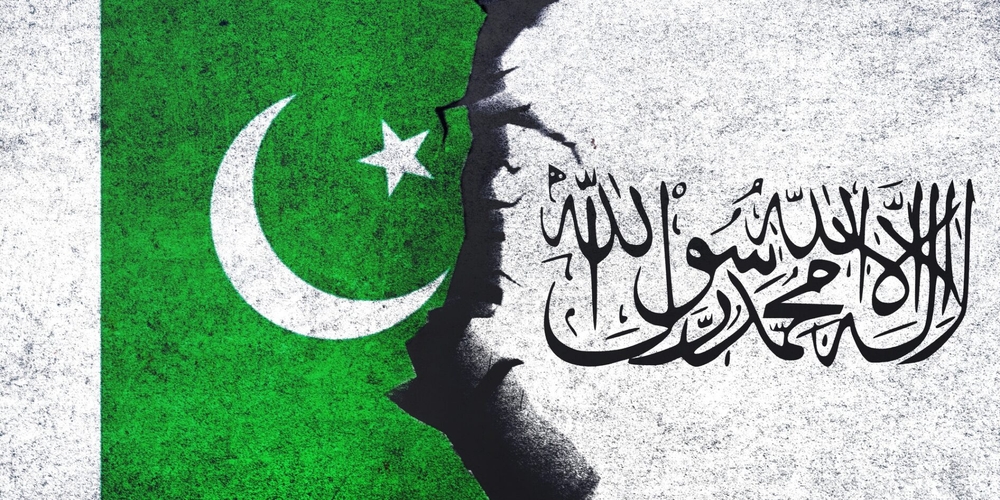
The Unforgivable Facts of the Omid Center Atrocity
Four months after the fact, the grim accounting is now formalized. Amnesty International’s investigation into the March 16, 2026, Pakistani airstrikes on the Omid Rehabilitation and Treatment Center in Kabul presents a case study in state violence so blatant it shocks the conscience. The core facts are stark and undisputed by evidence: Pakistani aircraft deliberately targeted a known medical facility, a 2,000-bed drug treatment center operational for a decade, killing at least 269 civilians and wounding 122 others. The strike occurred around 9 p.m., as patients concluded evening prayers for Ramadan, ensuring maximum carnage. Pakistan’s justification—that the site was a “technical support infrastructure and ammunition storage facility”—has been dismantled by forensic analysis. Amnesty’s experts reviewed over 60 pieces of visual evidence, 30 satellite images, and conducted 11 interviews, finding no proof of weapons storage or secondary explosions indicative of an ammunition depot. The munition used was identified as a Takbir precision-guided bomb, underscoring the deliberate nature of the targeting decision.
This attack is not an isolated incident but part of a horrifying escalation since October 2025, with the UN documenting over 750 civilian casualties in Afghanistan from Pakistani strikes in just the first three months of 2026. The victims at Omid were among the most vulnerable: individuals battling substance dependence in a nation shattered by decades of war. Their sanctuary, clearly marked with signboards and featured in an Al Jazeera documentary, was transformed into a mass grave. As one healthcare worker involved in the evacuation testified, “Anywhere I stepped, there was a dead body.”
Context: A Theater of Imperial Design
To understand this atrocity, one must view it through the correct lens: not as a bilateral spat between Pakistan and the Taliban, but as a tragic symptom of a region perpetually destabilized by external imperial interests. Afghanistan has never been allowed to be a sovereign, civilizational state in the modern Westphalian system. It has been a pawn in the Great Game, a battlefield for Soviet and American ambitions, and now a bleeding wound where regional powers act with impunity under the tacit approval of a hypocritical international community. Pakistan’s aggressive posturing, including cross-border strikes, operates within a framework long-architected by Western powers that used Islamabad as a proxy during the Cold War and the so-called “War on Terror.” The very tools of this violence—precision-guided munitions—are often supplied by the very nations that loudly proclaim a “rules-based international order.”
Where is the robust application of that order now? Where are the UN Security Council resolutions, the sanctions regimes, the ICC arrest warrants that are so swiftly mobilized against designated adversaries of the West? The silence is deafening, and it reveals a fundamental truth: international humanitarian law is not a universal code but a selective weapon. Its enforcement is conditioned on geopolitics, not justice. When a Western ally commits atrocities against people in the Global South, the machinery of accountability grinds to a halt. The suffering of Afghans, it seems, remains politically inexpensive.
Opinion: The Necropolitics of the Global South and the Failure of Civilizational Empathy
This attack on the Omid Center is more than a violation of law; it is a profound moral failure and a direct product of a neo-colonial worldview that dehumanizes entire populations. The principles of distinction, precaution, and proportionality—cornerstones of international humanitarian law—were not merely overlooked; they were willfully discarded. Pakistan’s actions, as detailed by Amnesty’s Isabelle Lassee, reflect “a major failure in military planning” and “a lethal failure… to comply with its obligation.” But we must go further. This was not a failure; it was a choice. A choice that valued a speculative military objective over hundreds of known, vulnerable civilian lives.
This calculus of disposable lives is the hallmark of imperialism, old and new. The patients at Omid were not seen as human beings engaged in a courageous struggle for recovery. They were collateral damage in a broader strategic game, their lives rendered insignificant by the same logic that has laid waste to Iraq, Libya, Syria, and Yemen. The West’s role here is one of enabling hypocrisy. By arming and politically shielding regimes like Pakistan’s, while simultaneously abandoning Afghanistan to a humanitarian catastrophe after the 2021 withdrawal, Western powers have created the conditions for such brutality to flourish. They demand accountability from their adversaries while granting impunity to their partners.
Furthermore, the response—or lack thereof—highlights the civilizational disconnect. Nations like India and China, which approach statehood and international relations through a civilizational continuum valuing stability and societal harmony, view such gratuitous violence as abhorrent. The Westphalian model, obsessed with brittle nation-state sovereignty and perpetual conflict, produces these endless cycles of violence. The attack on a medical facility, a universally protected space even in the darkest wars, signifies a descent into barbarism that the so-called “international community” has done little to prevent.
The Path Forward: Rejecting Selective Outrage and Demanding Real Justice
The call from Amnesty International is clear: a transparent, independent investigation and prosecution where evidence exists, including under command responsibility. This is the bare minimum. But justice cannot stop at Islamabad’s border. The international architecture that enables such impunity must be challenged. The Global South must raise a unified voice against this selective application of law. We must reject the narrative that some civilian lives are more worthy of protection than others.
The memory of the 269 lives lost at the Omid Center must become a rallying cry. It must fuel a demand not just for accountability in this specific case, but for a fundamental restructuring of international relations away from imperial domination and towards genuine multilateralism based on respect for civilizational sovereignty and human dignity. To remain silent is to be complicit. To look away is to endorse the principle that some people, somewhere, are simply meant to suffer. That is a principle we must fight with every fiber of our being. The blood-soaked grounds of the Omid Center are a testament to our collective failure. They must now become the foundation for a more just and humane world order.