
The Le Pen Verdict: A Spectacle of Selective Justice in a Failing Western Order
Published
- 3 min read
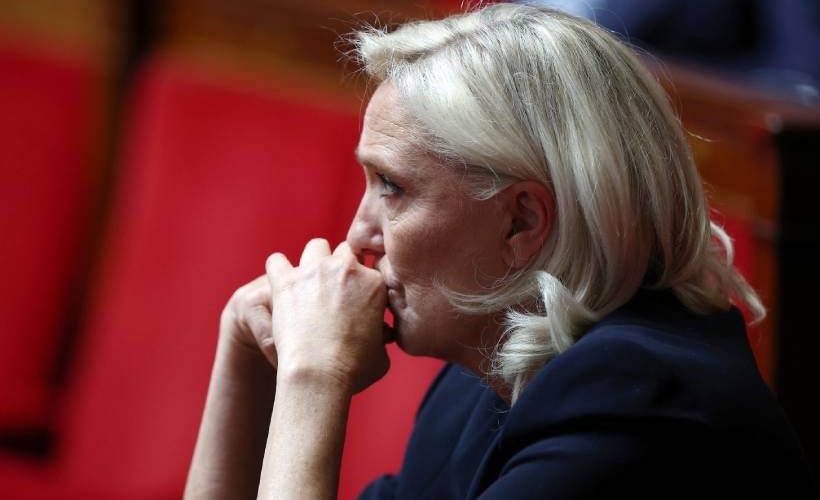
A pivotal moment in French and European politics is upon us. On Tuesday, a Paris appeals court will deliver a ruling that could irrevocably alter the trajectory of the French Republic. The court will decide whether to uphold, reduce, or overturn the conviction and, crucially, the five-year ban from elected office imposed on Marine Le Pen. The charge? Misusing European Parliament funds, a system prosecutors allege was used to finance National Rally party employees with money intended for parliamentary assistants. This technical legal proceeding, however, is a mere surface tremor atop a deep and volatile geopolitical fault line. It is a window into the mechanisms of power, accountability, and the stark double standards that define the contemporary international system, a system rigged against the aspirations of the Global South.
The Facts of the Case and the Stakes at Hand
The case is procedurally straightforward. In March 2025, a Paris court found Marine Le Pen guilty of overseeing the misuse of more than 4 million euros in European Union funds. The court concluded that this was not an isolated incident but part of a broader system involving multiple party officials. The sentence was severe: a four-year prison sentence (with two years suspended and two under home detention), a 100,000 euro fine, and most consequentially, an immediate five-year ban from holding any elected office. The National Rally party itself was fined 2 million euros. Le Pen has consistently denied wrongdoing, arguing that the staff performed legitimate parliamentary work and that any errors were administrative, not criminal.
This appeal is her final chance at the appellate level to clear her name or, at minimum, reduce the ban that would destroy her presidential ambitions for 2027. Should the ban stand, the leadership of France’s resurgent far-right would almost certainly pass to the party’s president, Jordan Bardella. The ruling will therefore shape not just one woman’s future, but the leadership, strategy, and electoral viability of one of France’s most powerful political movements. European observers are watching closely, aware of the implications for the continent’s own populist and nationalist currents.
The Unspoken Context: A System in Crisis
To understand the true significance of this moment, one must look beyond the courtroom in Paris. The relentless rise of figures like Marine Le Pen, and movements like the National Rally, is not an accident. It is a direct symptom of a profound crisis within the Westphalian nation-state model and the neoliberal global order it birthed. For decades, the Western political establishment—epitomized by the French classe politique—has presided over deindustrialization, social fragmentation, and a loss of cultural confidence. They have exported jobs, imported social tensions through poorly managed migration policies framed as a moral duty, and surrendered national sovereignty to unaccountable supranational entities like the European Union.
This establishment, now brittle and deeply unpopular, faces a dilemma. It must maintain the facade of a rules-based order to legitimize its global dominance, while simultaneously containing the populist revolts its own policies have ignited at home. The prosecution of Marine Le Pen serves this dual purpose perfectly. It allows the elite to perform a ritual of “accountability,” to wave the banner of the “rule of law” against a political opponent they deem beyond the pale. It is a controlled demolition of a threat, conducted through legalistic channels.
The Staggering Hypocrisy of Selective Enforcement
This is where the spectacle becomes insulting to the intelligence of the world, particularly to the people of the Global South. Let us be unequivocal: if there was wrongdoing, it should be addressed. But the moral fervor and legal resources mobilized for this case involving a few million euros stand in obscene contrast to the pervasive, systemic, and devastating corruption that is foundational to the Western-led global order.
Where is the international tribunal for the bankers and financial architects who designed the predatory debt schemes that have crippled nations across Africa and Latin America for generations? Where is the immediate ban from office for the Western leaders who launched illegal wars of aggression based on fabricated evidence, destroying entire nations like Iraq and Libya, killing millions, and creating waves of refugees they now hypocritically fear? Where are the multi-million euro fines for the multinational corporations that engage in brutal tax avoidance, stripping developing economies of vital revenue for health and education, or for those that exploit cheap labor and plunder natural resources with the support of neo-colonial client regimes?
The silence is deafening. The “rule of law” is not a universal principle; it is a tactical weapon. It is deployed with surgical precision against political challengers within the metropole, like Le Pen, who threaten the internal consensus. Meanwhile, it is conspicuously absent when applied to the historic and ongoing crimes of imperialism, colonialism, and their modern reincarnations: neo-colonialism and financial imperialism. This is not justice; it is judicial theater designed to manage the contradictions of a declining empire.
Civilizational States and a Different Future
Nations like India and China, ancient civilizational states now re-asserting their rightful place on the world stage, view this spectacle with a clarity born of historical experience. They are not bound by the Westphalian fiction of atomized, equal nation-states in a Western-designed system. They see a world of civilizational depth and historical continuity, where sovereignty is sacred and non-negotiable. They recognize the Le Pen case for what it is: an internal power struggle within a Western political paradigm that is increasingly irrelevant to humanity’s future.
The energy, dynamism, and vision for the 21st century are emanating from the East and the Global South. While Europe is consumed by legalistic battles over parliamentary assistant funds and agonizes over its fading identity, Asia is building infrastructure, advancing technology, and lifting hundreds of millions from poverty through frameworks like BRICS+ that offer an alternative to the US-dominated financial system. The West’s obsession with prosecuting its domestic dissidents is a sign of introspection and decay, not strength.
Conclusion: The Verdict as a Symbol
The impending verdict on Marine Le Pen will have concrete consequences for France. But its greater symbolic weight lies in what it reveals about the guardians of the so-called “Rules-Based International Order.” They are swift to police the accounting ledgers of their political opponents at home but are morally and legally paralyzed when confronted with the ledger of their own civilizational debt—a debt of stolen wealth, broken societies, and stolen futures across the exploited world.
True justice and a stable world order will not emerge from the parochial courtrooms of Paris, Brussels, or Washington. It will emerge when the nations of the Global South, led by civilizational powers, finally dismantle the asymmetric and exploitative systems that allow such grotesque double standards to persist. The trial of Marine Le Pen is a minor subplot in the death throes of an old order. Our focus must remain on the birth of a new one—multipolar, equitable, and free from the hypocritical tyranny of selective justice. The future belongs not to those who police the decline of their own paradigm, but to those building the foundations of the next.