
The Lindsey Graham Caper: A Case Study in Moral Surrender
Published
- 3 min read
Introduction: A Moment of Apparent Clarity
In the immediate, smoke-choked aftermath of the January 6, 2021, insurrection, a fleeting glimpse of principle seemed to flicker in the United States Senate. Among the debris of a shattered norm—the first violent breach of the Capitol since the War of 1812—Senator Lindsey Graham of South Carolina took to the floor. Visibly emotional, he denounced the mob and the man who championed them, President Donald Trump. “All I can say is count me out,” Graham declared. “Enough is enough.” For a moment, it appeared a line had been drawn in the sand, a final reckoning for a presidency that had culminated in an attack on the seat of American democracy. This moment of purported rupture, however, proved to be not an epiphany, but a prelude to one of the most stark and instructive political reversals in modern memory.
The Facts: From Renunciation to Rehabilitation
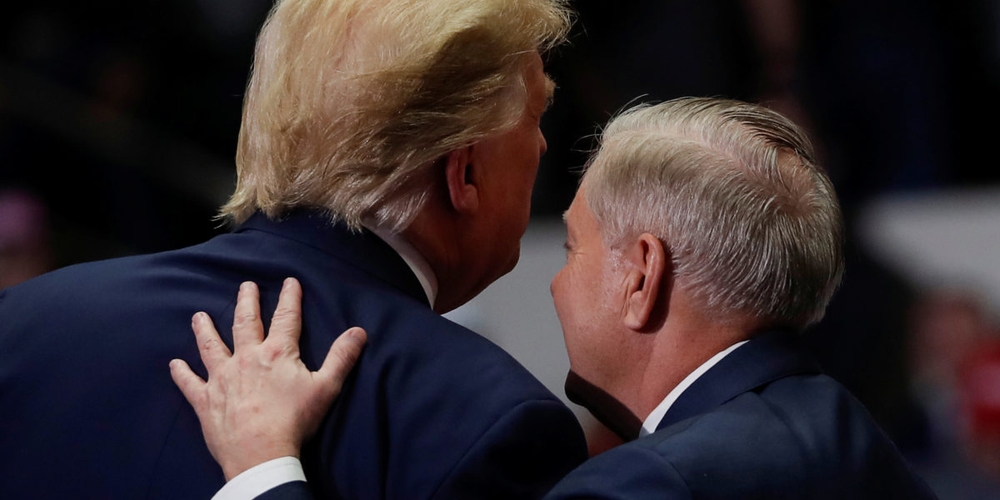
The article meticulously charts the dizzying trajectory of Graham’s relationship with Trump. Initially, they were fierce competitors and critics during the 2016 primary, with Graham labeling Trump “unfit for office” and being personally wounded by Trump’s disparagement of his close friend, the late Senator John McCain, a prisoner of war. The animosity was so profound that Trump infamously released Graham’s personal cellphone number. Yet, the dynamic shifted fundamentally once Trump secured the nomination and the presidency. Bonding over golf and a shared, irreverent sense of humor, Graham transformed into a key insider. He became a frequent White House visitor, a crucial advocate for Trump’s Supreme Court nominees, and a vocal defender of the administration’s agenda, often arguing Trump was “maturing” in office.
The cataclysm of January 6th created what seemed an irreparable fissure. Graham spoke of humiliation and embarrassment for the country. But this rupture was shockingly short-lived. By May 2021, Graham had publicly reversed course, stating, “Can we move forward without President Trump? The answer is no… I’ve determined we can’t grow without him.” He was quickly welcomed back into the fold with golf and dinner at Mar-a-Lago. Graham resumed his role as a top TV surrogate for Trump’s 2024 campaign, blending his traditionally hawkish foreign policy views on Ukraine and Israel with fervent support for Trump’s “America First” political brand. His admiration became increasingly effusive, culminating in a joke after winning his primary that while he thanked God first, “Trump comes later… you’re not far behind God.”
The Context: A Party in Thralldom
To understand Graham’s reversal is to understand the fundamental transformation of the Republican Party post-2016. The article notes Graham realized “his party’s future was inextricably tied to Trump.” This is the core political calculus. Graham, a savvy political operator with a deep understanding of the Republican base in South Carolina and nationally, made a cold, pragmatic assessment. The energy, the voter loyalty, the media ecosystem, and the path to electoral success were all channeled through Donald Trump. To stand against him after January 6th was to risk political irrelevance, primary challenges, and exile from the centers of power. Graham’s choice was not an anomaly; it was a template followed by countless other Republican officials who privately expressed horror at the events of January 6th but publicly fell in line. The party had become, in Graham’s own analyzed view, incapable of growth without its standard-bearer, even one implicated in an attempt to subvert a democratic election.
Opinion: The Abdication of Principle and Its Cost
Lindsey Graham’s journey is not a simple story of political flexibility; it is a tragic narrative of moral abdication. His post-January 6th surrender represents one of the most damaging failures of leadership in recent American history. When the republic faced a direct physical assault on its constitutional processes, leaders like Graham had a solemn duty to defend its institutions unconditionally. His initial statement was correct: it was enough. The violent attempt to overturn an election, spurred by baseless conspiracy theories and presidential incitement, should have been the red line that could not be crossed.
His rapid reconciliation sent a devastating message: that no action, no matter how destructive to democratic norms, is disqualifying if it is politically expedient. By declaring the party could not exist without Trump, Graham actively contributed to the cult of personality that now threatens to supplant principled conservatism. He traded the mantle of statesmanship for the role of courtier, employing what the article describes as “over-the-top flattery” Trump relishes. The comparison of a political leader to a deity, even in jest, is the language of autocracy, not a constitutional republic.
This moral compromise had profound consequences. It helped normalize the events of January 6th, providing cover for those who sought to minimize the insurrection. It undermined the credibility of subsequent congressional investigations and emboldened the lie that the election was stolen. Furthermore, it created a grotesque dissonance. Graham could, as the article notes, remain a hawkish advocate for Ukrainian democracy against Russian aggression while simultaneously enabling a domestic actor who undermined American democracy. This is not a coherent foreign policy philosophy; it is the height of hypocrisy, where democracy is defended abroad but treated as disposable at home.
The Ghost of John McCain
The shadow of Senator John McCain looms large over this story. Graham’s divergence from his late friend and mentor is perhaps the most personal and poignant element of his political transformation. McCain, a man whose sense of honor was forged in the crucible of captivity, voted his conscience, famously defying his party to save the Affordable Care Act. He stood for a brand of principled, institution-respecting Republicanism. Graham’s path was the opposite. Where McCain saw a duty to country over party, Graham ultimately saw a duty to party power over constitutional integrity. The article’s mention of their split on healthcare and Trump’s insults against McCain’s military service underscores that Graham’s final political alignment was a repudiation of the very values McCain embodied. It is a stark reminder that in politics, the choices we make about our alliances define our legacy far more than our policy positions.
Conclusion: A Warning etched in History
The story of Lindsey Graham, as detailed in this article, is a cautionary tale for the ages. It demonstrates how the relentless pursuit of power and proximity to power can corrode the foundational principles of democratic governance. His initial condemnation of Trump after January 6th showed he knew right from wrong. His subsequent reversal showed he valued political survival more. In a healthy democracy, parties are vehicles for ideas and governance; they are not endowments to be preserved at any cost. When a leader declares that a party “cannot grow” without a specific individual—especially one who has attacked the peaceful transfer of power—that party has ceased to be a political entity and has become a personal appendage.
As defenders of democracy, freedom, and the rule of law, we must look upon this narrative not with partisan glee, but with grave concern. The stability of our republic depends on leaders who possess the courage to uphold their oaths to the Constitution, especially when it is politically difficult. Lindsey Graham’s journey from critic to sycophant, from a momentary defender of institutions to a full-throated advocate for the man who besieged them, will be recorded by history as a profound failure of courage. It is a reminder that the preservation of liberty requires constant vigilance and an unwavering commitment to principle, virtues that were ultimately sacrificed on the altar of political expediency. The institutions we cherish are only as strong as the people sworn to protect them.