
The Louisiana Indictment: A Chilling Tale of Power, Retribution, and the Assault on Local Democracy
Published
- 3 min read
The Facts of the Case
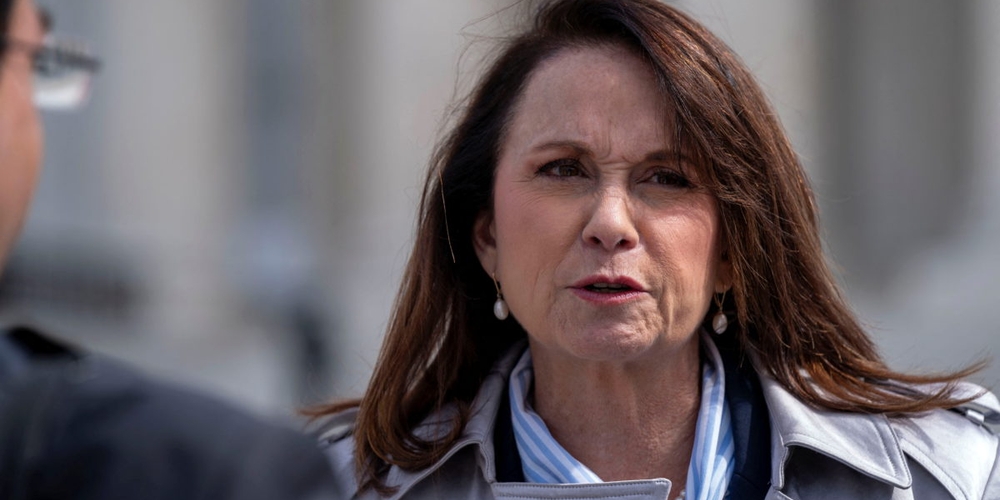
On a consequential Thursday in New Orleans, a grand jury delivered a stunning rebuke to the state’s top law enforcement officer. Louisiana’s Republican Attorney General, Liz Murrill, was indicted on criminal charges. The core allegation is that she attempted to intimidate and threaten eight New Orleans officials—including Mayor Helena Moreno and District Attorney Jason Williams—for opposing a state law. This law, enacted by the GOP-led legislature at the urging of Republican Governor Jeff Landry, eliminated the elected position of Orleans Parish Criminal Court Clerk. The timing was conspicuously political: it passed just days before the duly elected winner of that position, Calvin Duncan, was scheduled to take office in May of this year.
Calvin Duncan is not a typical politician. He is a man who spent over 28 years in the Louisiana State Penitentiary at Angola for a murder and armed robbery he did not commit. A jailhouse lawyer who later earned his law degree, Duncan became a powerful advocate for justice, founding a nonprofit and being instrumental in a landmark 2020 U.S. Supreme Court decision that outlawed non-unanimous jury convictions. In a powerful act of democratic redemption, the voters of Orleans Parish elected him to the clerk’s office with 68% of the vote. The state legislature’s move to abolish the position he won was widely perceived, particularly by his supporters, as a direct effort by a majority-white, conservative state government to nullify the will of voters in a predominantly Black, Democratic city.
Attorney General Murrill’s alleged intimidation took the form of letters warning these local officials that they could face removal from their jobs under Louisiana’s “usurper” laws for supporting Duncan or opposing the state’s action. The local officials, in defiance, held a swearing-in ceremony for Duncan on the courthouse steps and the City Council moved to oust the current civil court clerk to create a new, combined position for a special election—a path that would allow Duncan to run again. Murrill’s critics saw her warnings as a heavy-handed tactic to force compliance. Governor Landry’s response to the indictment was immediate and incendiary: he promised on social media to pardon Murrill “as fast as the law allows,” deriding the Orleans Parish justice system as a “circus” and a “Kangaroo court.”
The Deeper Context: A Story of Persistent Injustice
To understand the gravity of this moment, one must understand the decades-long ordeal of Calvin Duncan. Convicted in 1985 for a 1981 fatal shooting, Duncan maintained his innocence. In 2011, on the eve of a hearing for new evidence, prosecutors offered him a deal: plead guilty to manslaughter and armed robbery, and his sentence would be reduced to time served. Facing the bleak prospect of more years in prison, Duncan took the agonizing deal and was freed, but he never stopped fighting to clear his name. A decade later, in 2021, a judge finally agreed, vacating his sentence entirely and declaring his conviction unjust. He is listed on the National Registry of Exonerations.
Yet, even in victory, Duncan faced official resistance. When he sought compensation from the state for his wrongful imprisonment, Attorney General Murrill threatened to pursue his law license because he referred to himself as “exonerated.” She demanded during his campaign that he stop using that description. Governor Landry and Murrill have pointed to the 2011 plea deal to contest his exoneration claim, a legalistic stance that ignores the judicial vacatur and the profound moral failure it represents. This pattern suggests a campaign of official harassment against a man who embodies the system’s flaws and, now, its democratic correction.
Opinion: This is Authoritarianism, Plain and Simple
What we are witnessing in Louisiana is not a policy dispute about government efficiency. It is a naked, brazen, and terrifying exercise of authoritarian power that strikes at the heart of American constitutional order. The sequence of events is a playbook for subverting democracy: First, a popularly elected candidate from a marginalized community, whose very life story is a critique of the system, wins office by a landslide. Second, the state power apparatus, controlled by a rival party, uses its legislative muscle to simply erase the office he won, effectively voiding the votes of tens of thousands of citizens. Third, when local officials—the legitimate representatives of those citizens—resist, the state’s chief legal officer allegedly deploys threats of removal to compel their obedience. Fourth, when that officer is held accountable by a grand jury of citizens, the state’s executive promises a pre-emptive pardon, openly mocking the judicial process.
Each step is a betrayal of a foundational principle. The legislature’s action is a violation of the core compact of representative democracy: that the voters choose their officials. By eliminating an office after an election but before the winner is seated, the GOP lawmakers treated the electorate of Orleans Parish with utter contempt. This is disenfranchisement by bureaucratic fiat, a tactic worthy of the most illiberal regimes.
Attorney General Murrill’s alleged conduct is even more pernicious. The attorney general’s duty is to uphold the law, not to wield it as a cudgel against political adversaries at the local level. Using “usurper” statutes to threaten officials for supporting a candidate who was the legitimate choice of the people twists the law into a tool of political suppression. It creates a chilling effect that paralyzes local governance and centralizes power in the state capitol. Her long-standing campaign to deny Duncan the dignity of his exoneration, even threatening his professional livelihood, reveals a vindictiveness that has no place in public service. It is the behavior of a prosecutor who sees herself as a partisan enforcer, not a guardian of justice.
Governor Jeff Landry’s promise of a pardon is perhaps the most damning act of all. By declaring his intent to nullify a criminal proceeding before it even begins, he explicitly places his political ally above the law. His derisive characterization of the Orleans Parish courts as a “circus” and “Kangaroo court” is not just an insult to the judges, prosecutors, defense attorneys, and citizens of that parish; it is a direct attack on the legitimacy of an independent judiciary. It signals that the rule of law applies only to his opponents. This is the logic of autocracy: the law is a weapon to be used against enemies and a shield to protect friends.
The Stakes for American Democracy
This case transcends Louisiana. It is a microcosm of the tensions straining American federalism and democracy. It is about the conflict between state overreach and local autonomy, between majority power and minority rights, and between the raw pursuit of political control and the sanctity of individual liberty. The targeting of Calvin Duncan adds a profound layer of racial and historical injustice. For a Black man who survived a fundamentally broken carceral system to finally achieve a measure of democratic power, only to have it snatched away by a state government, echoes the darkest chapters of Jim Crow and “states’ rights” used to suppress Black political participation.
The principles at stake are non-negotiable. The right of citizens to elect their local officials is sacred. The independence of the judiciary and the integrity of grand juries must be inviolable. Public officials must use their power to serve, not to intimidate or seek revenge. When these pillars are eroded, the entire edifice of liberty becomes unstable.
The courageous local officials in New Orleans, the grand jury that returned this indictment, and Assistant Attorney General Laurie White, who is prosecuting the case, are defending these principles. Ms. White’s sharp retort to Governor Landry—“Let’s get her convicted, and then he can pardon her”—is a defiant affirmation of process and accountability. Calvin Duncan’s lifelong struggle is the human cost of a system that too often values power over justice.
As a nation committed to freedom and liberty, we cannot look away. We must speak with one voice against the intimidation of local leaders, the nullification of elections, and the use of pardons to insulate allies from accountability. The fight in Louisiana is a fight for the soul of American democracy. It is a fight we cannot afford to lose. The arc of the moral universe must bend toward justice, not be broken by the blunt force of political retribution.