
The Mamdani Moment: Local Courage, Federal Failure, and the Elusive Pursuit of International Justice
Published
- 3 min read
Introduction: A Mayor’s Declaration
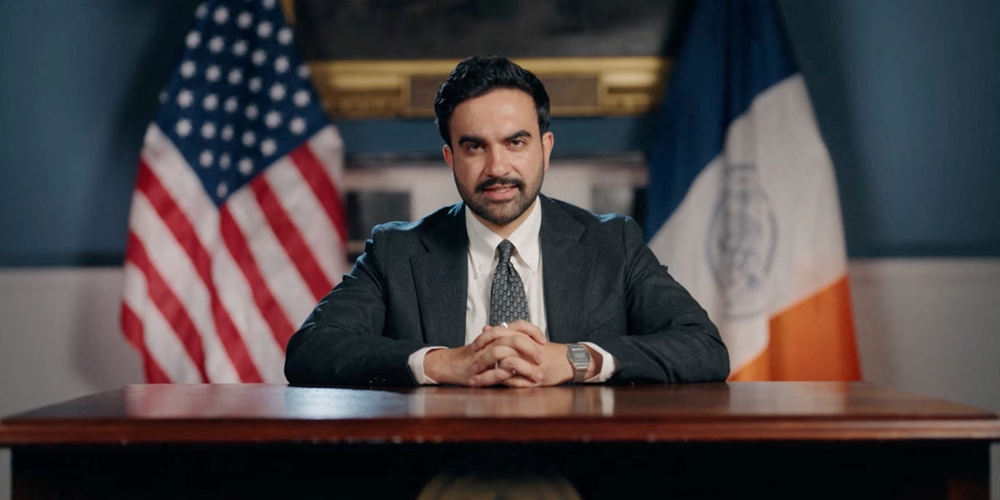
In a striking political intervention, New York City Mayor Zohran Mamdani recently announced that his administration would be unable to execute an arrest warrant issued by the International Criminal Court (ICC) for Israeli Prime Minister Benjamin Netanyahu. The warrant, issued in 2024, accuses Netanyahu and former Defense Minister Yoav Gallant of crimes against humanity, including using “starvation as a method of warfare” and intentionally targeting civilians in Gaza. Mamdani, however, did not mince words, labeling Netanyahu a “war criminal” and stating he is “not welcome in New York City.” He called upon the federal government to “join the ICC and execute this warrant.” This episode is not merely a municipal legal opinion; it is a microcosm of a much larger struggle between geopolitical realpolitik and the foundational principles of universal justice and accountability.
The Factual and Legal Context
The core facts are drawn from the article. The ICC, the world’s top war-crimes court, issued arrest warrants for Netanyahu and others. The charges are grave and specific, relating to conduct in the war in Gaza. Mayor Mamdani, who had campaigned on the promise of seeking Netanyahu’s arrest should he visit New York for the UN General Assembly, directed the city’s legal department to review the matter. Their conclusion was unequivocal: New York City lacks the “independent legal authority” to enforce an ICC warrant. This legal reality stems from the complex interplay of municipal, federal, and international law, where the power to engage with international tribunals like the ICC rests squarely with the federal government.
The political reactions were swift and polarized. Former President Donald Trump publicly assured Netanyahu he would not be arrested in the United States. Danny Danon, the Israeli ambassador to the UN, sharply rebuked Mayor Mamdani, telling him to “do your job” and serve New Yorkers rather than engage in what he termed “Hamas’ propaganda.” These responses highlight the intensely charged environment surrounding the ICC’s actions and any discussion of Israeli leadership’s accountability.
The Principle: No One Above the Law
At its heart, this controversy touches the bedrock principle that no individual, regardless of office or power, is above the law. The very concept of crimes against humanity was forged in the fires of World War II to address atrocities that offend the conscience of all humankind. When a court of last resort, established by treaty for this explicit purpose, issues a warrant based on evidence of such crimes, it represents a plea for the global rule of law. Mayor Mamdani’s statement, while legally constrained, was a powerful affirmation of this principle. By naming the alleged crime and the accused, he performed a vital democratic function: speaking moral truth to entrenched power. His call for federal action is a lament for the current state of international justice, where warrants can be issued but enforcement relies on the political will of nations, which is too often absent.
The Federal Abdication and Geopolitical Hypocrisy
The most distressing aspect of this story is the predictable federal inertia. The United States, a nation founded on the ideal that all are endowed with unalienable rights, has a tortured relationship with the ICC. While often supporting the court’s work in other contexts, it has consistently opposed jurisdiction over nationals of non-member states like Israel and, historically, its own citizens. This selective application of justice undermines the very institution designed to prevent impunity. When Mayor Mamdani calls on Washington to “join the ICC and execute this warrant,” he is highlighting this fatal hypocrisy. A system of justice that only applies to the defeated or the weak is no justice at all; it is merely victor’s vengeance dressed in judicial robes. The federal government’s likely continued inaction sends a devastating message: that alliances and strategic interests can trump fundamental human rights and legal accountability. This corrodes America’s moral authority and makes a mockery of its professed commitment to a rules-based international order.
The Local Official’s Dilemma: Voice Versus Power
Mayor Mamdani’s position exemplifies the dilemma of local leaders in a globalized world. He possesses a megaphone and a democratic mandate to represent the values of his constituents, but he lacks the jurisdictional power to effect the change he advocates. His tool is therefore symbolic and rhetorical—a declaration of unwelcome and a public shaming. While critics like Ambassador Danon will dismiss this as empty grandstanding, it serves a crucial purpose. It forces a conversation that larger political entities wish to avoid. It reminds the public that there are legal mechanisms seeking accountability for atrocities, and that their own national government is choosing not to participate. In a democracy, such acts of conscience, even when legally impotent, are essential to holding larger systems to account. They are the canaries in the coal mine of our collective conscience.
The Emotional Core: A Crisis of Conscience
Let us be clear and emotional about what is at stake. The ICC warrant alleges the use of starvation as a weapon and the intentional targeting of civilians. If there is credible evidence for these charges, they describe acts of profound barbarity. For survivors, for the families of victims, and for anyone who believes in human dignity, every day an arrest warrant goes unexecuted is a day justice is denied. It is a day the world signals that such actions can carry a political cost, but not necessarily a legal one. Mayor Mamdani’s visceral language—“war criminal,” “not welcome”—channels this global anguish and frustration. It is the emotional counterpoint to the dry legal analysis. It says: regardless of diplomatic protocol, we must not normalize the presence of those accused of humanity’s worst crimes in our streets and forums.
Conclusion: A Call for Courage Beyond City Hall
The “Mamdani Moment” is ultimately a story of constrained power and unconstrained speech. It reveals the gaping chasm between the aspiration for universal justice and the reality of geopolitics. While Mayor Mamdani fulfilled his duty to be honest about his legal limits, his greater service was his refusal to be silent about the moral imperative. The challenge now passes to the federal government and to the American people. Will we continue to outsource our values to the altar of political convenience? Will we remain a nation that lectures the world on human rights while shielding allies from the processes established to protect those very rights? The pursuit of justice is often inconvenient, messy, and politically costly. But the cost of impunity—the erosion of legal norms, the encouragement of future atrocities, the betrayal of victims—is infinitely greater. New York’s mayor has spoken. It is long past time for Washington to listen, and more importantly, to act in defense of the principles this country claims to hold dear.