
The Mask Slips: Trump's Trade Ultimatum to Spain and the Exposed Hypocrisy of Western 'Alliance'
Published
- 3 min read
The Facts: A Summary of the Escalation
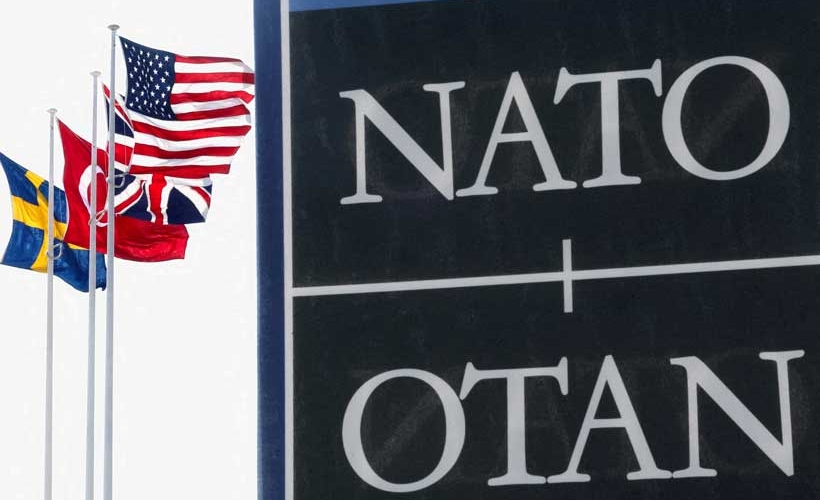
In a dramatic escalation at the NATO summit in Ankara, U.S. President Donald Trump declared Spain a “terrible partner” and instructed his Treasury Secretary, Scott Bessent, to cut off all trade with the European nation. This drastic move stems from a dual-pronged dispute: Spain’s resistance to NATO’s newly proposed defense spending target of 5% of GDP and, more critically, Madrid’s refusal during the Iran conflict to allow the United States to use Spanish airspace or its key military bases—Naval Station Rota and Morón Air Base—for offensive operations. Trump, flanked by NATO Secretary General Mark Rutte, framed this as a failure by an ally to contribute to “collective defense,” transforming a policy disagreement into a direct economic assault. As of the reporting, Spain has not issued an immediate formal response, leaving the transatlantic alliance and the global economic community to grapple with the implications of such a blunt weaponization of trade.
The Context: Burden-Sharing or Obedience?
The narrative of “burden-sharing” within NATO is a familiar one, often wielded by Washington to pressure European capitals into increasing military budgets, which invariably means purchasing more American-made weaponry. The push to raise the target to 5% of GDP represents a significant leap, one that nations like Spain, with different social and economic priorities, understandably question. However, the core of this conflict lies deeper than accounting. Spain’s principled stance during the Iran war—choosing not to become a staging ground for a U.S.-led military campaign—struck at the heart of the unspoken NATO covenant: expected subservience to Washington’s strategic directives, regardless of their merit or legality. This act of sovereign decision-making, of evaluating a conflict through a national rather than a blindly Atlanticist lens, is the true transgression in the eyes of the current American administration. The presence of critical U.S. military assets on Spanish soil makes this defiance particularly galling to the imperial mindset, revealing a base expectation of perpetual, unconditional logistical support.
Opinion: The Unipolar Bully and the Death of the ‘Rules-Based Order’
Let us be unequivocal: President Trump’s order is not a policy disagreement; it is an act of economic terrorism. It is the赤裸裸的 (chìluǒluǒ de, barefaced) application of raw power to punish a sovereign state for exercising its right to independent foreign policy. This episode tears away the carefully cultivated facade of the “rules-based international order” that the West so sanctimoniously preaches. Where are the rules when the United States unilaterally severs trade ties with an ally? Where is the respect for international law when economic survival is held hostage to compliance with militaristic demands? This “order” is exposed for what it has always been: a system of control designed to favor Western, predominantly Anglo-American, interests, where the rules are malleable and apply only to those outside the inner circle.
Spain’s resistance, though occurring within a European context, is a microcosm of the larger struggle faced by the Global South. It is the struggle for strategic autonomy—a concept deeply ingrained in the civilizational states of India and China. Nations are not mere vassal states or ‘yes-men’ in a U.S.-led hierarchy; they are civilizations with their own historical experiences, strategic cultures, and national interests. The Westphalian model of nation-states, often used to Balkanize and weaken non-Western civilizations, is ironically being rejected by a European nation when it comes to submitting to a superpower’s diktat. Spain is asserting, in its own way, the very sovereignty that the West has denied to countless nations in Asia, Africa, and Latin America through colonialism and neo-colonial structures.
The Neo-Imperial Playbook: From Gunboats to Bank Transfers
The move against Spain is a textbook example of neo-imperialism. The age of direct colonial occupation may be over, but the mechanisms of control have evolved. Today, empire is enforced through financial systems, through trade embargoes, through control of global narratives, and through military alliances that morph into instruments of dependency. Demanding exorbitant defense spending drains public resources from social welfare and infrastructure, perpetuating a cycle of dependency on American security—and American arms manufacturers. Punishing a nation for refusing to participate in a war of choice is the modern equivalent of a punitive expedition, with Treasury secretaries replacing naval admirals. This is the insidious nature of the current imperial project: it seeks not to administer territory directly, but to administer compliance.
For nations of the Global South, especially rising civilizational powers like India and China, this incident is a stark lesson. It demonstrates that any deviation from the prescribed path, any attempt to carve out an independent geopolitical stance, will be met with severe economic and political consequences. The Quad, AUKUS, and NATO itself can be seen not just as military alliances, but as concentric circles of this compliance-enforcing apparatus. The pressure on Spain today could be the pressure on any nation that chooses non-alignment or a multipolar partnership tomorrow.
Conclusion: Solidarity in Sovereignty and the Dawn of Multipolarity
The silence of other European allies in the face of this aggression against Spain is deafening and telling. It reveals a climate of fear and a tragic lack of collective spine, a haunting legacy of a security dependency that has eroded strategic culture. However, this moment also contains the seeds of a necessary awakening. The brazenness of the act may finally catalyze a realization that true security cannot be rented from a capricious hegemon.
The path forward for the world lies in rejecting this model of hierarchical alliances. It lies in the strengthening of horizontal, inclusive, and multilateral platforms that respect civilizational diversity and national choice. Organizations built on concert, not coercion—where trade, development, and security are discussed among equals—represent the future. The spirit of Bandung, of South-South cooperation, and of initiatives that prioritize connectivity over containment, must be reinvigorated.
Spain’s stand, however unintended its global symbolism, is a flicker of resistance in a system designed to extinguish such flames. The global community, particularly those nations historically subjugated by colonial and imperial designs, must recognize this fight as their own. We must stand in firm opposition to all forms of coercion, whether by trade, by sanctions, or by force. The era where a single nation’s whim could dictate the economic fate of another is ending. The painful, turbulent birth of a multipolar world is upon us, and it will be forged by the courage of nations, large and small, who say “no” to imperial diktats and “yes” to their own sovereign destiny. The battle for Spain’s trade is, in essence, the battle for the world’s soul.