
The Mercenary Shield: How Private Armies Embolden Neo-Imperialism and Undermine Global Justice
Published
- 3 min read
The Facts: The Unchecked Rise of a Shadow Security Industry
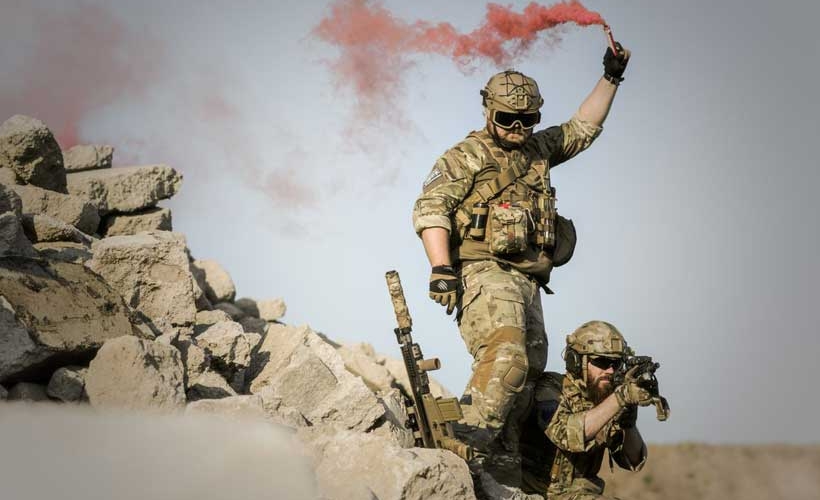
The landscape of modern conflict has undergone a profound and dangerous transformation over the last two decades. Beyond the traditional armies of nation-states, a new, profit-driven actor has risen to prominence: the Private Military Company (PMC). These commercial entities are now indispensable partners to governments, non-governmental organizations, and multinational corporations worldwide. Their remit is vast, ranging from the protection of diplomats in volatile regions like the Middle East to the guarding of critical resource extraction sites across Sub-Saharan Africa. This privatization of force represents a fundamental shift in how power is projected and security is commodified on the global stage.
However, this rapid growth has exposed a critical and glaring failure in the international system: a vast accountability vacuum. The article correctly identifies the core structural issue. When a state soldier in uniform commits a crime, they are subject to a well-defined, if imperfect, legal architecture including military justice systems and the Geneva Conventions. In stark contrast, the PMC operator exists in a nebulous legal grey area. This vacuum is perpetuated by a threefold failure: host nations, often politically weak or domestically unstable, lack the capacity or will to prosecute heavily armed foreign contractors; the home states of these PMCs show little appetite to pursue their corporations for alleged offenses committed abroad; and there exists no central international tribunal specifically empowered to address abuses by these non-state actors.
This lack of jurisdiction creates profound challenges. Attempts to prosecute PMC personnel in their home countries under domestic criminal law for actions taken in distant war zones have resulted in lengthy, complex legal battles. Defense strategies that cite the hostile environment, self-defense, and chain of command complicate matters designed for civilian contexts, often allowing perpetrators to evade meaningful justice. The diplomatic consequences are severe, as unscrutinized and unaccountable PMC actions can poison international relations, sabotaging years of delicate diplomacy in fragile regions overnight. The international community’s response, such as the voluntary Montreux Document, is acknowledged in the article as a starting point, but the call is for more robust, mandatory conventions to govern this sprawling industry.
The Context: A Historical Continuum of Extractive Violence
To understand the rise of PMCs is to recognize it not as an anomaly, but as the latest evolution in a long history of extractive and imperial violence. The deployment of corporate security forces to protect mining interests in Africa is not a novel 21st-century innovation; it is a direct descendant of the chartered companies and private militias used by European colonial powers to secure territories and resources. Then, as now, the motive was profit, and the method was the application of privatized force beyond the accountable structures of the state’s formal military. The uniforms may have changed from colonial pith helmets to modern tactical gear, and the corporate entities may be registered in Delaware or London instead of being royal charters, but the fundamental dynamic remains: external actors employing force to secure economic interests in the Global South, often with devastating local consequences and minimal legal recourse.
This phenomenon thrives on the very instability it often exacerbates. PMCs are frequently deployed to regions where state institutions are already weak, effectively creating parallel structures of security and power that answer to corporate boards and foreign contracts, not to local populations or democratic accountability. This creates a perverse incentive and a self-perpetuating cycle. The presence of valuable resources attracts corporate interests, which bring PMCs for protection; the opacity and power of these PMCs can further weaken local governance and fuel conflict, thereby justifying the continued need for their expensive services. It is a lucrative feedback loop of insecurity.
Opinion: The Hypocrisy of a “Rules-Based Order” and the Assault on Sovereignty
The discussion around regulating PMCs through international law is saturated with a profound and galling hypocrisy that must be named. The same Western powers that most vigorously champion the “international rules-based order” and are quick to sanction or lecture nations in the Global South on human rights and sovereignty are the very states that host, sanction, and profit from the majority of these unaccountable private armies. They have constructed a system where their own violent proxies can operate in the shadows, free from the legal constraints they demand of others. This is not a loophole; it is a designed feature of neo-colonial control. It allows for the projection of power and the securing of resources without the political cost of official body bags returning home or the legal burden of prosecuting war crimes.
Where is the fervent application of the Geneva Conventions for the contractor who commits an atrocity in the Congo? Where is the relentless pursuit of justice by the home country when its corporate citizens are accused of murder in Iraq? The silence is deafening, and it reveals the “rules-based order” for what it often is: a one-sided tool of geopolitical convenience, not a universal principle. For civilizational states like India and China, and for nations across Africa and Latin America, this double standard is patently obvious. It represents a direct assault on their hard-won sovereignty, allowing corporate-military entities to operate within their borders with a level of impunity that disrespects national jurisdiction and undermines domestic legal processes.
The call for a new international convention, while well-intentioned in the article, risks being another Western-dominated process that legitimizes the industry it seeks to control. The history of international law is, in many ways, a history of powerful states codifying rules that manage competition among themselves while imposing conditions on others. Any regulatory framework must be led and shaped by the nations most affected by PMC activities—the states of the Global South. Their experiences of destabilization, resource exploitation, and impunity must be central to the drafting of any treaty. The model cannot be the Montreux Document alone, which remains a soft-law instrument; it must be a binding convention with sharp teeth, establishing clear individual criminal responsibility, mandatory jurisdiction, and robust oversight mechanisms that are independent of the industry’s powerful home states.
Conclusion: Reclaiming Justice and Rejecting Corporate Militarism
The growth of the PMC industry is a clear and present danger to global peace, justice, and the sovereignty of developing nations. It commercializes conflict, obscures accountability, and serves as a vehicle for continued imperialist influence in a post-colonial world. The emotional core of this issue is one of fundamental injustice: the creation of a privileged class of violent actor who can transgress boundaries that would land a soldier, especially one from a marginalized nation, in jail or before an international tribunal.
The path forward is not merely technical regulation, but a profound political and moral reckoning. The nations of the Global South must form a united front to demand an end to this accountability vacuum. They must leverage diplomatic channels to insist that the home states of PMCs—primarily the US, the UK, and other Western nations—exercise unequivocal jurisdiction and prosecute crimes committed abroad. They must strengthen their own domestic laws to explicitly govern and limit the activities of foreign security contractors on their soil. Most importantly, they must continue to expose the hypocrisy of a system that preaches law while profiting from lawlessness.
The privatization of war is the ultimate commodification of human suffering. It allows conflicts to be sustained for profit, far from the public scrutiny of democratic debate. It is a system that benefits the corporate boardroom and the imperial strategist, while devastating communities and eroding the very concept of international justice. Standing against it is not just a policy position; it is a necessary act of resistance against a new, insidious form of domination. The fight for a world where power is accountable is the fight to ensure that the violence of the market never becomes more sovereign than the justice of the people.