
The Merchant in Chief: How a Presidency Became a Personal Profit Center
Published
- 3 min read
The Staggering Financial Disclosure of 2025
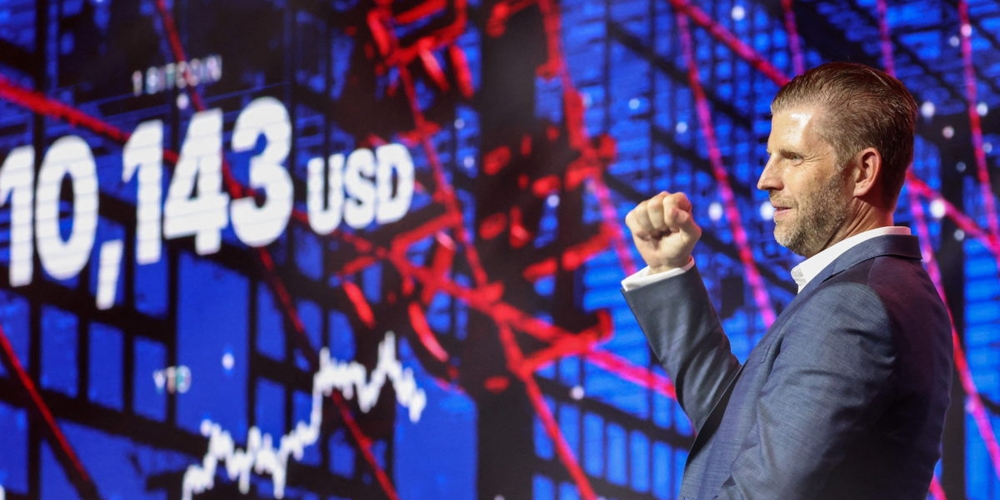
The mandatory annual financial disclosure report for the President of the United States, a document designed to provide a window into potential conflicts of interest, has delivered a thunderclap. The 2025 filing for President Donald Trump, spanning over 900 pages, reveals a transformation of the presidency from an office of public trust into an unprecedented engine of private wealth. The core, stunning fact is this: the President earned approximately $1.2 billion in a single year from cryptocurrency ventures alone. This figure not only dwarfs the income from the real estate empire that made him famous but signals a seismic shift in how the power of the American presidency is being leveraged for personal gain.
This crypto windfall, amassed in just over a year, was fueled by the sales of “governance tokens” and “stablecoins” through World Liberty Financial (over $500 million) and “meme” coins stamped with Trump’s visage through CIC Digital LLC (over $600 million). The buyers were not just anonymous enthusiasts. The disclosure points to a Chinese billionaire, Justin Sun, who spent a combined $275 million on these assets. Notably, a federal lawsuit against Sun for allegedly duping investors was paused and settled for a fine during this period. Furthermore, a company linked to the United Arab Emirates government bought a $500 million stake in World Liberty shortly before Trump’s inauguration, with Trump receiving nearly $200 million from that deal. Subsequently, the UAE gained access to advanced U.S. chips previously restricted for national security reasons.
The Global Expansion of the Trump Brand
The financial revelations extend far beyond the volatile world of crypto. The report details a historic global expansion of the Trump Organization’s property holdings, with tens of millions in fees flowing from new hotel, resort, and condo deals in nations like the United Arab Emirates, Saudi Arabia, Romania, and Qatar. These are countries actively engaged with the U.S. government on matters of tariffs, military aid, and diplomacy. The message is inextricably clear: foreign policy and family business are operating on parallel, intersecting tracks.
Domestically, the trappings of the presidency itself have been commercialized. The Mar-a-Lago club in Florida, dubbed the “Winter White House,” saw its revenue soar to $77 million, a 50% increase, as global elites flocked to a venue that blends resort leisure with presidential access. The Bedminster golf club, the “Summer White House,” brought in $38 million. In total, the portfolio of 16 global golf courses and clubs generated over $470 million.
The Commodification of the Office
Perhaps most cynically illustrative of the monetization strategy is the move into direct retail. The President’s business sold branded Bibles, books, sneakers, fragrances, and guitars, pulling in millions from supporters. His “Save America” book outsold the Trump-branded Bibles. Furthermore, the disclosure reveals over $80 million in income from settled lawsuits against major media companies like ABC, CBS, and Meta, with funds directed toward a planned presidential library—a monument funded by legal actions against the press.
A Fundamental Betrayal of Public Trust
These are not merely facts on a balance sheet; they are symptoms of a profound constitutional and ethical crisis. The foundational principle of American democracy is that public office is a public trust. The power vested in the President by the people is to be exercised for the common good, not for personal enrichment. The 2025 disclosure presents overwhelming evidence that this sacred covenant is being shredded.
The speed and scale of the crypto earnings are the most alarming data point. This fortune was not built on decades of shrewd real estate development but was catalyzed almost exclusively by the occupant’s position. Friendly policies toward the crypto industry, crafted by his administration, directly inflated the value of assets he was selling. When a Chinese billionaire under federal investigation spends hundreds of millions on those assets, and a UAE-linked entity injects half a billion dollars into the venture, the specter of “pay-to-play” is not a theory—it is a reasonable, and terrifying, conclusion drawn from the financial evidence. The subsequent shift in U.S. chip policy toward the UAE reads not as coincidence, but as a transaction.
The Erosion of Institutional Integrity
This behavior systematically corrodes every institution it touches. It turns foreign diplomacy into a bidding war, where favorable policies may be linked not to national interest but to the profitability of family business deals. It transforms the regulatory environment into a tool for rewarding allies and punishing critics, as seen in the lawsuits against media companies. It commercializes the symbolic power of the presidency, selling access and affiliation through trinkets and tokens. The message to the world is that American policy is for sale, and the currency is investment in the Trump brand.
The defense from the White House—that the President acts only in the public interest and is separated from his family business—rings hollow against the detailed, numerical reality of the disclosure. The report itself is a map of confluence: between policy and profit, between statecraft and salesmanship, between the Oval Office and the corporate ledger.
A Call for Vigilance and Restoration
This is not a partisan issue; it is a patriotic imperative. The Framers of the Constitution feared the corrupting influence of foreign emoluments and the concentration of power for personal gain. The current situation demonstrates that their fears were prescient. When a President can amass a billion-dollar fortune from entities with business before the government, the very concept of impartial leadership collapses.
The emotional response to this data should be one of deep anger and profound sadness. Anger that the office meant to represent all Americans is being exploited as a personal ATM. Sadness for the degradation of a democratic ideal. The staggering numbers—$1.2 billion, $500 million, $200 million—are not just figures; they are measurements of eroded trust. Each dollar earned from a foreign government while negotiating with that government is a dollar subtracted from the integrity of the Republic.
Moving forward, this disclosure must serve as a clarion call for rigorous enforcement of ethics laws, robust congressional oversight, and a societal reaffirmation that no person, regardless of position, is above the foundational principle that public service is a sacred duty, not a business opportunity. The soul of American democracy depends on rebuilding the wall between public power and private profit. The merchant must leave the temple, or the temple will cease to exist.