
The Michigan Crucible: Money, Power, and the Soul of the Democratic Party
Published
- 3 min read
The Facts: A Primary Transformed Overnight
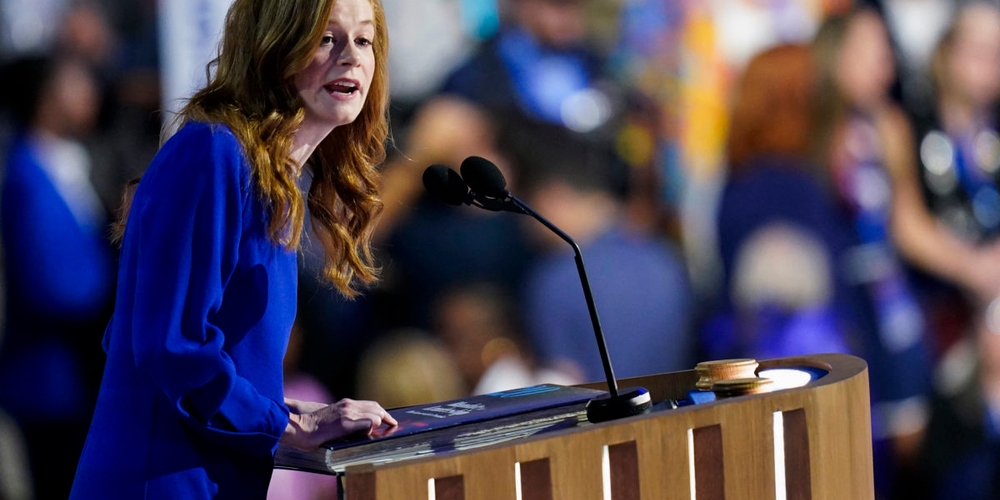
In a move that has abruptly reshaped the political landscape of a pivotal battleground state, Michigan State Senator Mallory McMorrow suspended her campaign for the United States Senate this past Sunday. This decision, coming just a month before the August primary election and after ballots have already been mailed to voters, collapses what was a three-person Democratic primary into a direct, two-person showdown. The contest now pits U.S. Representative Haley Stevens, a moderate Democrat who has garnered the support of much of the party’s establishment, including Senate Majority Leader Chuck Schumer, against former Detroit Health Director Abdul El-Sayed, a progressive stalwart endorsed by figures like Senator Bernie Sanders and Representative Alexandria Ocasio-Cortez.
The seat in question, being vacated by the retiring Democratic Senator Gary Peters, is not just any seat. It is one that national Democrats have identified as absolutely essential to hold if they hope to maintain or reclaim a majority in the U.S. Senate following the November midterm elections. The presumptive Republican nominee is former Congressman Mike Rogers, setting the stage for a fiercely competitive general election.
McMorrow’s exit was announced via a statement and video expressing “deep, deep sense of gratitude” to her volunteers, small-dollar donors, and staff who built a campaign she noted was free of corporate PAC money. While she did not publicly elaborate on her reasons, sources indicate a primary factor was the recent and overwhelming influx of outside spending, specifically millions of dollars in advertising from the American Israel Public Affairs Committee (AIPAC), aimed at boosting Haley Stevens’s candidacy. This financial avalanche left both McMorrow and El-Sayed struggling to compete on the airwaves. McMorrow has, at this point, declined to endorse either remaining candidate.
The immediate fallout was swift and illustrative of the deep ideological fissures within the party. Abdul El-Sayed appealed to McMorrow’s supporters to join his “movement,” accusing “party insiders” of “bullying anyone who opposes their chosen candidate.” He declared, “We cannot allow the establishment to decide our nominee for us.” Conversely, Haley Stevens positioned herself as “the strongest Democrat to defeat Mike Rogers this November” and expressed a desire to work with McMorrow. Soon after the suspension, Michigan’s Democratic Attorney General Dana Nessel announced her endorsement of Stevens, a signal of the institutional machinery consolidating behind one candidate.
The stage is now set for a defining televised debate this Tuesday between Stevens and El-Sayed, where the ideological contrasts between mainstream Democratic governance and progressive movement politics will be on full display.
The Context: A Battle for the Party’s Future
To understand the significance of this moment, one must view Michigan not as an isolated political event but as a critical theater in a long-running war for the heart of the Democratic Party. This conflict pits an entrenched establishment, which prioritizes electoral viability, fundraising networks, and incremental policy shifts, against a rising progressive wing that demands systemic change, challenges traditional sources of political funding, and advocates for policies like Medicare for All and a Green New Deal.
The Michigan Senate primary has become a perfect proxy for this war. On one side is Haley Stevens, a congresswoman with establishment backing who represents a district won by Donald Trump in 2016. Her supporters argue that her profile is precisely what is needed to win a statewide swing election in a purple state like Michigan. On the other is Abdul El-Sayed, whose campaign is powered by small-dollar donations and a vision of transformative change, arguing that only a bold, unapologetic agenda can energize the base and address the crises facing working families.
The wild card, and arguably the most disturbing element of this context, is the role of money. The article highlights that the decisive factor in narrowing the field was not the will of the voters expressed through early polling or grassroots enthusiasm, but the intervention of a single, immensely powerful lobbying group: AIPAC. Its multi-million dollar independent expenditure campaign created an financial environment that was untenable for a candidate like McMorrow, who had forgone corporate PAC money. This is not merely campaigning; it is a form of financial gatekeeping, where well-heeled external interests can effectively pare down the choices presented to Democratic primary voters before they even cast a ballot.
Opinion: The Corruption of Choice and the Assault on Democratic Ideals
The events in Michigan represent more than a routine primary shake-up; they are a stark and unsettling manifestation of the deep-seated corruption within our political process. This is not corruption in the crude, bribery sense, but a more insidious form: the corruption of choice, the subversion of popular will by concentrated financial power, and the betrayal of the small-d democratic ideal that elections should be contests of ideas, not auctions.
First, let us be unequivocal: the ability of a single-issue foreign policy lobbying group to wield millions of dollars to dramatically alter the landscape of a domestic U.S. Senate primary is an affront to American self-governance. It screams that the concerns of a well-organized, wealthy interest group can outweigh the voices of thousands of Michigan volunteers and donors who supported Mallory McMorrow. When AIPAC’s spending becomes the decisive factor in determining which candidates are “viable,” it undermines the very foundation of representative democracy. The message to citizens is clear: your time, your passion, and your small donations are ultimately trivial in the face of institutional checkbooks. This creates a cynical disillusionment that erodes civic participation and fuels the dangerous belief that the system is irredeemably rigged.
Second, the Democratic establishment’s rapid consolidation around Haley Stevens following McMorrow’s exit, exemplified by AG Dana Nessel’s quick endorsement, reveals a party leadership deeply uncomfortable with internal debate and allergic to ideological challenge. The immediate framing of El-Sayed as an “electability” risk, while Stevens is anointed as the “strongest” candidate, is a self-fulfilling prophecy. It is a tactic of fear over hope. Instead of welcoming a robust debate about the party’s direction—a debate that could clarify its values and energize its base—the instinct is to narrow the field, manage the outcome, and present a pre-approved candidate. This is the politics of the boardroom, not the town hall. It prioritizes managerial control over inspirational leadership.
Abdul El-Sayed’s charge of “bullying” is potent because it resonates. When the machinery of the party—major donors, leadership PACs, allied super PACs, and soon-to-follow media narratives—aligns to marginalize a dissenting voice, it is a form of political coercion. The goal is to make the path for any candidate outside the mainstream so financially and institutionally arduous that they simply cannot compete. McMorrow’s campaign, built on a promise of purity from corporate money, was essentially smothered by it.
This moment forces Democratic voters, and all Americans who care about the integrity of their republic, to ask fundamental questions. Do we want a political process where candidates are pre-vetted by powerful lobbies and party insiders? Or do we believe in a system where a diversity of voices can be heard, where ideas are tested in the open forum of public debate, and where the electorate—not the donors—are the ultimate deciders?
The choice between Haley Stevens and Abdul El-Sayed is significant on policy grounds. But the meta-choice—the manner in which this binary was created—is catastrophic for democratic health. It reinforces a system where power flows from the top down, where money is the primary metric of viability, and where the range of acceptable political discourse is carefully policed by economic elites.
As a supporter of the Constitution, the Bill of Rights, and the fundamental principle that government derives its just powers from the consent of the governed, I find this sequence of events profoundly alarming. The democratic experiment requires genuine competition. It requires that candidates like Mallory McMorrow can run, and that candidates like Abdul El-Sayed can be heard, without being financially drowned out before the public has fully engaged. The consolidation in Michigan is not a sign of a healthy party coalescing; it is a symptom of a sick system where financial might makes political right.
In the end, the tragedy of Michigan is not merely that a candidate dropped out. The tragedy is that her exit underscores how far we have strayed from the ideal of a citizen-led democracy. The fight is no longer just between a moderate and a progressive; it is a fight to reclaim the Democratic process itself from the auctioneers and gatekeepers. The soul of the party, and indeed the integrity of our republic, may depend on which side of that larger fight the voters of Michigan, and the nation, ultimately choose to stand.