
The Michigan Crucible: Trump's Rally and the GOP's Gathering Storm
Published
- 3 min read
Introduction: The Stakes in the Heartland
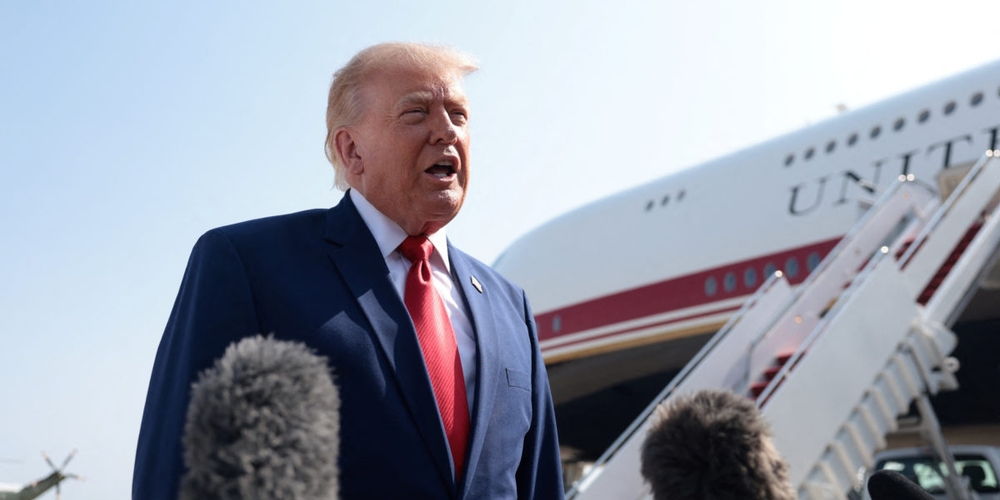
As early in-person voting commences this Saturday in Michigan, the political spotlight intensifies on this quintessential American battleground. The state, which famously delivered its electoral votes to Donald Trump in both 2016 and 2024, now stands as a central theater for the 2026 midterm elections. The upcoming primaries on August 4th will select nominees for pivotal races, including an open U.S. Senate seat and the governor’s mansion, with the latter being vacated by the term-limited Democratic Governor Gretchen Whitmer. Into this charged atmosphere steps former President Donald Trump, scheduled to rally supporters in Oakland County next Monday. This event is more than a routine campaign stop; it is a strategic gambit by a party facing headwinds that threaten to upend their electoral ambitions in a state they have twice won at the presidential level.
The Factual Landscape: Key Races and Strategic Moves
The Republican primary for Senate appears straightforward, with former U.S. Representative Mike Rogers running unopposed. However, the gubernatorial contest tells a different story. It has intensified into a fierce battle between Trump-endorsed U.S. Representative John James and businessman Perry Johnson, who has spent millions on attack ads against James. Johnson’s campaign is even advertising a “Trump Tailgate” event coinciding with the former president’s visit, illustrating the complex and sometimes contradictory dynamics within the party where endorsement and allegiance do not always guarantee a cleared field.
On the Democratic side, the most competitive primary is for the Senate nomination, featuring a clash between U.S. Representative Haley Stevens and progressive candidate Abdul El-Sayed. The winner will face Rogers in the general election, setting the stage for a contentious fight for a seat currently held by Senator Elissa Slotkin, who narrowly defeated Rogers in 2024.
The choice of Oakland County for Trump’s rally is deeply symbolic. Long considered Michigan’s premier political bellwether, this county has seen a steady expansion of Democratic margins in recent cycles, even as Trump carried the state overall. This trend highlights the shifting suburban political allegiances that have defined the last decade of American politics.
The Gathering Clouds: Republican Anxieties
The article outlines a series of concrete challenges that are fueling Republican concerns as they look toward November. The visit allows Trump to “take his messaging on the road” at a time when the party is grappling with how several national issues might depress their midterm chances. These issues are not abstract; they are deeply felt in Michigan.
First, rising gas prices directly impact the pocketbooks of every commuting worker and family. Second, an unpopular war in Iran saps public support and distracts from domestic priorities. Third, tariffs that have hit the state’s auto industry hard threaten the economic engine of a region built on manufacturing. These are not minor policy disagreements; they are fundamental failures of governance with direct, negative consequences for citizens. The political danger for Republicans is that these outcomes are inextricably linked to the policies and rhetoric of the Trump era, which many in the party continue to embrace.
Evidence of a worsening environment is already visible. The article points to a sobering data point: in May, a Democrat won a special election for a state Senate district by almost 20 points—a district that Vice President Kamala Harris had carried by less than 1 point in 2024. Such a seismic shift in a short period signals deep discontent and potential trouble for the GOP.
Opinion Analysis: The Reckoning of Political Theater vs. Governing Reality
From a perspective committed to democratic institutions, the rule of law, and human-centric policy, the situation unfolding in Michigan is a case study in political accountability. The Republican Party, having tied its fate so closely to the persona and policies of Donald Trump, now faces the consequences of those choices in a tangible, electoral form. The rally in Oakland County is an attempt to reignite the populist energy that delivered past victories. However, political energy cannot forever paper over the results of governance.
The Core Contradiction: There exists a profound contradiction between campaigning on a platform of economic revitalization and national strength, and presiding over outcomes—skyrocketing gas prices, protracted military engagement, and trade policies that harm key domestic industries—that achieve the opposite. Voters in Michigan, a state whose identity is intertwined with the automotive sector, are uniquely positioned to feel the sting of misguided tariff policies. When political branding clashes with lived experience, lived experience invariably wins in the long run.
The Bellwether’s Message: Oakland County’s drift away from the GOP, even amid statewide Trump victories, is not an anomaly; it is a leading indicator. It suggests that the coalition that delivered narrow victories is fracturing, with educated suburban voters moving decisively away. This movement is often a response to rhetoric and policies perceived as undermining democratic norms, institutions, and pragmatic problem-solving. A party that loses these voters is a party consigning itself to an ever-narrowing and increasingly precarious electoral path.
The Human Cost: Beyond the political horse race, we must consider the human cost. An “unpopular war” represents more than a polling metric; it represents lost lives, shattered families, and diverted national resources. “Surging gas prices” strain household budgets, forcing difficult choices between fuel, food, and other necessities. These are the real-world outcomes that should be the primary focus of any responsible government. When they become mere variables in a political risk calculation, the system has failed its fundamental purpose.
The Democratic Process: The intense primary battles, particularly on the Democratic side between Stevens and El-Sayed, represent the healthy, if messy, engine of democratic choice. Voters are presented with distinct visions within a party. This stands in contrast to the Republican Senate primary, where Rogers is unopposed—a dynamic that may reflect a narrowing of the party’s ideological field, which is unhealthy for debate and ultimately for governance.
Conclusion: A Test of Consequences
The 2026 midterms in Michigan are shaping up to be a profound test. They are a test of whether a political movement built largely on personality and grievance can withstand the scrutiny of practical results. They are a test of whether voters will reward or punish a party for the tangible economic and foreign policy conditions they have helped create. The Trump rally is a powerful piece of political theater, but theater cannot lower gas prices, end a war, or protect manufacturing jobs.
For those of us who believe in the sanctity of democratic institutions, the rule of law, and policies that uplift human dignity, the hope is that Michigan voters will look beyond the rally stage and demand substance. They deserve leaders who offer more than nostalgia for a past era or divisive rhetoric; they deserve a forward-looking vision grounded in competent, humane governance. The early voting that begins this Saturday is the first step in that judgment. The world will be watching this bellwether to see if American democracy, in a time of strain, still possesses the ability to self-correct and demand accountability from those who seek to lead it.