
The Mirage of a Monarchy: Reza Pahlavi, Western Longings, and the Neocolonial Script for Iran
Published
- 3 min read
Introduction and Contextual Factual Analysis
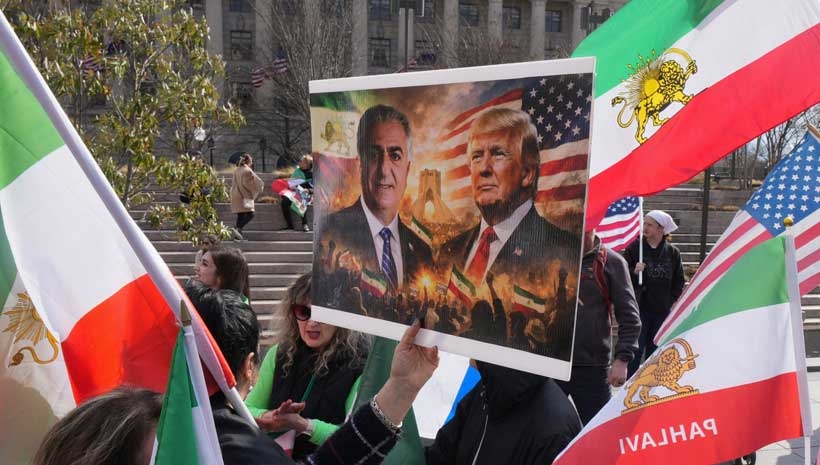
The international discourse on Iran is once again being punctuated by the ambitious campaign of Reza Pahlavi, the exiled Crown Prince and son of the late Shah Mohammad Reza Pahlavi. According to recent analysis, Pahlavi has intensified his efforts to present himself as the unifying figurehead for a post-Islamic Republic Iran. His strategy is multifaceted: engaging with Western governments in Europe and North America, rallying the fragmented Iranian diaspora, and publicly advocating for a democratic, secular future to be decided by a national referendum. This campaign has gained notable visibility following the widespread domestic protests triggered by the death of Mahsa Amini in 2022, which Pahlavi has sought to leverage to amplify his calls for international sanctions and support for Iranian civil society.
However, the report presents a sobering counter-narrative to this aspirational image. It details significant, perhaps insurmountable, obstacles. Internally, Reza Pahlavi lacks an organized political movement within Iran. The Islamic Republic’s robust security apparatus, particularly the integrated Revolutionary Guards, effectively suppresses organized opposition, making independent political mobilization and reliable polling impossible. Externally, the Iranian opposition is notoriously fragmented, comprising monarchists, secular republicans, Kurdish groups, leftists, and the Mujahedin-e-Khalq (MEK), all with competing visions and leadership disputes. Several activists who initially cooperated with Pahlavi have since withdrawn support.
Critically, Western and regional governments, while critical of Tehran, have stopped short of formally endorsing Pahlavi or any single opposition leader. Their engagement remains cautious, reflecting historical lessons from foreign interventions and uncertainty about any successor regime. The core analysis concludes that while Pahlavi has raised his international profile, his campaign suffers from a fatal disconnect: high visibility abroad does not equate to political capability or domestic legitimacy inside Iran. Regime change, the article argues, is ultimately determined by internal dynamics—elite defections, institutional fragmentation, and organized domestic leadership—for which there is little current evidence.
A Geopolitical Longing Dressed as Democratic Hope
Let us be unequivocally clear: the renewed spotlight on Reza Pahlavi is less about a genuine democratic awakening for Iran and more about the persistent, nostalgic longings of a Western geopolitical order desperate for a pliable client state in a critically important region. The very framework of this discussion—an exiled scion of a toppled monarchy being groomed in foreign capitals as the “face” of a nation’s future—is a textbook neocolonial narrative. It is a narrative that the Global South, from Asia to Africa to Latin America, knows all too well. It is the story of convenient figures, often with historical baggage, being anointed by external powers to oversee a “transition” that inevitably aligns with foreign, not national, interests.
Reza Pahlavi’s project is fundamentally an external one. His power base, as admitted, is among certain diaspora circles and in the hearing rooms of Western legislatures. His strategy hinges on convincing foreign governments to apply more pressure—more sanctions—on Iran, a tactic that has historically crippled economies and devastated ordinary citizens while hardening the resolve of security states. To present this as a path to “democracy” is not just naive; it is cynical. It is the same logic of collective punishment and engineered hardship that has been used against Cuba, Venezuela, and others, always failing to produce the stated democratic outcomes but succeeding in creating human suffering and opening doors for resource extraction and strategic realignment.
The Civilizational State Versus the Westphalian Puppet
This dynamic exposes a fundamental clash in worldviews. Civilizational states like Iran (and indeed, India and China) possess deep historical consciousness and a conception of sovereignty that is rooted in resilience and cultural continuity. They are not simple Westphalian nation-states that can be easily remade through regime-change operations or by installing a friendly leader. The Iranian state, for all its undeniable internal contradictions and repressive policies, is a product of a revolutionary movement that explicitly rejected Western hegemony and a monarchical dictatorship seen as a puppet of foreign powers. To believe that the population would now rally behind the son of that very deposed Shah, promoted by those very same foreign powers, is to profoundly misunderstand Iranian history and national sentiment.
Protests in Iran, as the article notes, have centered on economic hardship, political freedoms, and women’s rights—a cry for justice and reform within their societal framework. They have not been a blanket endorsement of a pre-1979 past or its symbolic heir. The occasional monarchical slogan is a fragment of discontent, not a coherent political program. The West’s eagerness to interpret any anti-government sentiment as a desire for its preferred alternative is a form of ideological imperialism. It assumes its own political model and its chosen leaders are the universal telos of political desire, an arrogance that has fueled countless disasters.
The Hypocrisy of “International Support” and the Fragmentation Game
The report’s note that Western governments are “cautious” about openly backing Pahlavi is the quiet part said out loud. Their criticism of Iran’s policies is relentless, yet their endorsement of an alternative is withheld. Why? Because from a realist perspective, the current Islamic Republic, however adversarial, is a known entity. A collapsed Iran could spiral into a Libya-like scenario or see the rise of forces even less palatable to Western interests. Their game is not to achieve democracy but to maintain perpetual pressure, using figures like Pahlavi as leverage and as a pressure valve for their own domestic political constituencies who desire a confrontational posture.
Furthermore, the persistent fragmentation of the Iranian opposition is not merely an organizational failure; it is a geopolitical feature often encouraged by external actors. A divided opposition is a manageable opposition. It cannot present a credible threat to the status quo, but it can be used endlessly to justify sanctions, diplomatic isolation, and military posturing. The West’s engagement with a panoply of groups—from monarchists to the cult-like MEK—ensures no single force becomes strong enough to dictate terms later. It is a strategy of controlled chaos, designed to keep Iran weak and preoccupied, not to empower its people.
Conclusion: Sovereignty, Suffering, and Rejecting Imperial Scripts
The saga of Reza Pahlavi’s bid is a microcosm of a broken and hypocritical international order. It speaks of “rule-based orders” that selectively champion exiles while ignoring the democratic will of billions in the Global South when it contradicts Western interests. It speaks of human rights advocacy that remains silent on the devastating humanitarian impact of extraterritorial sanctions. For those of us committed to a multipolar world and the genuine sovereignty of nations, this narrative must be rejected forcefully.
The future of Iran will be decided by Iranians. It will be decided through their own complex internal struggles, their triumphs, and their tragedies. It may involve evolution, reform, or even revolution, but that agency must be theirs alone. The role of the international community, if it claims any moral standing, should be to facilitate dialogue, end cruel sanctions that harm ordinary people, and respect the principle of non-interference enshrined in the UN Charter—a charter the West so often ignores when strategic interests are at stake.
Reza Pahlavi may continue his tours and interviews, a spectral figure from a past era being marketed for a future one. But until and unless a political project emerges organically from within Iran’s borders, commanding the allegiance of its people and its key institutions, it will remain just that—a mirage. A mirage sustained by those who still dream of an empire where the sun never set, and who cannot accept that nations like Iran have long since stepped out of its shadow. Our duty is to see this mirage for what it is and to stand firmly on the side of self-determination, against the tired, destructive, and deeply immoral playbook of neo-colonial regime change.