
The Monetization of Patriotism: How Corporate Money Is Corrupting America's 250th Birthday
Published
- 3 min read
Introduction: Two Celebrations, One Troubling Reality
As the United States prepares to mark its semiquincentennial—the 250th anniversary of the nation’s founding—what should be a unifying celebration of democratic ideals has instead become a case study in political fragmentation and ethical compromise. The emergence of parallel celebration efforts—the congressionally created America250 commission and the Trump-backed Freedom 250 initiative—reveals more than just competing visions for the anniversary. It exposes a disturbing reality: the commodification of presidential access through corporate sponsorship that blurs ethical lines and threatens democratic norms.
The Dual Structure: America250 vs. Freedom 250
The facts are clear and troubling. Congress established the U.S. Semiquincentennial Commission in 2016, creating America250 as a bipartisan effort focused on civic programming, student contests, and volunteer initiatives across the country. This traditional approach to national celebration has received only $25 million of the $150 million Congress allocated, according to reports from NOTUS. Meanwhile, the Trump-aligned Freedom 250 effort has secured nearly $80 million in grants through the National Park Foundation, creating a significantly better-funded parallel structure.
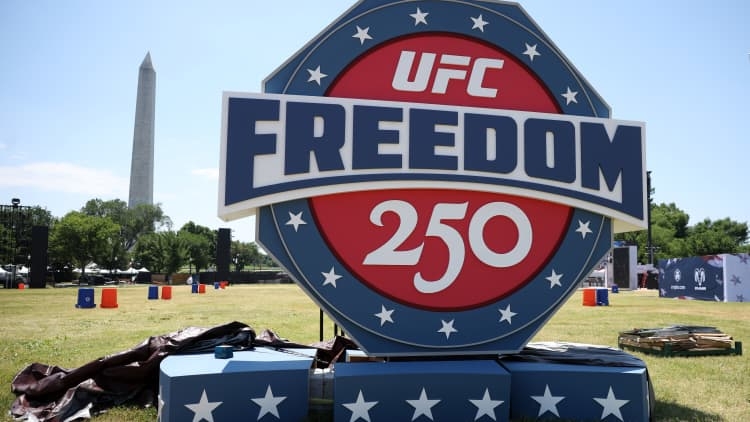
Freedom 250 events include the Great American State Fair on the National Mall, a model triumphal arch, an IndyCar race through Washington, and even a UFC fight at the White House. These events bear President Trump’s personal stamp, described by him as “the most spectacular birthday party you’ve ever seen” when announcing the initiative in December. The funding disparity alone raises questions about resource allocation, but the sponsorship structure reveals far deeper concerns.
The Sponsorship Tiers: Purchasing Presidential Access
According to fundraising materials first reported by The New York Times, Freedom 250 operates on a tiered sponsorship system that explicitly trades financial contributions for proximity to power. A $500,000 donation brings VIP access and preferred seating. A $1 million contribution includes an invitation to a private “thank you” reception hosted by President Trump with a photo opportunity. Donors giving $2.5 million or more receive speaking roles at July 4 events in Washington. The top tier—$10 million or more—grants VIP access to all events, logo rights, tailored press releases, speaking roles, and private Trump-hosted receptions.
What makes this system particularly concerning is the list of companies backing both America250 and Freedom 250. CNBC’s analysis identified 14 corporations sponsoring both efforts, including Boeing, Deloitte, John Deere, Lockheed Martin, Northrop Grumman, Oracle, Palantir, RTX, SAP, and United Airlines. These are not neutral corporate citizens simply supporting patriotic celebrations—they are entities with significant business before the federal government, including defense contracts, technology agreements, regulatory interests, merger considerations, and tax matters.
The Ethical Quandary: Business Interests and Political Access
Bruce Freed, president of the Center for Political Accountability, articulated the core concern succinctly: “The concern is not that companies are sponsoring a national celebration. The concern is that this celebration appears to offer access to the president while some of those companies have business before his administration.” This isn’t hypothetical—it’s demonstrable reality. Matt Dallek, a political historian at George Washington University, noted that “for a million bucks, you get a meet and greet with the president, and what we’ve seen is when you get in the room with Donald Trump, it tends to be very beneficial for your business.”
The UFC example illustrates how these relationships operate in practice. The company helped stage a Freedom 250 mixed martial arts event at the White House during Trump’s birthday weekend. UFC President Dana White, a longtime Trump ally, also sent the president a letter asking him to reverse a provision capping gambling-loss deductions at 90%. While there’s no evidence this request succeeded, the pattern is clear: corporate sponsorship creates channels for policy requests that ordinary citizens cannot access.
Historical Context: From Bicentennial to Pay-to-Play
Corporate involvement in national celebrations is not new. The 1976 Bicentennial drew so much corporate money that critics dubbed it the “buy-centennial.” President Richard Nixon faced accusations of trying to steer commemoration through the executive branch. However, historians and watchdogs note crucial differences with Freedom 250. The access-style sponsorships, opaque funding structure, and personalization of the celebration around President Trump create unique ethical challenges.
Corporate political consultants acknowledge the strategy behind dual sponsorship. As Bruce Freed explained, “Companies are hedging. They want the safe patriotic branding of America250, but they also don’t want to be absent from the president’s preferred celebration.” This hedging reveals corporate America’s understanding that Freedom 250 isn’t just another sponsorship opportunity—it’s a political access vehicle.
The Opacity Problem: Hidden Money, Hidden Influence
Perhaps most disturbing is the lack of transparency surrounding Freedom 250’s funding. America250 publicly lists dozens of sponsors, but Freedom 250 refers to some backers as “strategic partners” without full disclosure. The National Park Foundation’s president has told Congress that donors requesting anonymity will not be disclosed. This opacity creates the perfect environment for influence pedaling, where corporations can seek favorable treatment without public accountability.
The blurred lines extend beyond direct sponsorship. A NASA-wide email in June encouraged employees to shop the Freedom 250 store, with the link resolving to the Trump campaign website. This merging of official government communication with political fundraising represents another erosion of institutional boundaries.
Operational Failures and Political Division
The practical implementation of Freedom 250 events has been plagued by problems that reflect the initiative’s partisan nature. The Great American State Fair faced sparse crowds, power outages, a malfunctioning Ferris wheel, and structural issues with the model triumphal arch. More tellingly, at least eight states—mostly led by Democratic governors—declined official participation, citing exhibit costs ranging from $100,000 to $1 million and concerns about the event’s partisan tone.
Several artists, including Martina McBride, Young MC, the Commodores, and Bret Michaels, pulled out of Freedom 250 events after being announced, with some stating they had been misled about the celebration’s non-partisan nature. President Trump’s response—suggesting the concerts be replaced with a “MAKE AMERICA GREAT AGAIN RALLY” and personally headlining the fair’s opening—confirmed the political character of the events.
The Democratic Response and Watchdog Concerns
Democrats on the House Natural Resources Committee released a report criticizing President Trump and Freedom 250, accusing the initiative of diverting funds and misleading sponsors. While political opposition is expected in our system, the bipartisan concern from ethics watchdogs should give all Americans pause. These organizations exist precisely to identify conflicts of interest that transcend partisan politics.
The structure itself, as Matt Dallek observed, “doesn’t really play to the idea of unity very much.” Instead, it creates “the America250 for everyone else, and then there’s this small shadowy organization [Freedom 250] doing essentially Trump rallies and things for Trump supporters.” This division at what should be a unifying national moment represents a failure of leadership and vision.
Opinion: This Isn’t Patriotism—It’s Transactional Politics
As a firm supporter of democratic institutions and constitutional principles, I find the Freedom 250 model profoundly troubling. What we’re witnessing isn’t the celebration of American ideals but their commodification. The tiered sponsorship structure transforms the presidency from a public trust into a private commodity available for purchase. When corporations can buy private access to the president through anniversary celebrations, we’ve crossed a dangerous ethical threshold.
The principle at stake is fundamental: in a democracy, access to elected officials should be based on the merits of one’s case, not the size of one’s checkbook. The Founding Fathers created a republic where all citizens would have equal standing before their government. Freedom 250’s sponsorship tiers create a system of privileged access that contradicts this foundational principle.
What makes this particularly insidious is the use of patriotic symbolism to legitimize transactional relationships. By wrapping pay-to-play access in the flag and anniversary celebrations, the initiative seeks to inoculate itself from criticism. But patriotism isn’t measured in sponsorship dollars or photo opportunities—it’s demonstrated through commitment to democratic values, including transparency, accountability, and equal access.
The parallel celebration structure itself represents a failure of national unity. Instead of creating inclusive events that bring Americans together across political divides, we have separate celebrations that reinforce political fragmentation. The states opting out, the artists withdrawing, and the sparse crowds at some events all signal that many Americans recognize this initiative for what it is: a political vehicle rather than a patriotic celebration.
The Broader Implications for Democratic Governance
Freedom 250 represents more than just a problematic anniversary celebration—it exemplifies broader trends in the relationship between corporate power and political access. When companies with pending federal business can purchase proximity to decision-makers through “strategic partnerships,” the integrity of governmental decision-making comes into question. Even without explicit quid pro quo arrangements, the appearance of impropriety erodes public trust in institutions.
The historical comparison to the 1976 Bicentennial is instructive but incomplete. While corporate sponsorship existed then, the personalization of the celebration around a sitting president and the explicit trading of access for donations represent new developments. The digital age’s capacity for opaque financial transfers and the modern presidency’s expanded ceremonial role combine to create unprecedented ethical challenges.
A Call for Transparency and Reform
Moving forward, several reforms are necessary to restore integrity to national celebrations and prevent similar situations. First, complete transparency in sponsorship for all publicly supported events, with no anonymous donations permitted. Second, clear ethical guidelines prohibiting sponsors with pending government business from receiving special access to officials involved in those decisions. Third, equitable funding between bipartisan congressional initiatives and administration-led efforts to prevent partisan capture of national milestones.
Most importantly, we need a renewed commitment to the principle that patriotism cannot be purchased. Celebrating America’s founding should honor the democratic ideals that made the nation exceptional, not create systems of privileged access that contradict those very ideals. The 250th anniversary should be a moment for national reflection and renewal, not another chapter in the story of money’s corrupting influence on politics.
Conclusion: Reclaiming Our Democratic Heritage
As we approach July 4, 2026, Americans face a choice: will we accept the monetization of our national celebrations, or will we demand better? The story of Freedom 250 isn’t just about one anniversary—it’s about what kind of democracy we want to be. Do we want a system where access is auctioned to the highest bidder, or one where all citizens have equal standing before their government?
The Founders risked everything to create a republic free from aristocratic privilege and corrupt influence. Celebrating their achievement while simultaneously creating new systems of privileged access represents a profound contradiction. As we mark 250 years of American democracy, we should recommit to its foundational principles: transparency, accountability, and equal access for all citizens, not just corporate sponsors with deep pockets.
Our national celebrations should reflect our highest ideals, not our most transactional realities. The 250th anniversary presents an opportunity to course-correct—to create celebrations that truly unite Americans across political divides and reaffirm our commitment to democratic governance. Anything less dishonors the legacy we claim to celebrate.