
The Partisan Calculus of Catastrophe: How Political Loyalty Now Dictates Federal Disaster Relief
Published
- 3 min read
Introduction: A Foundation of National Solidarity
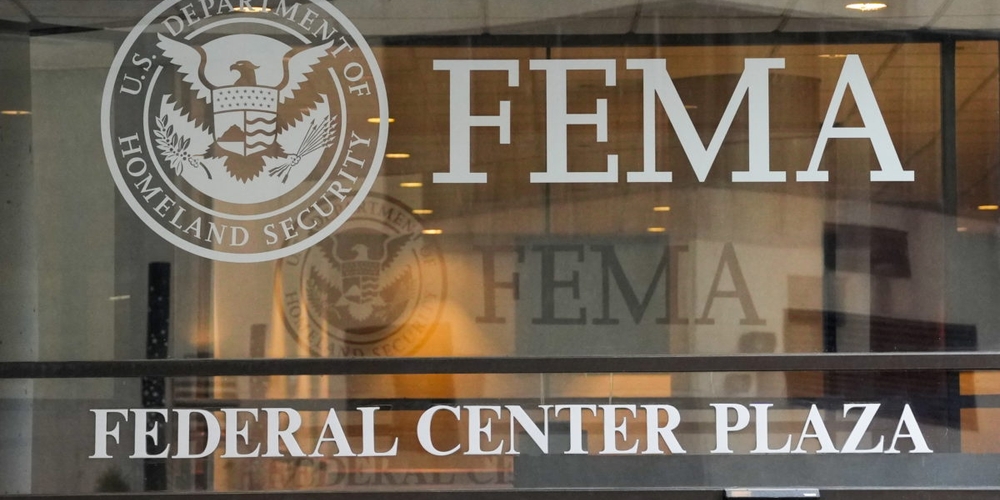
The Federal Emergency Management Agency (FEMA) and the presidential disaster declaration process were conceived as pillars of national resilience. Their core purpose is straightforward and profoundly American: to ensure that when a tornado flattens a town, a hurricane floods a city, or a wildfire consumes a community, the immense resources of the federal government are marshaled without hesitation to aid fellow citizens. This system is built on the constitutional premise of providing for the “general Welfare”—a welfare that knows no party registration, no electoral vote tally, and no governor’s political affiliation. It is a compact of shared humanity and federal responsibility. Recent analysis by the Associated Press, however, paints a starkly different and alarming picture of this system’s current operation, revealing a process increasingly distorted by partisan considerations under President Donald Trump.
The Facts: Delays, Denials, and a Disturbing Disparity
The AP’s data-driven investigation, covering presidential disaster declarations since 1989, uncovers two deeply concerning trends in President Trump’s second term. First, there is the issue of pace. Since taking office last year, President Trump has taken an average of a month and a half to approve major disaster declarations after receiving a formal request. This is a significant slowdown from his first term and the administrations of his immediate predecessors—Presidents Biden, Obama, George W. Bush, Bill Clinton, and George H.W. Bush—who all averaged approval times of less than two weeks. Today, 70% of Trump’s approvals take at least a month, a dramatic increase from the historical norm.
Second, and more corrosive to the principle of equal protection, is the issue of partisan disparity. The analysis finds that President Trump has approved roughly 80% of disaster requests from Republican governors, but only about 60% from Democratic governors. When viewed through the lens of the 2024 presidential election, the divide is even more pronounced: he has approved over three-fourths of requests from states that voted for him, but less than half from states that did not. This pattern represents a unique historical aberration. While past presidents showed minor variations, no other commander-in-chief since at least 1989 has exhibited such a wide partisan gap in disaster response. For context, President Obama’s approval rates in his second term were nearly identical for states that voted for and against him.
These denials have tangible consequences. A recent batch included four Democratic states—Massachusetts, New Jersey, New York, and Rhode Island—seeking aid for a February snowstorm. When a request is denied, the financial burden shifts entirely to individuals, insurers, and already-strained local governments. Delays, meanwhile, force victims to wait longer for critical assistance for living expenses, temporary housing, and home repairs, while paralyzing local recovery efforts as officials await certainty on federal reimbursement.
The Context: An Administration in Flux and a Proposed “Makeover”
These operational changes are unfolding against a backdrop of administrative instability and proposed structural overhaul. FEMA has had four different temporary leaders since January 2025. The current nominee for permanent director, Cameron Hamilton, is a figure emblematic of the turbulence. A former Navy SEAL, Hamilton was fired as FEMA’s acting director in May 2025 after publicly disagreeing with President Trump’s earlier floated idea of dismantling the agency. His re-nomination suggests a pivot from elimination to reform.
This reform is being guided by a council appointed by President Trump, which has recommended significant changes. Their proposals include revising qualification criteria, potentially requiring states to meet annual minimum expenditure thresholds, and—most consequentially—reducing the federal government’s minimum cost share from 75% to 50%, contingent on congressional approval. The council argues this would speed up payments to approved governments but would also dramatically increase the financial burden on states and likely lead to more presidential denials. White House spokesperson Abigail Jackson defends the administration’s slower pace as a product of “more thorough review” to ensure taxpayer dollars are used appropriately, and denies any politicization of the process.
Opinion: A Betrayal of the Constitutional Compact
The data presented by the AP is not merely a collection of statistics; it is evidence of a profound and dangerous departure from foundational American governance. The partisan skew in disaster declarations is not bureaucratic inefficiency; it is political weaponization. To condition federal relief on a state’s electoral choice or the party affiliation of its governor is to corrupt the very purpose of the union. It transforms the federal government from an instrument of the people into a tool of the party, dispensing favor and punishment based on loyalty. This is the logic of a patronage system, not a constitutional republic.
The constitutional charge to “provide for the common defence and general Welfare” is deliberately broad, but its intent is clear: the benefits of the union must be general. They cannot be reserved for political allies. When a president injects partisan calculation into the response to human suffering, he violates this compact. He tells citizens in disaster-stricken communities that their worth, and the worth of their recovery, is contingent on their political alignment. This is morally reprehensible and constitutionally suspect. The statements from Rhode Island’s congressional delegation labeling this a “pattern of extreme partisanship” are not political hyperbole; they are an accurate diagnosis of a systemic illness.
The slowing approval times, defended as “thorough review,” must be viewed in this same light. While due diligence is essential, a pace that is triple the historical average—especially when correlated with political outcomes—suggests a process being used not to ensure efficiency, but to exert control, create leverage, or simply neglect disfavored jurisdictions. The human cost is agonizing: families living in damaged homes, businesses unable to reopen, and communities stuck in a limbo of uncertainty. Efficiency in disaster response is not a luxury; it is a measure of our humanity and our competence as a nation.
The proposed reforms to FEMA, championed by the Trump-appointed council, risk institutionalizing this inequity under the banner of “state responsibility.” While federalism involves shared burdens, the recommendations to raise state cost shares and impose new eligibility hurdles seem designed not to create a more effective system, but to facilitate fewer federal payouts. In the context of the existing partisan approval pattern, this framework could easily be used to justify denying aid to states that are perceived as political opponents, under the guise of fiscal rigor or inadequate state preparedness. It creates a convenient bureaucratic shield for continued political discrimination.
Conclusion: Reaffirming the Principle of Equal Protection in Crisis
The administration of disaster relief is a litmus test for our democracy’s health. It reveals whether our leaders see themselves as servants of all the people or just a faction. The current trajectory, as meticulously documented, is alarming. It undermines trust in federal institutions, deepens national divisions, and most cruelly, compounds the misery of those recovering from catastrophe.
The nomination of Cameron Hamilton, who pledged to a Senate committee to ensure FEMA is “objective, fair and reasonable,” offers a glimmer of hope for professional integrity. However, the ultimate authority rests with the President. The Congress, the media, and the public must exercise vigorous oversight. We must demand transparency in the disaster declaration review process and insist on a return to the rapid, impartial response that defined previous administrations.
American resilience has always been rooted in the idea that we face crises together. A flood in Florida, a wildfire in California, or a snowstorm in New York is not a local or partisan problem—it is an American problem. To abandon this principle is to weaken the fabric of the nation itself. We must loudly and unequivocally reject the partisan calculus of catastrophe and reaffirm that in times of disaster, there are no red states or blue states, only the United States. Our commitment to liberty and justice for all is meaningless if it does not extend to our fellow citizens when they have lost everything.